Why Gayer-Anderson Museum matters.
Gayer-Anderson Museum is one of Cairo's most spellbinding time capsules, a pair of Ottoman-era houses frozen in elegance, where Islamic art, British eccentricity, and Egyptian history intertwine beneath painted ceilings and carved mashrabiya.
Step through the arched entrance beside the Mosque of Ibn Tulun, and the noise of the city falls away. Inside, sunlight spills through latticed windows, filtering across inlaid wood, colored glass, and centuries of collected treasures. Persian carpets, Syrian mosaics, and pharaonic relics coexist in harmony, curated with obsessive care by Major Robert Gayer-Anderson, the British officer-turned-collector who called this place home in the 1930s. The rooms are arranged not as exhibits, but as living spaces, a drawing room for poets, a Persian hall for contemplation, a rooftop terrace for Cairo's evening breeze. It feels less like a museum and more like a dream suspended in amber, the kind of place where every step reveals another story waiting to be rediscovered.
What defines Gayer-Anderson Museum.
Gayer-Anderson Museum occupies two adjoining historic houses, Beit al-Kritliyya (the House of the Cretan Woman) and Beit Amna bint Salim, masterpieces of 17th-century Islamic domestic architecture.
When Major Gayer-Anderson first entered in 1935, the buildings were decaying. Granted permission by the Egyptian government to restore and inhabit them, he spent years reviving their wooden mashrabiyas, marble courtyards, and frescoed domes while filling the rooms with objects gathered from across the Middle East and beyond. His eclectic collection includes everything from ancient Egyptian amulets and Coptic icons to Persian tiles, Mughal furniture, and Chinese ceramics, an entire cosmology of civilizations under one roof. The architecture itself is equally remarkable: carved wooden screens preserve privacy while admitting breeze and light; painted ceilings burst with floral arabesques; and narrow staircases twist upward toward hidden terraces overlooking the Mosque of Ibn Tulun. One of the most fascinating details lies beneath the house, a subterranean passage that legend claims once connected directly to the mosque. The museum's layout follows the traditional pattern of an Ottoman merchant home: men's quarters (the salamlik) on the lower floors, women's quarters (the haramlik) above, both arranged around open-air courtyards with marble fountains. When Gayer-Anderson left Egypt in 1942, he donated the house and its contents to the Egyptian government, earning the title Pasha in gratitude. Today, it stands not only as a museum but as a portrait of its namesake, a man who lived between cultures, building a bridge between East and West in the heart of Cairo. Its walls have also served as backdrops for films such as The Spy Who Loved Me, proof that its timeless beauty transcends even history itself.
How Gayer-Anderson Museum fits.
Visiting Gayer-Anderson Museum is less about sightseeing and more about surrendering to atmosphere.
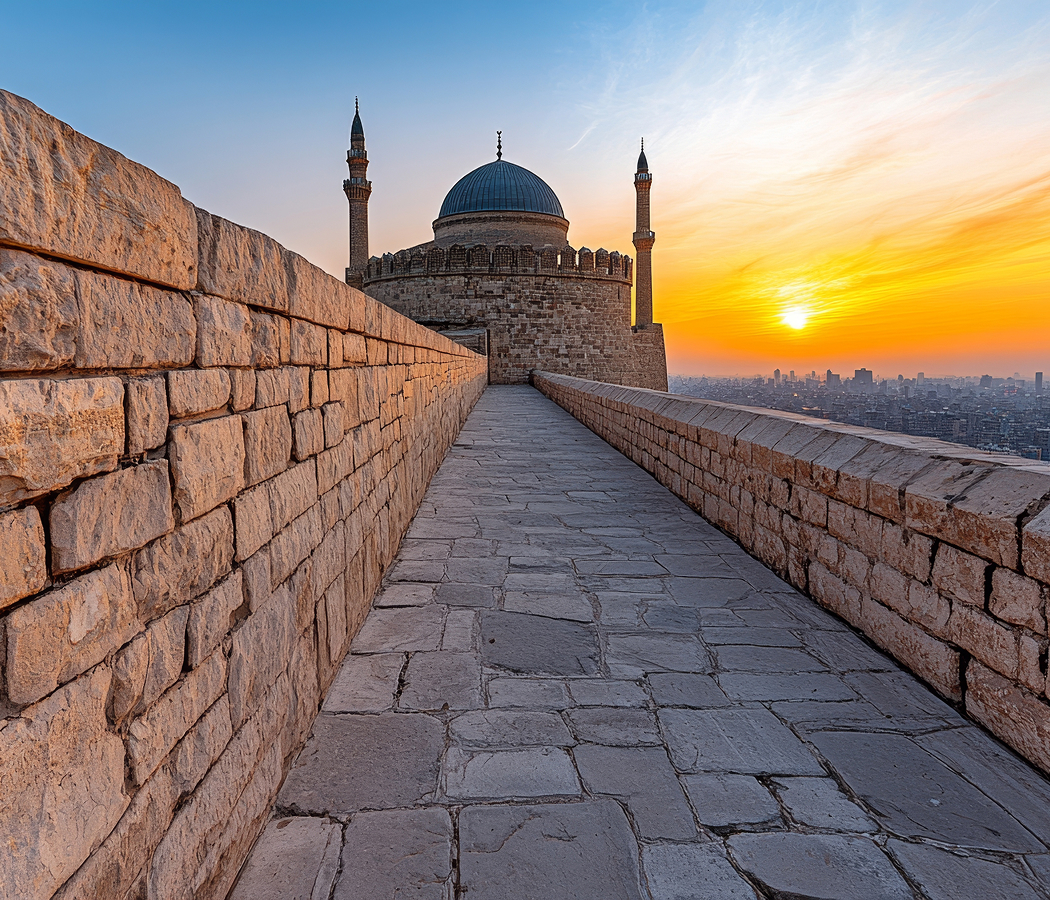
Plan to enter from Salah Salem Street, combining your visit with the adjacent Mosque of Ibn Tulun, their histories are intertwined. Arrive midmorning when the light softens through the mashrabiya latticework, painting the rooms in amber and shadow. Begin in the central courtyard, where the fountain anchors the space, then wander room by room, the Persian Hall, Damascus Room, and Ancient Egyptian Gallery, each layered with artifacts from different centuries and worlds. Don't rush; pause to listen to the hush of air moving through the screens and the faint call to prayer drifting from the mosque nearby. Climb to the rooftop terrace for a panoramic view of old Cairo, domes, minarets, and the ochre rhythm of history unfolding in every direction. Allocate one hour to absorb the details; photography is permitted but quiet contemplation is the true reward. As you leave, look back at the carved wooden balconies stacked above the entrance, the last flourish of a vanished Cairo, still whispering through the lattice of time.
Where your story begins.
Foresyte Travel reveals places that feel extraordinary long before you arrive.
Experience premium editorial crafted for luxury travelers.