Why Illinois Street matters.
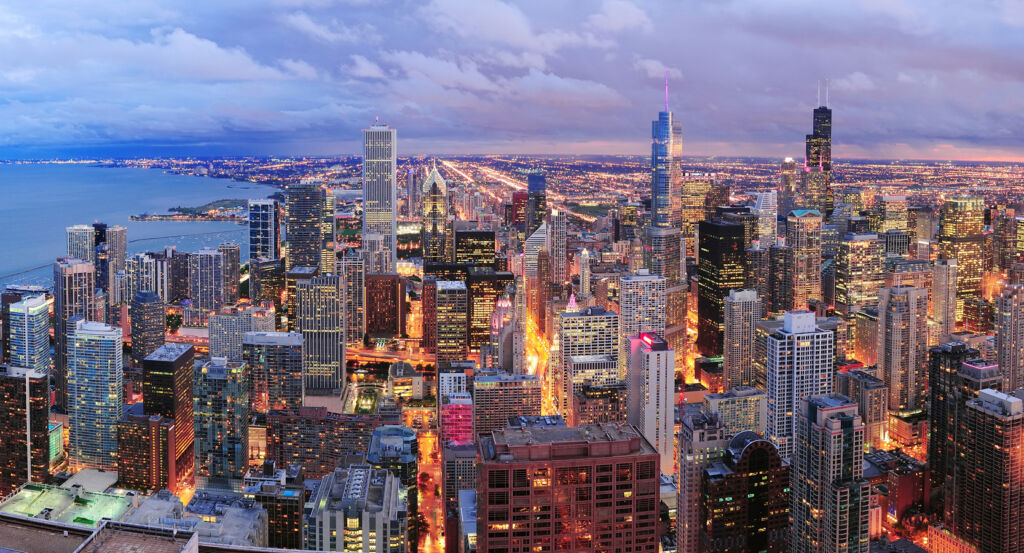
Illinois Street is an energetic corridor where Streeterville's maritime heritage, architectural ambition, commercial vitality, and Chicago's enduring relationship with Lake Michigan converge across one of downtown's defining east-west streets.
Running through Streeterville between River North and Navy Pier, Illinois Street connects historic warehouses, contemporary office towers, hotels, residential high-rises, riverfront infrastructure, and entertainment destinations that collectively reflect more than a century of remarkable urban evolution. The corridor reveals how shipping, manufacturing, engineering, and sustained redevelopment transformed reclaimed shoreline into one of Chicago's most influential mixed urban environments. Historic commercial structures and contemporary skyline architecture remain closely integrated throughout the streetscape while preserving successive chapters of the neighborhood's extraordinary growth. The result is a corridor distinguished by architectural continuity, economic vitality, and an enduring place along Chicago's celebrated waterfront.
What defines Illinois Street.
Illinois Street is best known for extending through Streeterville, where the neighborhood emerged following extensive lakefront infill after the late nineteenth century and rapidly developed into one of Chicago's principal commercial and residential districts during the twentieth century. Construction between the 1900s and the 1930s introduced substantial warehouse buildings, freight facilities, commercial lofts, hotels, and early high-rise office buildings that established the corridor's enduring architectural identity. Expansion of the Chicago Harbor, improvements to the Ogden Slip industrial basin, and continued investment in nearby transportation infrastructure reinforced Illinois Street's importance within Chicago's maritime economy before late twentieth-century redevelopment introduced major residential and commercial growth. Continued adaptive reuse and compatible reinvestment have retained important elements of the corridor's historic industrial fabric while sustaining its evolving role within Downtown.
Creation of the Streeterville Organization of Active Residents established long-term neighborhood advocacy through planning participation, infrastructure improvements, public safety initiatives, and preservation efforts that strengthened the districts surrounding Illinois Street. Designation of the Michigan-Wacker Historic District as a Chicago Landmark District preserved a nationally significant concentration of early skyscrapers and commercial architecture documenting the broader evolution of Chicago's central business district. Engineer Bennet C. Mossman directed major harbor, river, and lakefront engineering projects that influenced shoreline improvements and maritime infrastructure supporting development surrounding Illinois Street during the early twentieth century. Together, the Streeterville Organization of Active Residents, the Michigan-Wacker Historic District, Chicago Landmark designation, and Bennet C. Mossman demonstrate how coordinated civic leadership, preservation policy, and engineering innovation have collectively reinforced Illinois Street's enduring identity.
How Illinois Street fits.
Illinois Street works as an exploration of Streeterville's waterfront heritage, architectural evolution, and civic identity.
Begin at Tribune Tower, where Gothic Revival architecture, historic newsroom traditions, and stones gathered from globally significant sites establish the architectural ambition that distinguishes Downtown before naturally introducing the surrounding character of Illinois Street. Continue to Chicago Riverwalk, where river engineering, public spaces, and continuously unfolding views expand the experience from landmark architecture into the waterfront infrastructure that transformed Streeterville into one of the city's defining districts before guiding the journey toward the lakefront. Conclude at Navy Pier, where historic maritime infrastructure, century-old civic traditions, and sweeping Lake Michigan panoramas provide the historical and cultural payoff, demonstrating how engineering, public life, and the shoreline collectively shaped Streeterville's enduring identity. The complete sequence reveals how architectural ambition, riverfront renewal, and Chicago's lakefront together explain why Illinois Street remains one of downtown's most significant corridors.
Where your story begins.
Foresyte Travel reveals places that feel extraordinary long before you arrive.
Enjoy editorial crafted for luxury travelers.
Foresyte may earn a commission when you book.