Why InterContinental David Tel Aviv matters.
InterContinental David Tel Aviv is a landmark Mediterranean hotel where Neve Tzedek's historic character meets Tel Aviv's coastal modernity, Jaffa's ancient port history and the international culture of Israel's principal seaside metropolis.
Set along Kaufmann Street beside Charles Clore Park, InterContinental David Tel Aviv occupies a waterfront position between Neve Tzedek, the Mediterranean Sea and the historic port of Jaffa, with Tel Aviv's central streets extending north and the beach opening westward. Its distinctive setting places a large urban hotel between a broad public park, a continuous sandy shoreline and one of the oldest inhabited port landscapes on the eastern Mediterranean. The principal experiential mechanism is the direct movement between guest rooms, terraces, pools and the beach, allowing the city and sea to remain present throughout the stay. A secondary atmosphere emerges from the contrast between modern towers, restored neighborhood streets, palms, parkland and the blue horizon beyond the hotel. The result is an unusually complete coastal address that connects Tel Aviv's urban energy with its maritime history and propels the property beyond the conventional beach resort.
What defines InterContinental David Tel Aviv.
InterContinental David Tel Aviv is best known for its role in the transformation of Tel Aviv's southern beachfront into a major international hospitality district, bringing expansive hotel architecture and substantial convention infrastructure to a waterfront historically associated with the city's earliest neighborhoods. The development emerged during Israel's economic expansion of the 1990s, when international investment and commercial construction reshaped Tel Aviv's Mediterranean coastline. Israeli architect Yehuda Feigin developed the hotel's architectural conception between 1991 and 1994, establishing an ambitious building program on an 11,000-square-meter coastal site. Construction proceeded from 1996 to 1999, producing a substantial complex organized around two terraced accommodation wings, a central atrium and an additional tower rising above the principal structure. The project introduced 80,000 square meters of constructed space, representing a significant investment in the city's capacity for international tourism, diplomatic hospitality and major commercial gatherings. Its completion in 1999 established a prominent InterContinental property along Tel Aviv's expanding hotel corridor, extending the brand's international presence into Israel's principal commercial metropolis. The development also incorporated a substantial convention center, connecting luxury accommodations with the growing importance of Tel Aviv as a destination for international conferences and corporate events. Its architectural organization reflected the increasing commercial sophistication of the Israeli hospitality industry during a period of expanding international business relationships. The property subsequently became an established setting for major gatherings, connecting the city's international commercial activity with its developing reputation as a Mediterranean cultural destination. A significant modernization program introduced another chapter in 2026, when a NIS 40 million investment renewed 105 accommodations and associated circulation spaces. International design practice ARA Design, whose relationship with the property extended to its original development, directed the architectural transformation. General manager Ilya Borgakov oversaw the introduction of the renovated Premium Terrace Rooms, extending the hotel's investment in contemporary residential design and Mediterranean-facing outdoor spaces. InterContinental David Tel Aviv represents an important stage in the development of Israel's international hospitality industry, connecting the architectural ambitions of the 1990s with the continuing transformation of Tel Aviv's coastal luxury market.
Yehuda Feigin's architectural conception establishes the hotel's defining relationship with the Mediterranean through an expansive atrium that organizes the building's public spaces around light, vertical circulation and views toward the coastline. Two terraced accommodation blocks frame an interior volume extending across eight levels, creating a substantial central space that gives the building its distinctive architectural character. An additional fourteen-storey tower rises above the atrium, extending the composition vertically and establishing a prominent landmark within the southern beachfront skyline. The principal public floor occupies an elevated position above street level, bringing the lobby and dining spaces into a coordinated architectural environment overlooking the swimming pool and Mediterranean Sea. An open spiral staircase connects this elevated arrangement with the lower lobby and convention facilities, integrating the building's ceremonial and commercial functions through a continuous interior sequence. ARA Design's subsequent renovations developed this architectural inheritance through a contemporary interpretation of residential comfort, introducing natural wood, layered textures and carefully controlled lighting into the renewed accommodations. The 2026 Premium Terrace Rooms extend the relationship between interior design and coastal geography through private outdoor terraces, establishing a more direct connection with the Mediterranean landscape. The hotel's culinary character develops another relationship with Tel Aviv's cultural character through Jaffa Court, whose Israeli breakfast tradition incorporates regional breads, cheeses, preserved fish, tahini and other elements of the eastern Mediterranean table. Alon Shabo's pastry creations introduce a contemporary Israeli interpretation of European confectionery techniques, bringing an influential local culinary figure into the hotel's principal social setting. The Atrium Lobby Bar occupies the building's dramatic central volume, connecting the architecture's expansive scale with the informal gathering culture associated with Tel Aviv's cafés and restaurants. SPICE by Spicehaus introduces another distinctly local collaboration through cocktails inspired by the aromatic traditions of Eastern and Western spice markets, extending the property's culinary character into the city's established cocktail culture. The relationship between Feigin's expansive architecture, ARA Design's residential interiors and the culinary traditions of contemporary Tel Aviv gives InterContinental David Tel Aviv a distinctive character within Israel's international hospitality landscape.
How InterContinental David Tel Aviv fits.
InterContinental David Tel Aviv works as the starting point for an exploration connecting Jaffa's ancient port history, Tel Aviv's modern artistic culture and the civic institutions that preserve the foundations of the modern Israeli state.
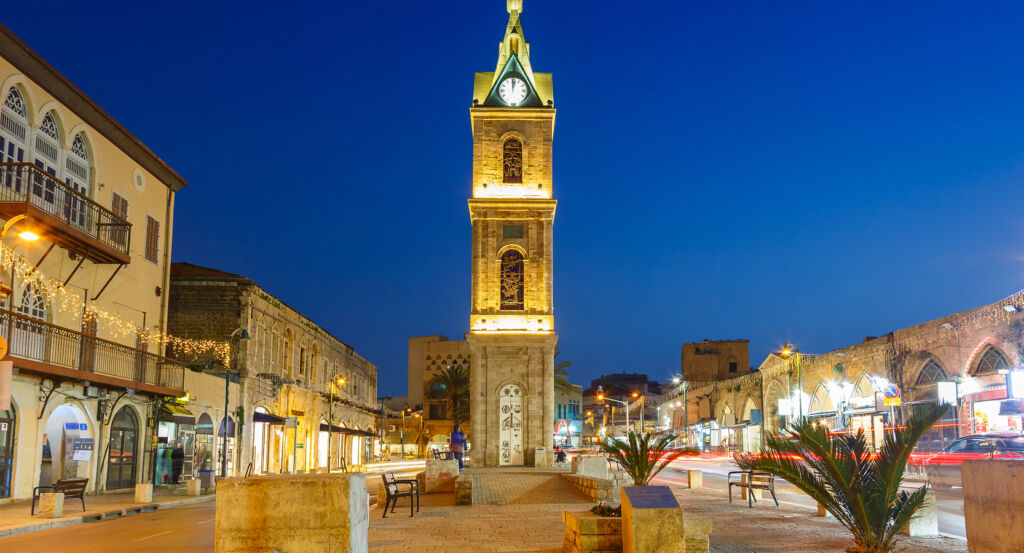
Begin at Jaffa Old City, the historic port district where stone lanes, Ottoman buildings, galleries, churches, mosques and harbor views preserve thousands of years of Mediterranean settlement. Its elevated streets and limestone architecture reveal the importance of the port as a point of trade, pilgrimage and cultural exchange between the Levant and the wider sea. The district connects ancient history with the contemporary cafés, studios and public spaces that define southern Tel Aviv. Its position beside the water places the city's modern coastal character within the older geography of Jaffa. Continue to Tel Aviv Museum of Art, the principal art institution of the city where Israeli, European and contemporary works occupy galleries within a major cultural complex. Its exhibitions connect Tel Aviv to international artistic movements while preserving a strong emphasis on Israeli artists, design and modern cultural life. The museum's architecture and public spaces create a civic setting distinct from the beach and commercial streets, demonstrating how art became central to the city's identity. Its collections place Tel Aviv within a global network of museums, artists and cultural institutions. Conclude at Independence Hall, the historic building on Rothschild Boulevard where the Declaration of Independence of the State of Israel was proclaimed in 1948. The building preserves the room, documents and civic setting associated with the establishment of the modern state. Its location within the early streets of Tel Aviv connects political history with the city's Bauhaus architecture, boulevards and Jewish settlement traditions. Independence Hall demonstrates how a relatively young city became the center of a defining national event. The progression moves from Jaffa Old City's ancient Mediterranean port through Tel Aviv Museum of Art's modern cultural life and concludes at Independence Hall, where the city's civic character meets the history of the State of Israel.
Where your story begins.
Foresyte Travel reveals places that feel extraordinary long before you arrive.
Enjoy editorial crafted for luxury travelers.
Foresyte may earn a commission when you book.