
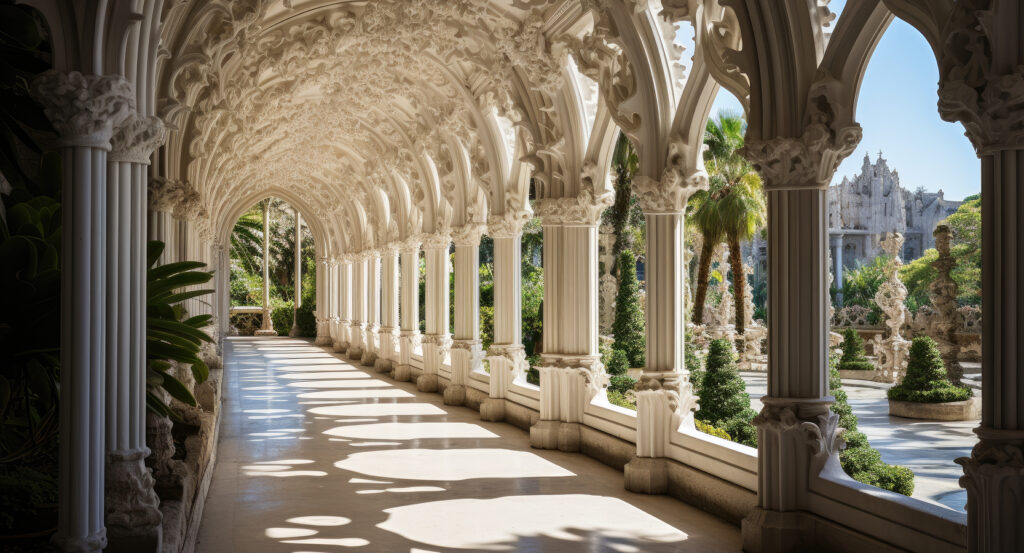
Why you should experience Tomb of Vasco da Gama in Lisbon, Portugal.
Tomb of Vasco da Gama is Lisbon's heartbeat carved into stone.
Resting inside the Church of Santa Maria de Belém, this monument stands as both elegy and compass, its white limestone shimmering in the filtered light of the monastery nave. To stand before it is to face the example of Portugal's greatest voyage, the man who turned the horizon from myth into map. His sarcophagus, poised on sculpted sea creatures, floats above the ground like a vessel adrift on eternity. The air carries the faint scent of wax and salt, and the hush of the space feels tidal, ebbing, flowing, holding its breath. The church around it hums with reverence, sunlight spilling through stained glass to touch the marble like a benediction. This is not a place of mourning; it's a sanctuary of awe.
What you should know about Tomb of Vasco da Gama.
Vasco da Gama's remains were not always here.
After his death in 1524 in Cochin, India, his body was buried abroad before being returned to Lisbon decades later. The tomb now housed in Jerónimos Monastery was installed in the 19th century, designed in pure Manueline style, the ornamental language of Portugal's golden age. Every symbol carved into the tomb carries intention: ropes twisted into stone evoke the rigging of ships; armillary spheres reference the navigational instruments that guided explorers; the cross of the Order of Christ rests near his name, signifying divine sanction over the voyages he commanded. The sea monsters beneath the sarcophagus represent both peril and providence, reminders of the dangers he overcame and the faith that sustained him. Above, delicate arches frame the tomb like waves frozen mid-motion, and from certain angles, the marble gleams as if still wet from the sea. Few visitors realize that across the nave, facing da Gama's tomb, lies that of the poet Luís de Camões, the voice who immortalized his journey in The Lusiads. One man sailed the world; the other gave it language. Together, their presence inside the same church transforms Jerónimos into something larger than a monastery, it becomes a monument to the imagination of a nation.
How to fold Tomb of Vasco da Gama into your trip.
To visit Tomb of Vasco da Gama is to pause inside history's breath.
Enter the Church of Santa Maria de Belém and move slowly down the central aisle until the light begins to fall more softly. You'll find the tomb on the right side of the entrance, near the choir, unassuming in placement, extraordinary in presence. Approach quietly; sound carries here in whispers. Notice the way the marble changes color as the sun moves, from ivory to amber to faint rose, as though reflecting the journey from dawn to dusk. Take time to study the carvings: the interlaced ropes, the starbursts, the sculpted waves. Each detail speaks of a voyage that began centuries ago but never truly ended. If you visit in the late afternoon, the stained-glass reflections dance across the surface like the play of light on open water. Step back a few paces to take in the entire composition, the tomb framed against the vast nave, Vasco da Gama forever at rest within the very church that blessed his departure. When you leave, the sound of your footsteps will echo softly, as if the stone itself remembers the rhythm of waves.
Where your story begins.
Foresyte Travel reveals places that feel extraordinary long before you arrive.
Experience premium editorial crafted for luxury travelers.














































































































