Why you should experience John F. Kennedy Boulevard in Philadelphia, Pennsylvania.
John F. Kennedy Boulevard is a distinguished corridor where Center City's civic ambition, architectural achievement, transportation infrastructure, and commercial prominence define Philadelphia's modern downtown.
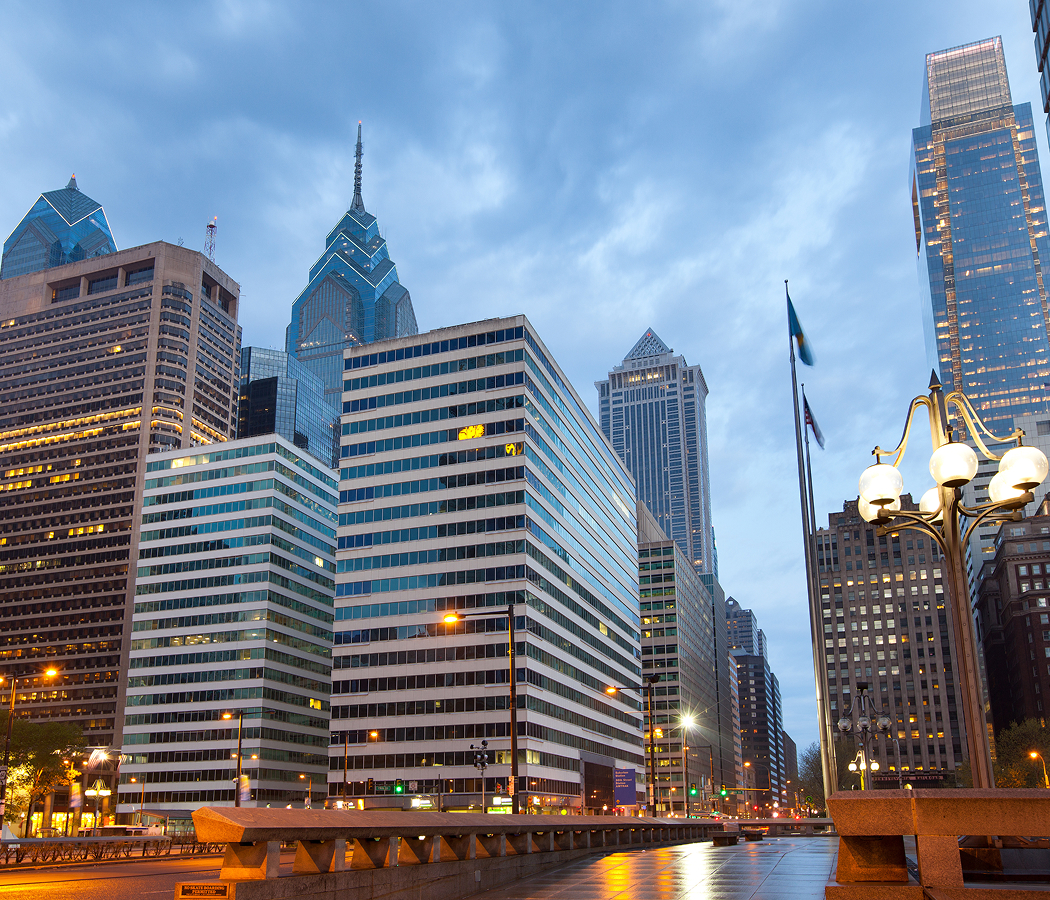
Running through Center City between University City and Logan Square, the boulevard connects landmark office towers, transit hubs, public plazas, hotels, and institutional campuses that collectively express Philadelphia's emergence as one of the nation's leading financial, governmental, and cultural centers. Successive blocks reveal how twentieth-century planning, corporate investment, transportation modernization, and skyline-defining architecture reshaped the city's historic western core into a nationally recognized central business district. Throughout the boulevard, grand office buildings, landscaped public spaces, and multimodal transportation facilities preserve a physical record of more than a century of metropolitan growth. The result is an experience defined by confidence, connectivity, and one of Philadelphia's most consequential urban corridors.
What you should know about John F. Kennedy Boulevard.
John F. Kennedy Boulevard is best known for originating as Pennsylvania Boulevard, a grand civic thoroughfare planned during the early twentieth century to improve circulation between 30th Street Station and Philadelphia's commercial core before being renamed in 1964 following the assassination of President John F. Kennedy. Construction accompanied the broader transformation of Penn Center, a redevelopment program directed by planner Edmund N. Bacon and architect Vincent Kling after the Pennsylvania Railroad relocated tracks below grade during the 1950s, opening 30 acres of land for office towers, public plazas, hotels, and transportation infrastructure. The corridor became the address of landmark developments including One Penn Center (completed 1959), Two Penn Center (1963), Three Penn Center (1979), and the Suburban Station complex, integrating regional rail, subway, trolley, and pedestrian concourses into one of the nation's largest interconnected transit systems. The boulevard also borders LOVE Park, formally JFK Plaza, dedicated in 1965, whose Robert Indiana LOVE sculpture was first installed in 1976 before becoming one of Philadelphia's defining works of public art. Together, Penn Center, Edmund N. Bacon, Vincent Kling, the Pennsylvania Railroad, regional transit infrastructure, modern office construction, and JFK Plaza established John F. Kennedy Boulevard as the civic spine of Philadelphia's twentieth-century downtown renaissance.
Management by the Center City District supports coordinated streetscape maintenance, landscaping, public safety, seasonal programming, and sidewalk improvements that reinforce the boulevard's role as Philadelphia's principal commercial corridor. Continuing investment by the City of Philadelphia, SEPTA, Amtrak, and the Pennsylvania Department of Transportation has modernized transit facilities, reconstructed intersections, expanded bicycle infrastructure, upgraded accessibility, and improved pedestrian connections between Center City and University City. Recent commercial development has introduced new office renovations, residential towers, hospitality projects, and public-space enhancements while preserving the boulevard's function as the city's primary business address. Collectively, these transportation investments, planning partnerships, civic improvements, and commercial reinvestment demonstrate how John F. Kennedy Boulevard continues evolving as the centerpiece of Philadelphia's modern urban core.
How to fold John F. Kennedy Boulevard into your trip.
John F. Kennedy Boulevard works as an exploration of Center City's civic architecture, public spaces, and transportation heritage.
Begin at LOVE Park, where one of Philadelphia's most recognizable public spaces introduces the boulevard through grand civic design, fountains, and Robert Indiana's celebrated sculpture while establishing an ideal starting point for the experience. Continue to 30th Street Station, where Art Deco architecture, grand waiting rooms, and one of the nation's busiest rail terminals deepen appreciation for the engineering and transportation systems that shaped modern Philadelphia before naturally leading back toward downtown. Conclude at Philadelphia City Hall, where the world's largest freestanding masonry municipal building provides the historical payoff through grand Second Empire architecture, civic symbolism, and the enduring presence of William Penn overlooking the city. Together, the sequence moves from public space to transportation engineering before culminating in Philadelphia's defining civic monument, expressing the remarkable breadth of history connected by John F. Kennedy Boulevard.
Where your story begins.
Foresyte Travel reveals places that feel extraordinary long before you arrive.
Experience premium editorial crafted for luxury travelers.