Why Khufu's Restaurant matters.
Khufu's Restaurant is an acclaimed contemporary Egyptian restaurant where Giza Plateau's ancient funerary landscape meets Mostafa Seif's reinvention of Egyptian regional cooking, connecting the Great Pyramids, Nile Valley food traditions and the first Egyptian victory in Middle East & North Africa's 50 Best Restaurants.
Set within the Giza Pyramid Complex above Nazlet El-Semman, the restaurant occupies an elevated position near the archaeological plateau's southern visitor routes, overlooking the expansive limestone structures that define the desert escarpment west of the Nile and the dense urban neighborhoods extending toward Central Cairo. The building combines pale stone surfaces with restrained contemporary architecture, establishing a visual relationship with the surrounding limestone terrain. A double-height dining room incorporates expansive glazing, generous ceiling proportions and carefully arranged tables oriented toward the archaeological landscape. An extensive outdoor terrace extends the restaurant across the open plateau, providing unobstructed views of the ancient monuments beneath the broad desert sky. The result is a restaurant whose limestone architecture, elevated dining room and panoramic terrace establish an exceptional physical connection between contemporary Egyptian hospitality and one of humanity's most consequential archaeological sites.
What defines Khufu's Restaurant.
Khufu's Restaurant is best known for becoming the first Egyptian establishment to claim the No. 1 position on Middle East & North Africa's 50 Best Restaurants, transforming a dining destination beside the Giza pyramids into an internationally recognized institution for contemporary Egyptian cuisine. The restaurant was founded in 2022 by Giovanni Bolandrini, the Italian-born hospitality entrepreneur behind Egypt's Pier88 restaurant group. Bolandrini had established Pier88 in 2008, developing a portfolio of restaurants through a combination of international hospitality standards and carefully selected Egyptian locations. His professional career began in fashion and developed into restaurant entrepreneurship after his relocation to Egypt in 2001. Khufu's represented a significant expansion of the group's ambitions, connecting a restaurant devoted to Egyptian culinary heritage with an archaeological setting of international significance. The project brought contemporary restaurant infrastructure into the protected pyramid complex, creating a dedicated dining destination within the grounds of one of the world's oldest expansive landscapes. Executive chef Mostafa Seif became central to the restaurant's development, introducing a culinary approach shaped by his upbringing in Cairo and the traditional rural cooking of Egypt. Seif graduated from the Culinary Arts Academy in 2013, establishing the professional foundation for his subsequent work in technically demanding kitchens. His career combined classical culinary methods with a growing interest in the ingredients and preparations associated with Egyptian households and agricultural communities. Participation in Top Chef Middle East brought regional recognition, with Seif winning the competition in 2018. That achievement preceded his involvement in the development of New Egyptian Cuisine, a movement concerned with presenting traditional Egyptian ingredients and preparations through contemporary restaurant techniques. At Khufu's, Seif developed menus that connected familiar national dishes with carefully controlled preparation, presentation and service. His work incorporated recipes associated with the Nile Delta, Upper Egypt and rural Egyptian households, establishing a culinary program extending beyond the conventional repertoire of international hotel dining. The restaurant developed separate breakfast and lunch formats, creating distinct opportunities to explore the country's culinary traditions through morning staples and more elaborate midday preparations. Its emphasis on Egyptian ingredients also supported vegetarian cooking, drawing upon the longstanding importance of legumes, grains and vegetables within the country's food culture. Recognition followed in 2025 when Khufu's entered Middle East & North Africa's 50 Best Restaurants at No. 4 and received the distinction of Best Restaurant in Egypt. The restaurant subsequently received the Resy One To Watch Award from The World's 50 Best Restaurants, extending its international recognition beyond the regional ranking. Seif earned Two Knives at The Best Chef Awards in 2025, adding an individual distinction to the restaurant's growing professional standing. A further achievement arrived on February 3, 2026, when Khufu's secured first place at the Middle East & North Africa's 50 Best Restaurants ceremony in Abu Dhabi. The victory ended the three-year leadership of Dubai's Orfali Bros and marked the first time an Egyptian restaurant had occupied the ranking's highest position. Bolandrini and Seif's collaboration established a prominent international platform for Egyptian cooking, joining hospitality entrepreneurship with a chef whose work draws directly upon the country's agricultural and domestic food traditions. The restaurant's development demonstrates the cultural significance of presenting Egyptian cuisine within an institution whose setting connects contemporary gastronomy with the ancient civilization that shaped the surrounding landscape.
Mostafa Seif's cooking develops the familiar foundations of Egyptian household food through precise preparation, controlled acidity and contrasting textures, preserving the character of traditional ingredients within carefully composed contemporary dishes. His approach begins with the agricultural staples that have sustained Egyptian cooking across generations, particularly fava beans, lentils, rice, wheat, vegetables and aromatic herbs. These ingredients carry substantial cultural importance through their association with communal meals, religious observances and the regional cooking of the Nile Valley. Seif concentrates their individual qualities through methods that refine texture and presentation while preserving recognizable combinations of flavor. Koshari provides a particularly consequential foundation for this approach, bringing together the grains, legumes and acidic seasonings associated with one of Egypt's most familiar national dishes. The restaurant's koshari salad reorganizes those components into a lighter preparation, allowing the textures of the individual ingredients to develop through a carefully balanced composition. Acidity becomes essential to the dish's structure, sharpening the earthy character of the legumes and providing contrast against the substantial starches. That relationship between familiar ingredients and refined preparation continues through the kitchen's treatment of eggplant, whose flesh develops a soft, concentrated texture through smoking. Tahini contributes the richness of sesame, with citrus introducing freshness against the vegetable's roasted character. Seif's use of fermentation and dairy introduces another dimension through dried yogurt, whose concentrated tang develops against savory accompaniments. The kitchen's treatment of rice carries particular significance through its connection to Egyptian rural cooking, where grains form the foundation of substantial family meals. Mu'ammar rice develops richness through slow baking, allowing dairy and cooking fats to penetrate the grains and create a browned surface above a tender interior. Smoked beef introduces concentrated savory flavor, extending the preparation through a carefully developed relationship between grain, fat and meat. Traditional Egyptian breakfast receives similar attention through fava beans, falafel, eggs and fresh accompaniments arranged around warm bread. The combination preserves the established relationship between legumes, fried preparations and dairy that characterizes the Egyptian morning table. Upper Egyptian baked eggs introduce regional specificity through a spiced tomato base, whose acidity balances the richness of the eggs. Seif's approach to substantial meat preparations draws upon the same agricultural foundations, combining traditional Egyptian seasonings with grains and fruit. Pharaonic duck incorporates a dukkah crust, using the roasted aromas of nuts and spices to develop a textured exterior around the meat. Freekeh contributes the earthy character of roasted green wheat, with orange and apricot purée adding fruit acidity and sweetness against the duck's richness. A concentrated duck jus completes the preparation through the natural savory qualities of the principal ingredient. The restaurant's vegetarian selections preserve the central importance of plant-based cooking within Egyptian food traditions, including the dietary practices associated with Coptic Christian fasting. Seif's distinctive achievement lies in developing these connected culinary traditions through disciplined technique and carefully balanced compositions, presenting Egyptian food as a substantial contemporary cuisine grounded in the country's agricultural and cultural history.
How Khufu's Restaurant fits.
Khufu's Restaurant works as the culinary conclusion to a Giza Plateau itinerary connecting the architectural ambition of Egypt's Fourth Dynasty, the royal funerary complex of Khafre and the expansive sculpture that has guarded the necropolis for more than four millennia.
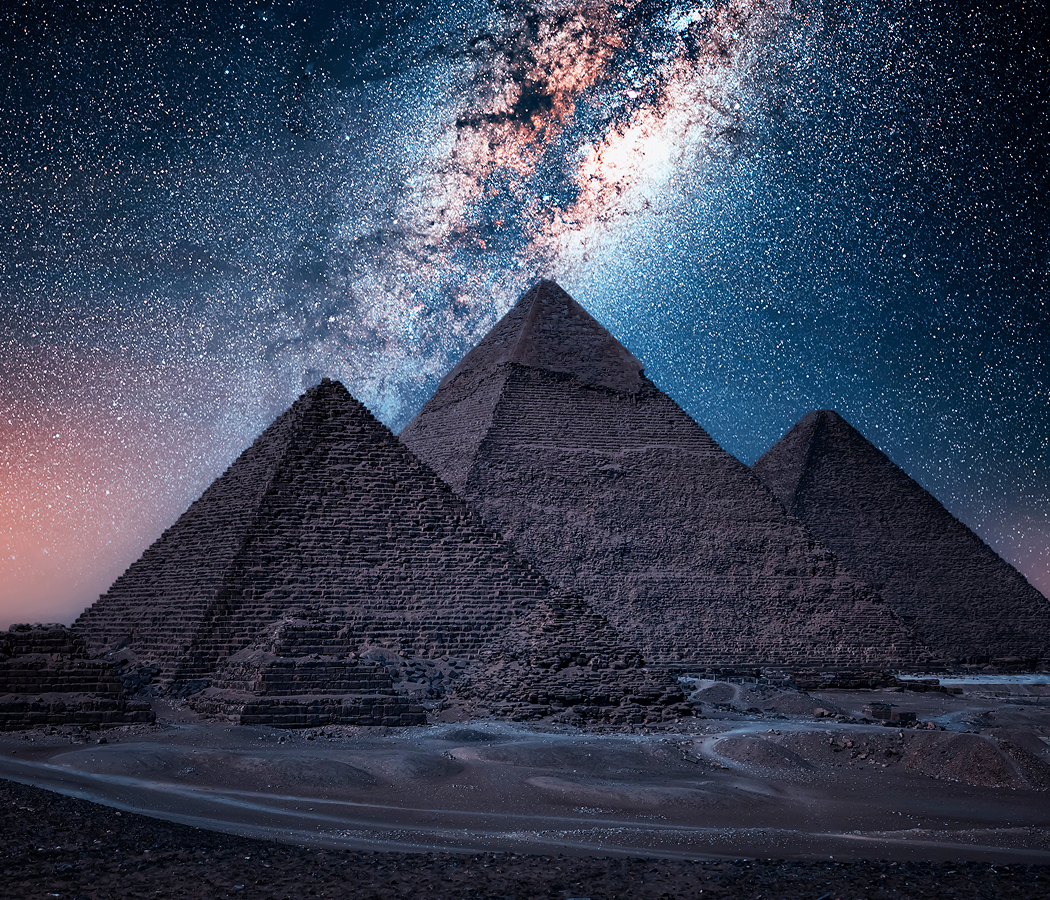
Begin at Great Pyramid of Giza, the colossal royal tomb constructed for Pharaoh Khufu during Egypt's Fourth Dynasty 2560 BCE. The pyramid originally rose 146.6 meters, making it the tallest human-made structure in the world for thousands of years. Its construction involved 2.3 million stone blocks, with the principal limestone core supplemented by finely finished casing stones that once formed a smooth exterior. The original entrance lies high on the northern face, connecting to an internal system of passages and chambers developed within the enormous masonry structure. The Grand Gallery rises through the pyramid's interior toward the King's Chamber, where a granite sarcophagus occupies the central burial space. The structure remains the only surviving member of the Seven Wonders of the Ancient World, preserving an architectural achievement that has shaped international understanding of ancient Egyptian civilization for centuries. Continue to Pyramid of Khafre, the royal monument constructed for Khufu's successor during the same dynasty. The pyramid stands on higher ground within the plateau, creating the visual impression of greater height despite its smaller original dimensions. Its summit preserves a substantial section of the original polished limestone casing, providing a direct indication of the exterior finish that once covered the principal pyramids. Khafre's funerary complex incorporated a mortuary temple, causeway and valley temple, establishing a ceremonial route between the elevated burial monument and the lower plateau. Massive limestone and granite blocks distinguish the surviving temple structures, demonstrating the technical capabilities of royal construction during the Old Kingdom. Conclude at Great Sphinx of Giza, the colossal limestone sculpture occupying the eastern edge of Khafre's funerary complex. Carved directly from the plateau's bedrock, the monument combines a lion's body with a human head traditionally associated with Khafre. Its 73-meter length makes it one of the largest surviving monolithic sculptures of the ancient world. The surrounding Sphinx Temple incorporates substantial stone masonry, connecting the sculpture with the ceremonial architecture of the neighboring royal complex. The monument's long history includes periods of burial beneath drifting sand, successive restoration campaigns and archaeological investigations that transformed modern understanding of its construction. The progression moves from Khufu's expansive royal tomb through Khafre's integrated funerary architecture and culminates at the colossal guardian sculpture that connects the Giza Plateau's ancient religious landscape with its enduring international significance.
Where your story begins.
Foresyte Travel reveals places that feel extraordinary long before you arrive.
Enjoy editorial crafted for luxury travelers.
Foresyte may earn a commission when you book.