Why you should experience King Kamehameha I Statue in Hawaii.
King Kamehameha I Statue in Honolulu stands as one of Hawaii's most revered landmarks, a gilded tribute to the monarch who united the islands and shaped their destiny.
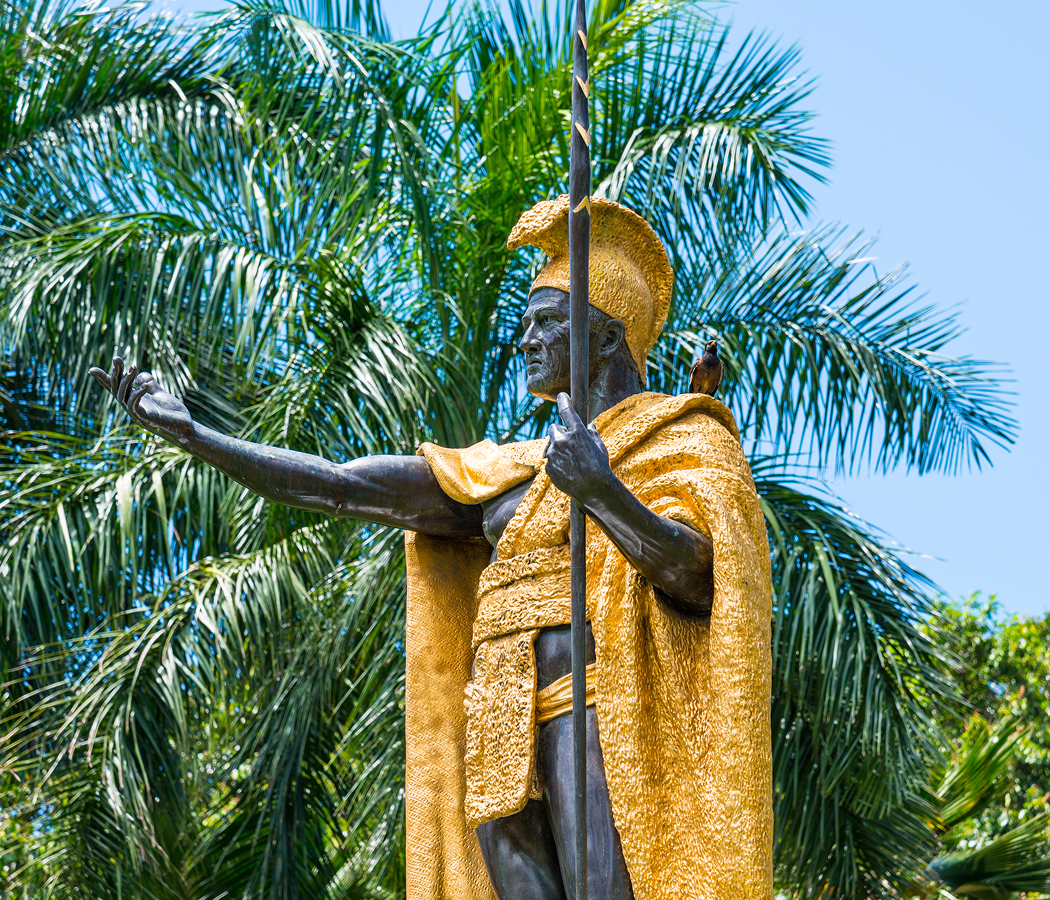
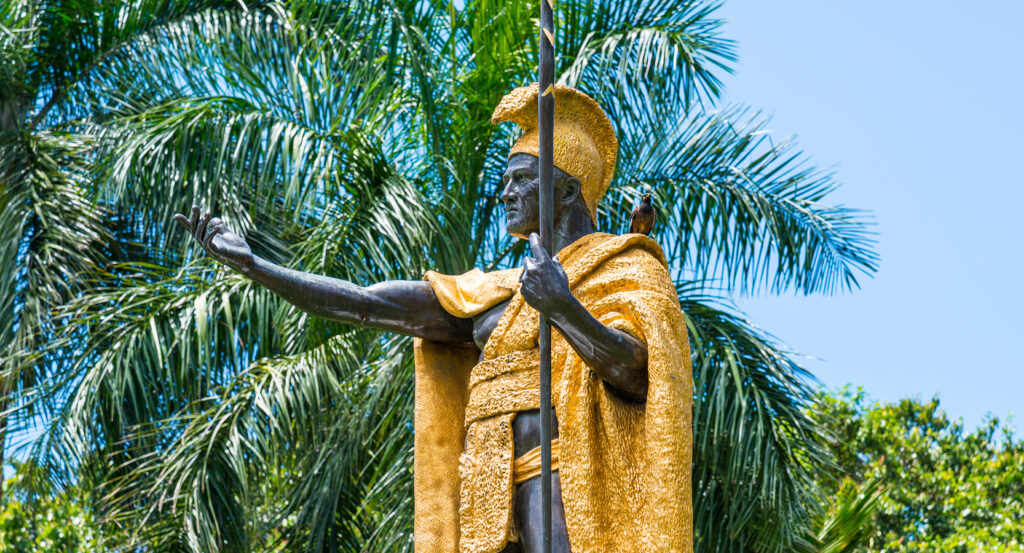
Set before Aliʻiōlani Hale, the elegant 19th-century courthouse across from the ʻIolani Palace, the statue's golden cloak gleams under the tropical sun, a symbol of courage, wisdom, and leadership. King Kamehameha I, known as Kamehameha the Great, was the warrior-king who brought the Hawaiian Islands together under one rule in 1810, forging a new era of peace and identity. His likeness, sculpted in neoclassical style, is instantly recognizable, right arm extended in welcome, spear held firmly in the other, embodying both strength and hospitality. The setting enhances the statue's grandeur: palm trees sway above the courthouse's coral façade, and the nearby palace adds regal context, framing the statue within Hawaii's historic heart. Visitors often pause in quiet awe, sensing that this isn't merely a monument, it's a bridge between worlds. To Hawaiians, the statue isn't a tourist attraction but a deeply spiritual symbol, representing the enduring mana, or divine power, of their ancestors. Whether you encounter it under the morning sun or illuminated by spotlights at night, King Kamehameha I Statue feels alive, timeless, noble, and unyielding in its watch over Honolulu.
What you should know about King Kamehameha I Statue.
The statue's history is as compelling as the man it honors, a tale of craftsmanship, loss, and ultimate triumph.
Commissioned by the Kingdom of Hawaii in 1878, the sculpture was crafted in Florence, Italy, by American artist Thomas Ridgeway Gould. The original bronze was lost at sea when the ship carrying it sank near the Falkland Islands in 1880. Undeterred, a second casting was ordered and successfully delivered to Honolulu, where it was unveiled in 1883 to coincide with King David Kalākaua's coronation celebrations. Remarkably, the original statue was later recovered from the ocean depths, restored, and now stands in Kamehameha's birthplace, North Kohala, on the Big Island. The Honolulu statue, the most famous of several replicas across the islands and even in Washington, D.C., remains the definitive version, drawing visitors and residents alike each June 11 for Kamehameha Day, a state holiday celebrating his unification of Hawaii. On that day, the statue is draped with long strands of fresh flower lei, cascading from his outstretched arm to the base, a spectacular and resonant ceremony that transforms the plaza into a sea of color and scent. Few realize that even the smallest design details carry deep meaning: the mahiole (helmet) and kā'ei (feather cloak) were crafted to signify chiefly rank and divine lineage, while his poised stance was inspired by both Western statuary and Hawaiian posture traditions. Over the years, the statue has survived storms, vandalism, and even political change, yet its symbolism endures untouched, a golden example of Hawaii's sovereignty and spirit.
How to fold King Kamehameha I Statue into your trip.
Visiting King Kamehameha I Statue is best done with time to linger, to feel the weight of history beneath the palms.
Located in Downtown Honolulu, the statue sits directly across from ʻIolani Palace and within walking distance of other major landmarks like the Kawaiahaʻo Church and the Mission Houses Museum. Begin at the base of the statue, where interpretive plaques explain its origins and cultural significance. The best time to visit is early morning or late afternoon, when the light catches the gold leaf and casts a soft glow across Aliʻiōlani Hale's grand facade. For a deeper experience, plan the trip around Kamehameha Day in June, when the lei-draping ceremony transforms the site into a living celebration of Hawaiian pride, complete with hula performances, chants, and traditional music. Even outside of festivities, the plaza around the statue is a place of quiet reflection. You'll often see locals offering flowers or bowing their heads briefly as they pass, a gesture of respect to the great unifier of the islands. Combine your visit with a tour of ʻIolani Palace to understand the full sweep of Hawaii's royal history, from Kamehameha's unification to the monarchy's final years. As you stand before the statue, golden and resolute against the sky, you can almost feel the echoes of the past, the courage of a leader who dreamed of a united Hawaii and the legacy that continues to shape the islands today. King Kamehameha I Statue isn't just a monument, it's a living symbol of identity, strength, and the enduring spirit of aloha that defines Hawaii itself.
Where your story begins.
Foresyte Travel reveals places that feel extraordinary long before you arrive.
Experience premium editorial crafted for luxury travelers.