
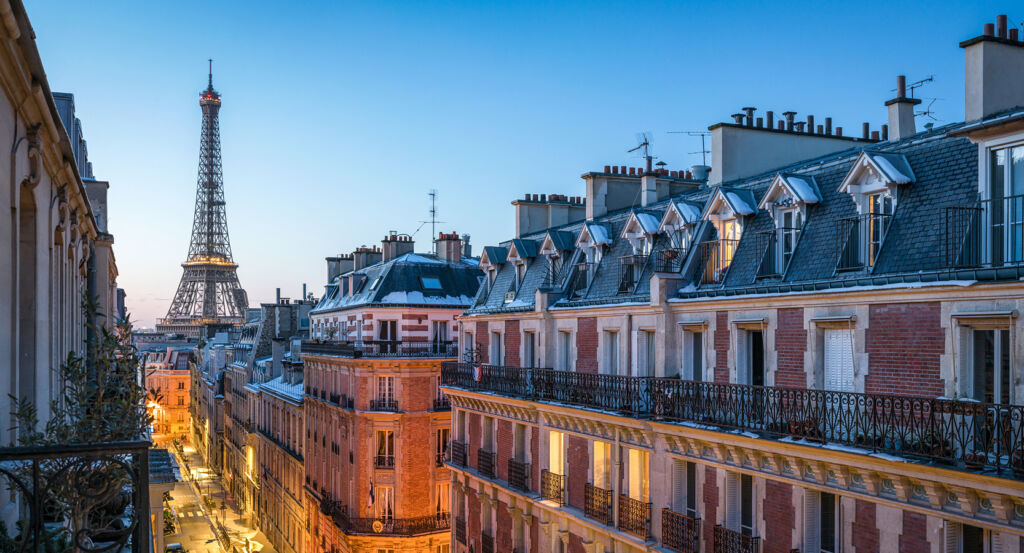
Why you should experience Le Royal Monceau Raffles Paris in Paris, France.
Le Royal Monceau Raffles Paris is a cultured palace hotel where Faubourg-du-Roule's cosmopolitan character, interwar glamour, international creative society and enduring devotion to contemporary art converge inside a 1928 grand hotel reimagined by Philippe Starck.
Set along Avenue Hoche near Rue du Faubourg Saint-Honoré and just steps from Arc de Triomphe, the hotel opened on August 1, 1928 under founders Pierre Bermond and André Junot before becoming a gathering place for artists, writers, performers, royalty and international political figures. A complete two-year renovation beginning in 2008 culminated in the hotel's 2010 reopening under Raffles, with Starck recasting the interiors around mirrored surfaces, commissioned art, acoustic guitars, bespoke furniture and the sensibility of an imagined Parisian collector. The cultural program extends through a private collection exceeding 300 works, Art District gallery, Librairie des Arts, an Art Concierge and the 99-seat Cinéma Katara, while a 1,500-square-meter wellness complex contains a 23-meter swimming pool. The result is a palace where nearly a century of international society, contemporary art, cinema, gastronomy and design remain integral parts of the same Avenue Hoche identity.
What you should know about Le Royal Monceau Raffles Paris.
Le Royal Monceau Raffles Paris is best known for opening on August 1, 1928 under Pierre Bermond and André Junot and rapidly establishing Avenue Hoche as a gathering place for an international clientele that included Josephine Baker, Walt Disney, the Maharajahs of Indore and Kashmir, King Farouk of Egypt and the Aga Khan. The hotel later became connected with major twentieth-century political history, hosting Ho Chi Minh for seven weeks around the 1946 Fontainebleau Conference and serving in 1948 as the Paris setting where David Ben-Gurion and Golda Meir signed documentation associated with the newly created State of Israel. Raffles assumed management in 2008 before the property closed for two years of reconstruction, reopening in October 2010 after Philippe Starck developed an art-centered interior concept incorporating Murano-glass chandeliers, Philippe Hurel writing desks, acoustic guitars, extensive mirrored bathrooms and more than 300 artworks. France subsequently awarded Le Royal Monceau the Palace distinction in 2013, while the contemporary property encompasses 149 rooms and suites, including 61 suites and three Presidential Suites, alongside Art District, Librairie des Arts, an Art Concierge and Cinéma Katara. The 99-seat cinema incorporates oversized Philippe Starck leather seating and professional projection and audio infrastructure, while Raffles Spa & Wellness extends across more than 1,500 square meters around a 23-meter swimming pool.
Nobu Matsuhisa expanded the hotel's international culinary character in 2016 when Matsuhisa Paris opened as the chef's first restaurant in France, combining Japanese technique with Peruvian ingredients under a concept developed from the restaurant culture Matsuhisa established after opening his Beverly Hills namesake in 1987. Il Carpaccio provides a distinct Italian counterpoint under chefs Oliver Piras and Alessandra Del Favero, whose restaurant received a MICHELIN Star in 2022 and developed contemporary Italian cooking within a dining room covered by a shell-inspired glass conservatory. Art District extends Philippe Starck's 2010 transformation into a dedicated exhibition program, while the Art Concierge interprets both the hotel's collection of more than 300 works and Paris's wider cultural calendar, making specialist artistic guidance a formal component of Raffles hospitality. Together, Nobu Matsuhisa, Oliver Piras, Alessandra Del Favero, Philippe Starck and the Art Concierge demonstrate how Le Royal Monceau's post-2010 character operates across cuisine, collecting, cinema and design while continuing the international cultural role established at Avenue Hoche in 1928.
How to fold Le Royal Monceau Raffles Paris into your trip.
Le Royal Monceau Raffles Paris works as the anchor for an afternoon tracing private collecting, decorative refinement and twentieth-century artistic patronage through western Paris.
Begin at Musée Jacquemart-André, where banker Édouard André and painter Nélie Jacquemart assembled Italian Renaissance paintings, eighteenth-century French furniture and works by Rembrandt, Botticelli, Fragonard and Boucher inside the residence architect Henri Parent designed for André during the Second Empire. Continue to Musée Nissim de Camondo, where banker and collector Moïse de Camondo commissioned René Sergent in 1911 to create a residence inspired by the Petit Trianon for his collection of eighteenth-century French furniture, tapestries, porcelain and decorative arts, later bequeathing the house and collection in memory of his son Nissim. Conclude at Musée d'Art Moderne de Paris, whose collections occupy the eastern wing of Palais de Tokyo, constructed for the 1937 Exposition Internationale and now encompass major twentieth-century work spanning Fauvism, Cubism, the École de Paris and successive postwar movements. The progression moves from nineteenth-century private collecting through an intensely personal decorative-arts collection into modern Parisian art, establishing a cultural arc that closely mirrors Le Royal Monceau Raffles Paris's own synthesis of collecting, design and artistic patronage.
Where your story begins.
Foresyte Travel reveals places that feel extraordinary long before you arrive.
Experience premium editorial crafted for luxury travelers.














































































































