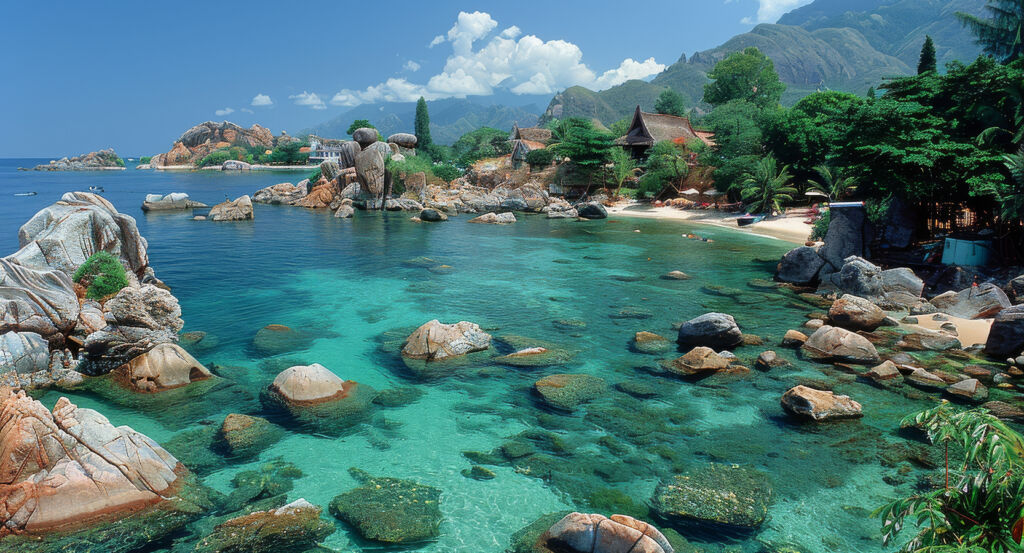
Why you should experience Le Zahir Nosy Iranja in Nosy Iranja, Madagascar.
Le Zahir Nosy Iranja is where the world feels im cinematic, where a shimmering white sandbank unfurls like a ribbon between two islands, where the water glows in shades so electric they don't seem real, and where the rhythm of life slows until your entire being syncs with the pulse of the ocean. Set on the renowned dual-island paradise of Nosy Iranja, known as The Island of Turtles - Le Zahir Nosy Iranja captures the essence of a place often called the most beautiful destination in all of Madagascar. This is not simply a hotel. It is a dream carved into bright white sand, wrapped in turquoise water, and softened by the warm, fragrant air drifting across the Mozambique Channel.
From the moment your boat approaches the island, Nosy Iranja reveals its magic: a long curve of blinding-white sand connecting a small untouched islet to the main island, surrounded by water so im clear you can see ripples in the sand beneath the surface. The sandbank appears and disappears with the tides, creating a living masterpiece that shifts every few hours. And rising along the shoreline of this paradise is Le Zahir Nosy Iranja, a collection of charming beachside bungalows crafted in natural Malagasy materials, framed by palms, and set just steps from the water. The bungalows feel like something from a castaway dream, wooden structures with high thatched roofs, soft mosquito-netted beds, wide verandas catching ocean breeze, handcrafted details, and an atmosphere so peaceful and open that you feel part of the landscape. Light streams through woven bamboo walls. The air smells like warm sand, driftwood, and salt. And outside your door, the sound of the ocean becomes your constant companion. The property is set along one of the most extraordinary beaches on Earth. The sand is pure white and powder-soft, glowing almost neon under midday sun. The water shifts in gradients, translucent jade near the shore, bright turquoise farther out, and deep sapphire at the reef's edge. Because Nosy Iranja is protected by coral systems, the water is warm, gentle, and glassy. You can wade for long distances, floating effortlessly in the shallows as the sand warms beneath your feet. The sandbank itself is the island's beating heart. Walk along it at low tide, with water shimmering on both sides, creating the illusion of walking on a path suspended in the sea. Sit on the sand as small waves curl around you. Watch the tide pull the sandbank into soft new shapes as the hours pass. Every moment feels surreal, like stepping into a living postcard. Dining at Le Zahir Nosy Iranja is part of the island's charm. The restaurant sits just meters from the shore, open-air, breezy, and carried by the sound of waves. Meals focus on fresh, local ingredients: seafood pulled directly from surrounding waters, coconut-rich curries, zebu skewers infused with island spices, grilled lobster, bright salads, seasonal vegetables, tropical fruit, and desserts kissed with Madagascar vanilla. Everything tastes animated and sun-sweetened, shaped by the rhythms of the island. The bar brings casual island pleasure to life, cocktails, fresh juices, rum punches, and cool drinks enjoyed with your feet buried in the sand and the ocean glowing before you. Afternoons at Le Zahir Nosy Iranja are soft and luminous. Sunlight turns liquid-gold across the sand. Breeze moves gently between palm fronds. The ocean becomes a warm, shimmering mirror of sky.
What you did not know about Le Zahir Nosy Iranja.
Le Zahir Nosy Iranja sits on one of the most geologically, ecologically, and culturally remarkable islands in the Indian Ocean, a place shaped by rare marine ecosystems, ancient volcanic origins, tidal choreography, and enduring Malagasy tradition.
Nosy Iranja's iconic sandbank, the “tongue of sand” that connects two islands, exists because of a rare combination of coral growth, tidal flow, and sediment movement. The smaller island is a former volcanic structure, its basaltic foundation weathered into rich mineral deposits over millions of years. These minerals support vegetation along the island's slopes, influencing groundwater and contributing to the stability of the sandbank. The sand itself is biogenic, composed of crushed coral, shell fragments, and microscopic organisms that create its blinding brightness. Parrotfish play a major role in producing this sand, grazing on coral and excreting fine particles that eventually wash onto the shore. The coral reef surrounding Nosy Iranja is part of a vital marine ecosystem in the Mozambique Channel. These reefs, among the most biodiverse in the Indian Ocean, create natural barriers that shape the calm lagoon. They host countless species: butterflyfish, surgeonfish, angelfish, wrasses, parrotfish, rays, octopus, and sea turtles that nest on the island's beaches. The water's intense color comes from sunlight refracting through shallow depths over pale coral sand. The clarity is enhanced by minimal river runoff and consistent tidal flushing, a natural filtration system. Nosy Iranja is one of Madagascar's most important turtle nesting sites. Both green and hawksbill turtles return seasonally to lay eggs in the warm sand. The island's isolation provides protection, and local conservation efforts help safeguard hatchlings. The forest behind Le Zahir Nosy Iranja hosts unique wildlife. Fruit bats, sunbirds, white-eyes, chameleons, and geckos move through the vegetation. Certain medicinal and aromatic plants, including ravintsara, ylang-ylang, and endemic shrubs, grow naturally here, shaped by the island's volcanic soil. The tidal choreography that creates the sandbank is among the most fascinating natural phenomena in the region. Twice daily, water recedes to reveal the shimmering path connecting the two islands. This happens because of the bay's unique curvature, coral reef placement, and sediment flow. During rising tide, the sandbank disappears in soft waves, leaving only the highest portions visible. This cycle has governed local life for generations. Culturally, Nosy Iranja holds profound significance among Sakalava communities. The island's lighthouse, designed by Gustave Eiffel, stands as a symbol of Madagascar's maritime history. Local villagers have long used the island for fishing, ritual gatherings, turtle ceremonies, and seasonal navigational routes. The wooden pirogues seen near the shore follow fishing patterns passed down through ancestral teaching. Traditional taboos (fady) govern how certain areas of the island can be used, especially during turtle nesting months. Le Zahir Nosy Iranja is built with respect for this sacred landscape. It uses natural materials, low-impact structures, and ecological practices that protect the shoreline, vegetation, and surrounding reefs. It sits lightly on one of Madagascar's most precious natural wonders, participating in its magic.
How to fold Le Zahir Nosy Iranja into your trip.
Le Zahir Nosy Iranja becomes your luminous island escape, a place where mornings open with shimmering light, days move in warm turquoise rhythm, and evenings melt into quiet tropical glow as the sandbank glitters beneath fading sky.
Start the morning with coffee on your veranda as sunrise paints the island in soft gold. Watch the tide shift across the sandbank. Listen to the ocean whisper along the shore. Feel warm breeze drift across your skin. Then head to breakfast, tropical fruit, fresh pastries, Madagascar honey, eggs, grilled specialties, and vanilla-scented delights served in open-air beauty facing the sea. After breakfast, step directly onto the beach. Walk the sandbank at low tide, with water glowing on both sides and the sea stretching endlessly beyond. Swim in warm, glassy shallows. Paddleboard along the coastline. Snorkel above coral gardens alive with color and movement. Float on your back beneath enormous blue sky. Let the island's rhythm slip into your bones. Late morning invites exploration. Visit the lighthouse for panoramic views of the archipelago. Wander the village, where artisans carve wooden pirogue miniatures and weave baskets. Learn about turtle conservation. Take a boat to the outer reef for deeper snorkeling or diving. Or simply stay on the beach, where doing nothing becomes its own kind of magic. Return to Le Zahir Nosy Iranja for lunch, grilled langoustines, fresh fish in coconut curry, zebu brochettes, tropical salads, warm bread, and desserts infused with Madagascar vanilla. The ocean breeze makes every bite taste brighter. Then sink into the softness of the afternoon. Nap in the shade of a palm. Swim again in warm water. Walk the shoreline as tides shift slowly outward. Read on your terrace while the breeze moves gently across the pages. Let sunlight settle into your skin. As late afternoon arrives, the world transforms. The sandbank glows in soft rose. The ocean deepens into luminous turquoise. Breeze becomes warm velvet. Sit on the beach with a cool drink and watch fishing boats return in silhouette. Then comes sunset, among the most breathtaking anywhere in Madagascar. Gold. Pink. Coral. Lavender. Deep indigo. The sky becomes a moving canvas. Lanterns glow across the property. Dinner unfolds in candlelit calm, fresh seafood, island spices, French-Malagasy creativity, and the warmth of coastal night. After dinner, walk the quiet beach beneath a sky scattered with stars. Listen to waves folding gently into the shore. Feel the soft, fragrant air wrapping around you. End your day in deep, restorative island peace. Le Zahir Nosy Iranja becomes not just where you stay, but the glowing, ocean-held heart of your entire Madagascar journey.
Where your story begins.
Foresyte Travel reveals places that feel extraordinary long before you arrive.
Experience premium editorial crafted for luxury travelers.