
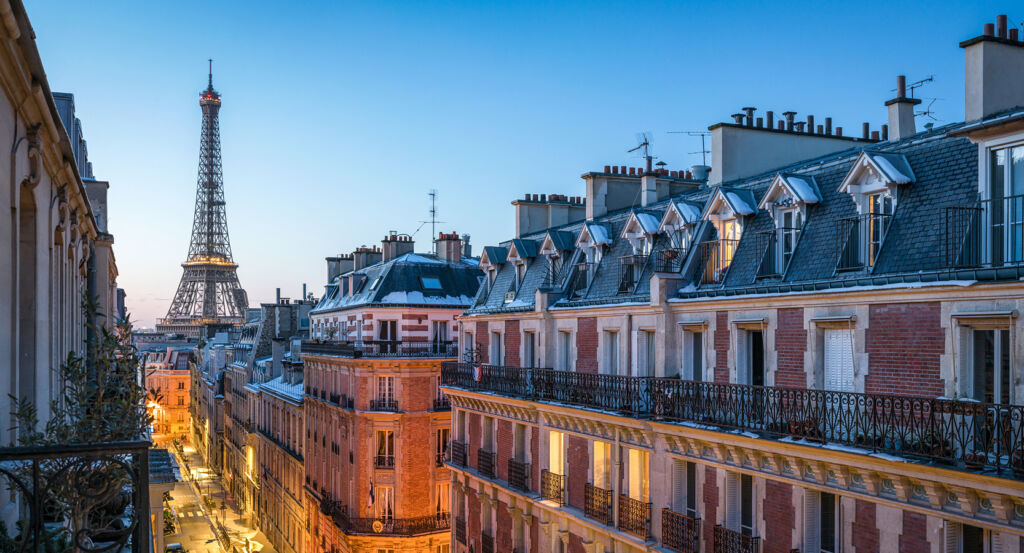
Why you should experience Maison Astor Paris, Curio Collection in Paris, France.
Maison Astor Paris, Curio Collection is a storied luxury hotel where Madeleine's polished character, transatlantic social history, fashion-house refinement and enduring culture of private Parisian hospitality converge through the legacy of American hotelier John Jacob Astor IV.
Set along Rue d'Astorg near Rue de la Ville-l'Évêque and just steps from Église de la Madeleine, the hotel occupies the Parisian residence Astor established in 1907, five years before his death aboard Titanic connected the property with one of the defining transatlantic stories of the early twentieth century. The contemporary hotel preserves that New York-to-Paris character across 131 rooms and suites on seven floors, pairing French residential references with a hospitality narrative rooted in the Astor family's influence on Gilded Age society. Upper accommodations include terrace suites overlooking Paris and a 40-square-meter Rooftop Suite dressed in Hermès fabrics with panoramic views stretching from Montmartre to the Eiffel Tower. The result is a hotel where American hospitality history, Parisian residential elegance and the Astor family's remarkable cultural legacy remain intertwined more than a century after the house opened.
What you should know about Maison Astor Paris.
Maison Astor Paris, Curio Collection is best known for being founded in 1907 by John Jacob Astor IV, the American financier, inventor and hotelier born into the Astor dynasty who helped develop New York's original Waldorf-Astoria and later built the St. Regis New York before establishing this Parisian house at 11 Rue d'Astorg. Astor's French property became part of a hospitality legacy already inseparable from the transformation of luxury hotels in Gilded Age New York, while his personal story acquired lasting historical significance when he died on April 15, 1912 during the sinking of Titanic after helping his pregnant wife Madeleine Astor into Lifeboat 4. More than a century later, the Paris property operates within Hilton's Curio Collection with 131 rooms distributed across seven floors, preserving Astor as the central narrative of the hotel rather than treating his name as a decorative reference. Accommodation extends from compact nine-square-meter single rooms through duplex and terrace suites to a 40-square-meter Rooftop Suite for four people, where Hermès fabrics accompany a private living room, king bed, bathtub and broad terrace overlooking the Paris skyline. Current hospitality spaces continue the same transatlantic premise through La Salle à Manger and Le Club, connecting the building's 1907 origins with the social rituals associated with one of America's most consequential hospitality families.
Caroline Schermerhorn Astor provides the social foundation for that contemporary dining narrative through the celebrated New York circle known as “The 400,” whose dinners and receptions established her as a dominant arbiter of Gilded Age society and whose legacy Hilton explicitly references inside La Salle à Manger. Chef Bruno Felici develops the Paris-New York connection through bistronomic cooking beneath the restaurant's glass roof, combining French technique with international influences and emphasizing local, seasonal ingredients across the current culinary program. Hermès carries the Franco-American story into the hotel's highest accommodation through fabrics created by the Paris house for the Rooftop Suite, whose terrace frames a panorama extending between Montmartre and the Eiffel Tower. Together, Caroline Astor, Bruno Felici, Hermès and Curio Collection by Hilton extend John Jacob Astor IV's 1907 foundation through social history, contemporary gastronomy, French craftsmanship and modern hospitality, allowing the founder's transatlantic character to remain the organizing narrative of Maison Astor Paris.
How to fold Maison Astor Paris into your trip.
Maison Astor Paris, Curio Collection works as the anchor for an afternoon tracing private collecting, decorative refinement and Belle Époque cultural ambition across the western Right Bank.
Begin at Musée Jacquemart-André, where banker Édouard André and painter Nélie Jacquemart assembled Italian Renaissance paintings, eighteenth-century French decorative arts and works by artists including Rembrandt inside the residence Henri Parent designed for André during the Second Empire. Continue to Musée Cernuschi, established from financier and collector Henri Cernuschi's Asian art collection inside the mansion William Bouwens van der Boijen designed beside Parc Monceau, extending the afternoon through another private collection transformed into a Paris museum. Conclude at Palais Garnier, Charles Garnier's opulent opera house inaugurated in 1875 after fourteen years of construction, where sculpture, painting, marble, gilding and Marc Chagall's later ceiling composition reveal successive generations of French artistic patronage. The progression moves from two intensely personal collecting traditions into the grand theatrical culture of nineteenth-century Paris, creating an arc of wealth, connoisseurship and cultural ambition that gives Maison Astor Paris, Curio Collection's own Gilded Age history deeper context.
Where your story begins.
Foresyte Travel reveals places that feel extraordinary long before you arrive.
Experience premium editorial crafted for luxury travelers.














































































































