
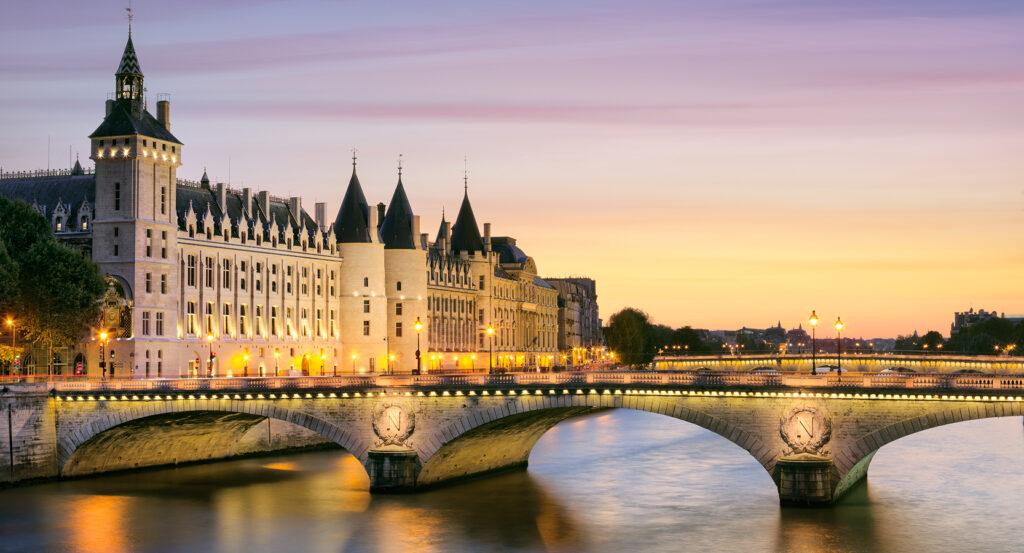
Why you should experience Marie Antoinette Chapel in Paris, France.
The Marie Antoinette Chapel is not merely a memorial, it's a requiem carved in stone, an intimate sanctuary that captures the fragility of power and the enduring dignity of loss.
Tucked within the Conciergerie, this small but profoundly moving chapel stands on the site of the queen's prison cell, where she spent her final days before the guillotine. The light here feels almost deliberate, dim yet tender, falling across marble altars and gilded moldings as though reluctant to disturb the silence. The walls are adorned with neoclassical flourishes, but beneath the elegance lies a palpable sorrow, a sense that even beauty must kneel before fate. You can almost feel her presence, the tremor of prayer, the rustle of silk turned coarse by captivity. The air itself seems to carry her final words, her forgiveness, her resignation. This is not the Marie Antoinette of legend or caricature, but a woman reduced to her most human form, mother, mourner, and monarch unmade.
What you should know about Marie Antoinette Chapel.
What many visitors don't realize is that the chapel's creation was as much a political act as it was an act of remembrance.
Commissioned during the Bourbon Restoration in the early 19th century, it served to rehabilitate the monarchy's image and sanctify its martyrs. Every inch of ornamentation was chosen with intention: the white marble symbolizing purity, the crucifix echoing redemption, and the black-and-gold railings evoking both mourning and majesty. But beneath this royal sentimentality lies an unsettling tension, the fact that this sanctified space was once a place of despair, its transformation into a shrine part of France's attempt to reconcile with its fractured past. The very notion of consecrating a prison cell into a chapel reflects the nation's paradoxical dance with guilt and glory. Even the queen's monogram, delicately etched into the decor, becomes an emblem not of vanity but of vulnerability, a signature of suffering turned sacred.
How to fold Marie Antoinette Chapel into your trip.
To weave the Marie Antoinette Chapel into your Paris experience, visit it immediately after exploring the Salle des Gens d'Armes, their proximity creates a chilling continuity.
Walk from the echoing vastness of the guard hall into the quiet confinement of the chapel, and you'll feel the compression of power into pathos. The shift in scale mirrors the queen's own descent, from Versailles' opulence to this cloistered solitude. Take your time inside; let your eyes trace the details, the altar's subtle carvings, the faded portraits, the votive candles trembling in the dim air. When you emerge back into daylight, cross to the Seine and walk toward the Pont Saint-Michel, allowing the hum of the city to slowly reclaim you. Later, over wine at a Left Bank bistro, reflect on how Paris holds space for contradiction, reverence and rebellion, grief and grace, all within a few quiet meters of each other. The chapel endures as both apology and poem, a reminder that even in the city of light, shadows are what give the glow its meaning.
Where your story begins.
Foresyte Travel reveals places that feel extraordinary long before you arrive.
Experience premium editorial crafted for luxury travelers.














































































































