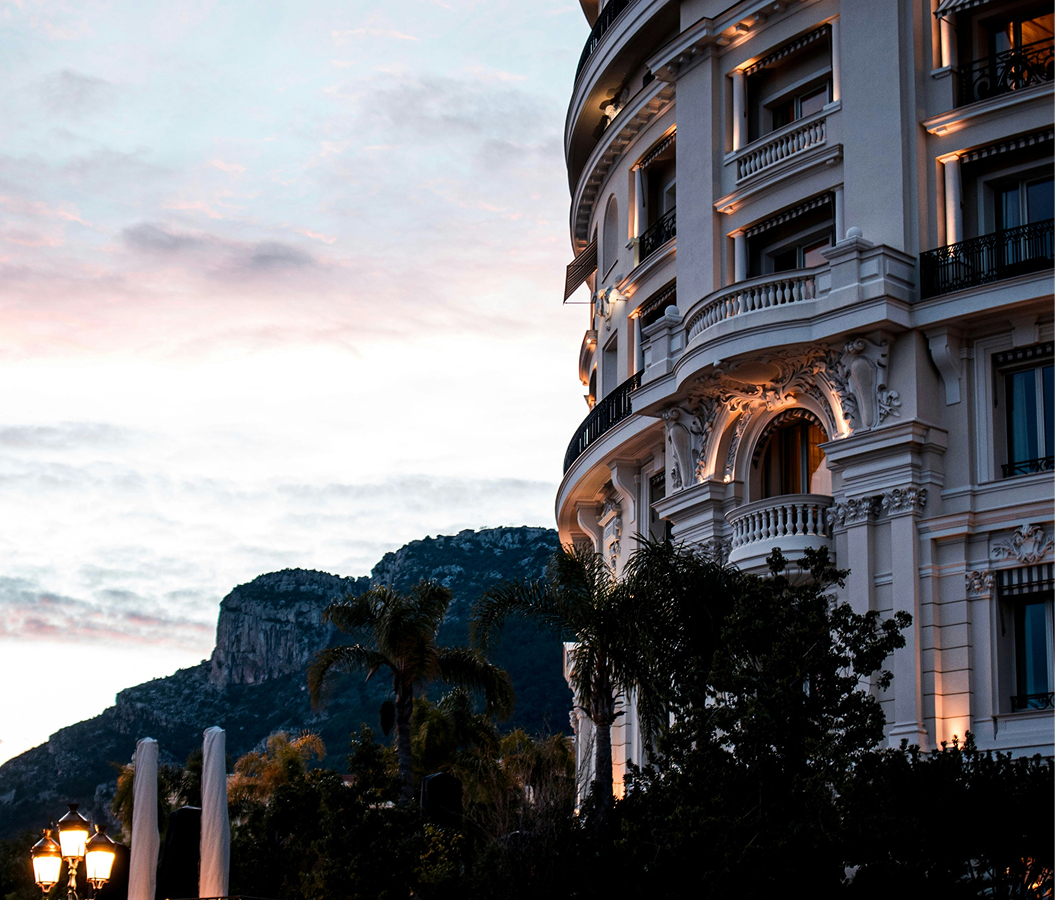
Why Museo Civico di Storia Naturale matters.
Museo Civico di Storia Naturale is a storied scientific institution where Porta Venezia's Enlightenment culture, nineteenth-century collecting, evolutionary discovery and the reconstruction of natural worlds converge inside Italy's earliest purpose-built natural history museum.
Set along Corso Venezia near Via Palestro and just steps from Giardini Indro Montanelli, the museum occupies Milan's first public garden, where Giuseppe Piermarini transformed former monastic ground into an Enlightenment landscape before Giuseppe Balzaretto and Emilio Alemagna expanded it into the setting for the city's emerging scientific institutions. Giovanni Ceruti's terracotta-clad building surrounds its collections with a late nineteenth-century architectural vision shaped by the great natural history museums then rising in London and Vienna, giving scientific display a grand civic presence. Fossils, minerals, taxidermy and reconstructed habitats carry the experience from deep geological time through living ecosystems, with entire rooms changing scale from individual specimens to immersive environmental scenes. The result is a scientific institution where nearly two centuries of Milanese collecting and research become a physical journey through the history and diversity of life.
What defines Museo Civico di Storia Naturale.
Museo Civico di Storia Naturale is best known for beginning in 1838 with the intertwined collections of Giuseppe De Cristoforis and Giorgio Jan, two naturalists whose partnership converted private collecting into Milan's first civic museum. De Cristoforis, a wealthy Milanese fascinated by mineralogy and entomology, met Jan in 1828, and the pair united their collections in 1831 before Jan's fossils, minerals, plants and animals were transferred from Parma to De Cristoforis's Milan home. De Cristoforis died at 34 in 1837 after having willed the collection to Milan, and Jan became the institution's first director the following year, remaining in that position until 1866. The collection expanded rapidly: Milan absorbed the former Royal Museum of Natural History in 1847, transferred the institution to Palazzo Dugnani in 1863 and accepted Ercole Turati's immense ornithological collection in 1884 after his heirs offered its principal portion to the city. Turati had assembled birds through international dealers, purchased entire specialist collections and financed naturalists including Luigi D'Albertis and Odoardo Beccari, whose expeditions supplied birds of paradise from New Guinea. Antonio Stoppani became director in 1882 after years spent expanding its paleontological holdings and emerged as a leading advocate for a larger permanent home, leaving his own geological and fossil collections to the institution. Giovanni Ceruti subsequently designed the Corso Venezia building, constructed from 1888 into the 1890s and completed in 1907 as the first Italian museum architecture conceived specifically for natural history. De Cristoforis's bequest, Jan's scientific leadership, Turati's global ornithology and Stoppani's paleontology transformed a private collection into an institution large enough to demand an entirely new architectural type.
Catastrophe forced that institution to build itself almost a second time. An air raid in 1943 devastated half the Corso Venezia building, and the ensuing fire consumed substantial portions of collections assembled across the previous century, including much of Jan's historic herpetological holdings. Exceptional survivals included Gian Battista Brocchi's fossil mollusks and part of Stoppani's paleontological collection, and later investigation even recovered nineteenth-century amphibian specimens associated with Jan that had long been presumed lost. Milanese physician Vittorio Ronchetti's financial bequest became crucial to the rebuilding, with the first galleries reopening in 1952 before reconstruction of the facade concluded in 1956. A new museographic chapter emerged during the later twentieth century through habitat dioramas, eventually producing a sequence of 83 major environments whose final six, devoted to tropical forests in the Sunda Islands, New Guinea and Central Africa, were completed in 2017. Scientific work continued alongside reconstruction: the museum's collections grew to 4.4 million specimens, including 120,000 fossils, and research on the Besano-Monte San Giorgio deposits contributed exceptional Triassic specimens to Milanese paleontology. That tradition remained active in 2025 when a museum-led team began investigating thousands of dinosaur footprints extending for almost five kilometers through Valle di Fraele in the Stelvio National Park, among the richest Triassic track sites yet identified. Destruction, reconstruction, the 83-diorama program and continuing field discovery turned the museum's twentieth and twenty-first centuries into an extension of the scientific enterprise begun by De Cristoforis and Jan.
How Museo Civico di Storia Naturale fits.
Museo Civico di Storia Naturale works as the anchor for a daytime progression through Milan's first public garden, an eighteenth-century aristocratic palace that became the museum's former home and a Portaluppi planetarium that extended the district's scientific ambitions from terrestrial nature into astronomy.
Begin at Giardini Indro Montanelli, created between 1782 and 1786 after Habsburg suppression of the San Dionigi and Carcanine monasteries released ground for Giuseppe Piermarini to design Milan's first public garden. His geometric French scheme gave way to Giuseppe Balzaretto's 1857 to 1862 expansion, which absorbed Palazzo Dugnani and introduced wooded clearings, artificial rocks, streams and a lake before Emilio Alemagna reshaped portions of the park after the major exhibitions of 1871 and 1881. Continue to Palazzo Dugnani, where Count Giovanni Vimercati assembled a natural history collection before donating the palace and his holdings to Milan in 1846, preparing the building for its new role when the civic museum moved there in 1863. The grand salon preserves Giambattista Tiepolo's mythological frescoes above an iron balustrade, placing eighteenth-century aristocratic decoration inside the building that housed Milanese natural science for three decades. Conclude at Planetario Ulrico Hoepli, commissioned and donated to Milan in 1929 by the Swiss-Italian publisher Ulrico Hoepli and designed by Piero Portaluppi as a Neoclassical octagonal building beneath a hemispherical dome. The institution opened in May 1930 with a German Zeiss star projector beneath a 20-meter dome, and its original Model II was replaced by a Zeiss Model IV in 1968 as astronomical projection entered another technological generation. The progression moves from Piermarini creating a public Enlightenment landscape through Palazzo Dugnani turning aristocratic collecting into civic science into Hoepli and Portaluppi extending that scientific district toward the simulated heavens, revealing how the territory surrounding Museo Civico di Storia Naturale evolved into one of the city's most concentrated environments for public knowledge.
Where your story begins.
Foresyte Travel reveals places that feel extraordinary long before you arrive.
Enjoy editorial crafted for luxury travelers.
Foresyte may earn a commission when you book.