Why Mismaloya Beach matters.
Mismaloya Beach is a cinematic coastal cove where Mismaloya's forested Sierra Madre foothills meet the sheltered waters of Banderas Bay, the fishing traditions of southern Jalisco and the film production that brought Puerto Vallarta to international prominence.
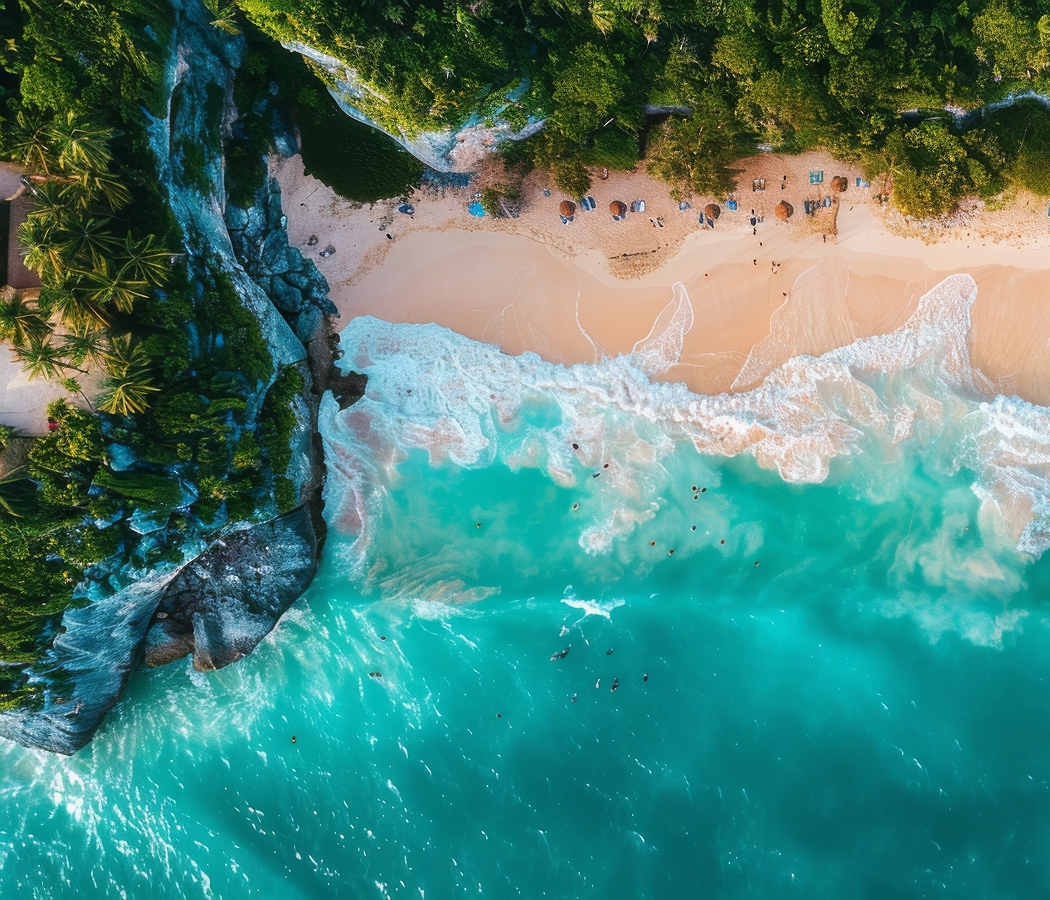
Situated south of Puerto Vallarta along Federal Highway 200, the crescent-shaped beach occupies a narrow inlet at the mouth of the Río Mismaloya, with steep tropical hills enclosing its eastern and western approaches and the open waters of Banderas Bay extending toward the northwest. Golden sand curves between rocky headlands, creating a compact shoreline bordered by fishing boats, beachfront restaurants and vegetation descending toward the water. The surrounding slopes contain exposed rock faces, palms and dense seasonal forest, establishing a striking transition between the mountainous interior and the Pacific coast. A bridge and descending access road connect the beach with the highway and adjoining village, concentrating development along the river mouth and narrow coastal plain. The result is a sheltered maritime setting whose natural enclosure, traditional fishing activity and association with a consequential chapter of Hollywood history distinguish Mismaloya within the southern reaches of Banderas Bay.
What defines Mismaloya Beach.
Mismaloya Beach is best known for its association with John Huston's 1964 film The Night of the Iguana, whose production helped introduce Puerto Vallarta and the surrounding coast to international audiences. The area formed part of a sparsely populated coastal region where fishing communities depended upon marine resources and small-scale trade across Banderas Bay. Its steep terrain limited overland connections, making boats essential for transportation between settlements along the southern shoreline. During the early 1960s, Hollywood director John Huston selected the Mismaloya coastline as the principal filming location for his adaptation of Tennessee Williams's 1961 play. The production brought Richard Burton, Ava Gardner, Deborah Kerr and Sue Lyon to the region, assembling an internationally prominent cast in a comparatively isolated Mexican setting. Huston commissioned a purpose-built film set on the rocky headland overlooking the cove, adapting the dramatic coastal terrain to the story's fictional Mexican hotel. Construction required the transportation of equipment, materials and personnel into an area with limited infrastructure. Filming began in 1963 under difficult tropical conditions, with the production's remote location presenting substantial logistical challenges. Burton's relationship with Elizabeth Taylor, who accompanied him during filming, attracted extensive international press attention and intensified public interest in the production. Taylor and Burton subsequently acquired neighboring houses in Puerto Vallarta, strengthening the city's association with Hollywood and international celebrity. The film premiered in 1964 and earned four Academy Award nominations, winning for costume design in a black-and-white production. Its international exposure contributed to Puerto Vallarta's growing reputation as a coastal destination, encouraging investment in accommodations, transportation and recreational infrastructure. Mismaloya became closely associated with this transformation as travelers sought the landscapes connected with Huston's film. The completion of the coastal highway improved access to the village and surrounding beaches, supporting the expansion of tourism beyond Central Puerto Vallarta. Resort development subsequently introduced larger hospitality properties along the adjoining hillsides, establishing a commercial presence alongside the original fishing settlement. The beach retained its association with the film and its importance as a coastal departure point, preserving a direct connection between the region's maritime traditions and its modern tourism economy.
How Mismaloya Beach fits.
Mismaloya Beach works as the historical and coastal anchor for a southern Puerto Vallarta outing connecting the region's protected marine habitats, tropical mountain forests and traditional settlements along the shoreline of Banderas Bay.
Begin at Los Arcos Marine Park, the protected marine area surrounding a group of rocky islands and sea stacks rising offshore between Mismaloya and Puerto Vallarta. The formations consist of weathered rock masses shaped by prolonged marine erosion, with natural arches and steep cliffs providing nesting and resting habitats for seabirds. The surrounding waters support tropical fish, marine invertebrates and other species associated with rocky reef environments. Snorkeling and diving excursions explore submerged formations, where variations in depth create distinct marine habitats. The islands' exposed surfaces provide important sites for pelicans, cormorants and other coastal birds, contributing to the ecological significance of the protected area. Continue to Vallarta Botanical Gardens, the botanical institution established in 2004 within the Sierra Madre Occidental foothills south of Puerto Vallarta. Founded by Robert Price and opened to the public in 2005, the garden focuses on conserving native Mexican plants through cultivated collections, specialized horticultural facilities and educational programs. Its orchid conservatory supports the cultivation of species associated with Mexico's diverse tropical and mountainous environments. Landscaped terraces and forest trails connect botanical displays with naturally vegetated hillsides, providing opportunities to observe native trees, flowering plants and regional wildlife. The surrounding Río Horcones valley establishes a distinctive mountain setting for the institution's conservation activities. Conclude at Boca de Tomatlán, the coastal village situated where the Río Horcones reaches Banderas Bay. The settlement occupies a sheltered inlet enclosed by steep forested hills, with fishing boats and water taxis operating from the narrow waterfront. Its position at the river mouth historically supported fishing and transportation between coastal communities connected by marine routes. The surrounding landscape combines tropical vegetation, rocky shoreline and freshwater habitats, creating a distinctive transition between the Sierra Madre Occidental and the Pacific Ocean. The village also serves as a departure point for coastal excursions and walking routes connecting smaller settlements along the southern bay. The progression moves from Los Arcos Marine Park's rocky marine habitats through Vallarta Botanical Gardens' tropical forest collections and culminates at Boca de Tomatlán's traditional waterfront, connecting Mismaloya Beach with the natural and maritime environments of southern Banderas Bay.
Where your story begins.
Foresyte Travel reveals places that feel extraordinary long before you arrive.
Enjoy editorial crafted for luxury travelers.