
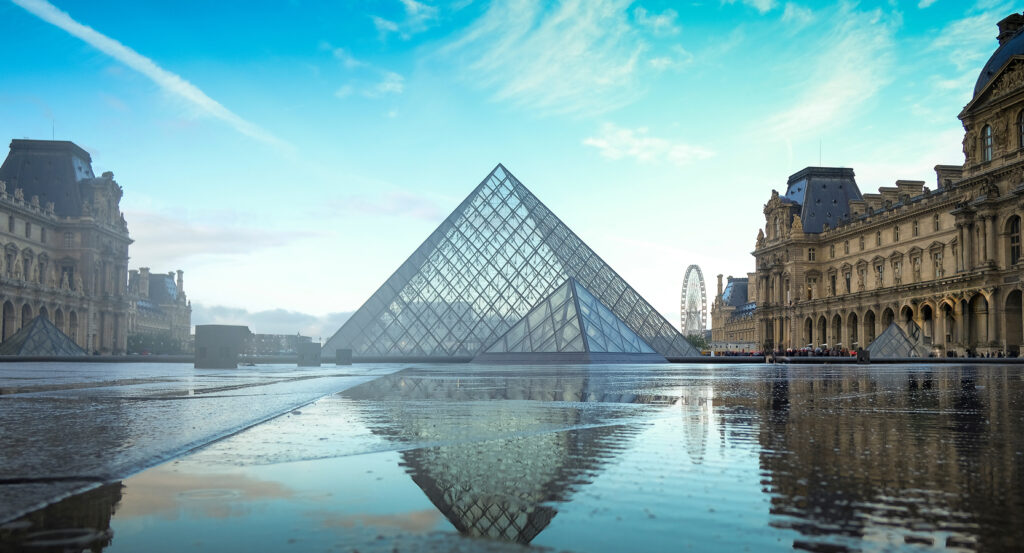
Why you should experience Mona Lisa Gallery in Paris, France.
Mona Lisa Gallery is the Louvre's most celebrated exhibition space where the Louvre's artistic legacy, Renaissance mastery, architectural grandeur, and unparalleled cultural significance showcase the world's most famous painting.
Set along Rue de Rivoli near Place du Carrousel and just steps from the Salle des États entrance, this grand gallery combines soaring historic interiors, museum-scale architectural proportions, exceptional climate-controlled conservation, masterful gallery lighting, and Leonardo da Vinci's immortal masterpiece within one of the most visited exhibition rooms on Earth. The extraordinary atmosphere reflects centuries of artistic achievement while placing visitors face-to-face with one of civilization's defining cultural treasures. The result is an experience defined by artistic excellence, museum innovation, and enduring global influence.
What you should know about Mona Lisa Gallery.
Mona Lisa Gallery is best known for housing Leonardo da Vinci's Mona Lisa inside the Louvre's Salle des États, the museum's largest exhibition hall, where the Renaissance masterpiece has been displayed since 1966 within an increasingly sophisticated conservation environment designed to accommodate millions of annual visitors while protecting one of humanity's most valuable works of art. Originally constructed between 1855 and 1857 by architects Louis Visconti and Hector Lefuel during Napoleon III's expansion of the Louvre, the Salle des États initially served ceremonial governmental functions before being transformed into a grand exhibition gallery during the twentieth century. Leonardo painted the Mona Lisa between 1503 and 1506, with refinements continuing until around 1517, before bringing the portrait to France at the invitation of King Francis I, who acquired the work following Leonardo's death in 1519. Since entering the French royal collection, the painting has survived the French Revolution, Napoleonic relocations, wartime evacuations, and its sensational 1911 theft by Vincenzo Peruggia, an event that elevated the portrait into an international cultural phenomenon. Today the painting is displayed within a purpose-built, bullet-resistant, climate-controlled glass enclosure that precisely regulates temperature, humidity, vibration, and lighting while preserving the fragile poplar wood panel. The gallery receives an estimated 20,000 to 30,000 visitors each day, making it among the most heavily visited museum spaces in the world. Opposite Leonardo's masterpiece hangs Paolo Veronese's grand The Wedding Feast at Cana, measuring 6.77 by 9.94 meters, creating an extraordinary discussion between two of the Louvre's greatest Renaissance masterpieces within a single architectural volume. Advanced visitor circulation systems, security infrastructure, environmental monitoring, and conservation technologies continue evolving to balance public access with the long-term preservation of a work valued as an irreplaceable landmark of world heritage.
The architectural experience unfolds through the Salle des États' grand nineteenth-century proportions, richly articulated ceiling, expansive wall surfaces, carefully calibrated natural and artificial illumination, and museum-grade environmental engineering that focus attention on Leonardo's remarkably intimate portrait despite the gallery's immense scale. Continuous conservation research, high-resolution imaging, multispectral analysis, and scientific examination have revealed Leonardo's sophisticated sfumato technique, subtle glazing methods, underdrawings, and compositional refinements, reinforcing the gallery's role as both a public exhibition space and one of the world's foremost centers for Renaissance art scholarship. Every element of the gallery demonstrates how architecture, conservation science, curatorial expertise, and visitor management combine to preserve one of history's most influential paintings for future generations.
How to fold Mona Lisa Gallery into your trip.
Mona Lisa Gallery works as part of an exploration through Louvre Museum's celebrated masterpieces.
Begin at the Winged Victory of Samothrace, where one of antiquity's greatest sculptural achievements introduces the museum's extraordinary collections before continuing to Mona Lisa Gallery. Continue to Venus de Milo, whose timeless Hellenistic beauty complements Leonardo's Renaissance masterpiece through one of art history's most celebrated pairings. Conclude at the Grande Galerie, where centuries of European painting provide a memorable finale celebrating one of the world's greatest museum collections. The progression moves naturally from classical antiquity to Renaissance genius before concluding with the evolution of European art, revealing why Mona Lisa Gallery remains the cultural heart of the Louvre.
Mona Lisa Gallery has always been experienced at its best through the art, neighborhoods, and people that continue to shape Paris beyond the museum's walls. Airbnb Experiences offers another way to continue that journey, connecting travelers with local hosts through art walks, Seine-side food tastings, sketching sessions, cooking classes, and other small-group experiences in the neighborhoods surrounding Louvre. That might mean exploring the 1st Arrondissement alongside a Parisian guide, sketching the city's historic streets with a local artist, or discovering the cafés and hidden corners that unfold just beyond the museum's grand galleries. These hosted experiences invite travelers to continue their Louvre visit with the same curiosity that has inspired generations of visitors, allowing Paris to reveal itself one conversation, one neighborhood, and one unforgettable moment at a time.
Where your story begins.
Foresyte Travel reveals places that feel extraordinary long before you arrive.
Experience premium editorial crafted for luxury travelers.














































































































