
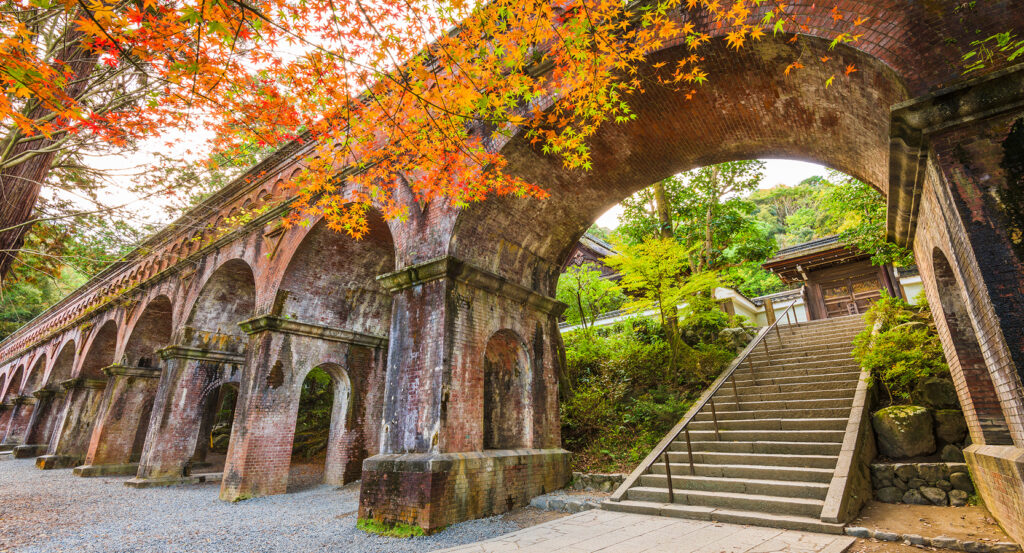
Why you should experience Nanzenji Suirokaku in Kyoto, Japan.
Nanzenji Suirokaku, or Suirokaku Aqueduct, is Kyoto's quiet paradox, a relic of modernity running through the heart of timelessness.
Its red brick arches stretch across the temple grounds like a Roman dream, their weight softened by moss, ivy, and centuries of rain. Beneath them, the murmuring of water mingles with the rustle of bamboo and the distant ring of temple bells. Standing here, you feel suspended between eras: the spiritual calm of the Zen monastery and the industrial ambition of the Meiji period. The aqueduct doesn't disturb the temple's serenity; it completes it. Its rhythm of arches echoes the cadence of meditation, structure meeting stillness, progress meeting peace. Light filters through its vaults in golden shafts, illuminating patches of green and stone like a living painting. It's one of Kyoto's most photographed places, yet in person, it feels deeply personal, a secret stitched into the fabric of the city's soul.
What you should know about Nanzenji Suirokaku.
Built in 1890 as part of the Lake Biwa Canal project, Nanzenji Suirokaku was an engineering marvel of its time.
Stretching more than ninety meters across the temple's grounds and standing over thirteen meters tall, it was designed to channel water from Lake Biwa to Kyoto, a bold symbol of modernization following centuries of isolation. Its brickwork, laid in the Western arch style, was both revolutionary and controversial; many feared it would desecrate one of Japan's most sacred Zen temples. Instead, it became a masterclass in coexistence. The monks of Nanzen-ji embraced it as an example of impermanence, proof that even foreign ideas could harmonize within Kyoto's eternal rhythm. Over time, moss crept over the bricks, ivy curled around the arches, and the structure aged gracefully into the landscape. The aqueduct remains functional to this day, carrying water that sustains the city and feeds the streams around the temple's gardens. Few visitors realize it also connects symbolically to the Philosopher's Path, whose canal traces the same flow of water down from Lake Biwa through Kyoto's spiritual heart. The aqueduct, in essence, is both infrastructure and insight, a physical reminder that enlightenment, like water, must always keep moving.
How to fold Nanzenji Suirokaku into your trip.
Nanzenji Suirokaku is best approached after wandering the inner temple grounds, a visual and resonant crescendo at the edge of the forest.
Follow the stone paths past the Hojo and Tiger Cub Garden until the red arches emerge between pines. The transition is stunning, old Japan opening into quiet modernity. Walk beneath the first arch and listen to the water rushing through its concealed channels above. The play of light beneath the brick canopy shifts with every hour, casting amber and green reflections that seem almost painted by hand. Early morning and late afternoon are the most beautiful times to visit, when the low sun ignites the bricks and the temple's shadows stretch long across the gravel. In spring, cherry blossoms frame the structure in soft pinks; in autumn, crimson leaves spill over the parapets like fire. Stand at the base of the central arch and look upward, the geometry feels infinite, the silence alive. It's easy to forget that the aqueduct is still a functioning artery of the city, quietly feeding life while offering none of the noise of progress. When you step away, follow the trail that leads into the Nanzen-in Garden nearby; it's as if the aqueduct's water transforms instantly into reflection. Few landmarks in Kyoto capture this balance, the coexistence of innovation and introspection. Here, they flow together perfectly.
Where your story begins.
Foresyte Travel reveals places that feel extraordinary long before you arrive.
Experience premium editorial crafted for luxury travelers.

















































































































