
Why The Bishop's Garden matters.
The Bishop's Garden at the Washington National Cathedral is a sanctuary within a sanctuary, a quiet, walled oasis where the spiritual grandeur of the Cathedral gives way to serene intimacy.
Tucked on the south side of the Cathedral Close, the garden feels centuries older than its early-20th-century origins. Designed by landscape architect Frederick Law Olmsted Jr., it unfolds like a living cloister, where winding stone paths, herb-scented borders, and centuries-old stones create an atmosphere of timeless peace. Roses climb along medieval-style walls; lavender and thyme scent the air; and the sound of distant bells mingles with birdsong. At the garden's center, the Cross-shaped Path and medieval stone font evoke sacred geometry, tying the earthly beauty of nature to the Cathedral's heavenly design. Benches invite contemplation beneath flowering dogwoods, while ancient stones from demolished churches across Europe are embedded into the walls, a reminder that faith, like nature, endures through renewal. Here, time slows. The chaos of Washington seems to dissolve beyond the ivy-covered walls, replaced by stillness, reflection, and the soft rustle of leaves.
What defines The Bishop's Garden.
Though it feels like an ancient monastic courtyard, the Bishop's Garden was created in 1928 as part of the Cathedral's original landscape vision, a place for reflection, education, and quiet prayer.
Olmsted Jr. modeled it after traditional English ecclesiastical gardens, using materials steeped in history. Many of the stones and sculptures within the garden are genuine relics from the medieval era, salvaged from churches, abbeys, and manors in England and France. The medieval cross, for instance, dates back to the 14th century, while the central font was carved from limestone that once formed part of a ruined monastery. The garden also includes symbolic plantings, herbs once used by monks for healing, biblical species such as myrtle and fig, and seasonal blooms that mirror the liturgical calendar. It's one of the few places in Washington where visitors can trace both horticultural and spiritual heritage in a single step. The Shadow House, a small stone pavilion near the upper terrace, offers panoramic views of the Cathedral's south façade, while the Herb Garden and Upper Perennial Borders attract butterflies and songbirds year-round.
How The Bishop's Garden fits.
When visiting the Washington National Cathedral, step into The Bishop's Garden after exploring the grandeur of the Nave, it's the perfect place to exhale.
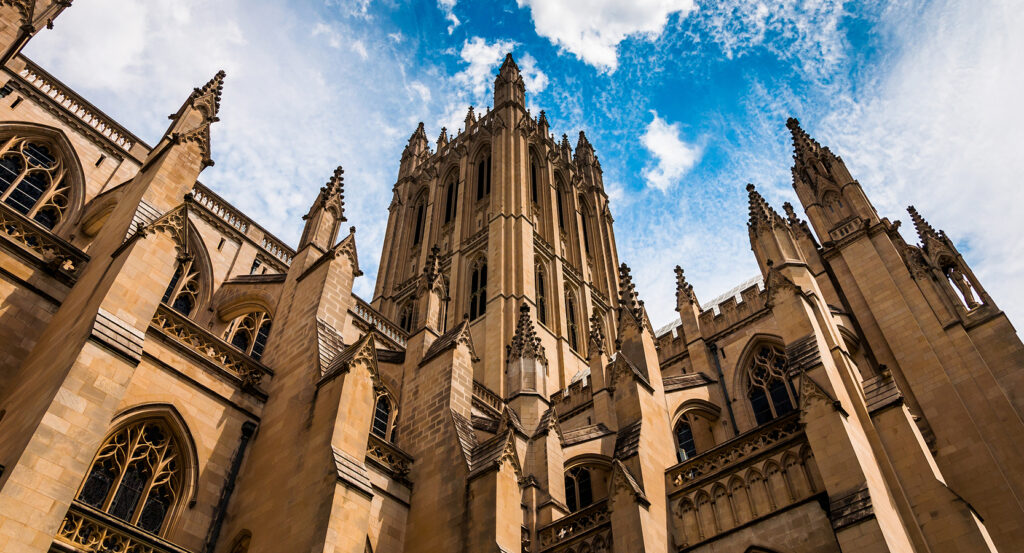
Enter through the south gate and follow the cobblestone path that descends into the walled enclosure, pausing at the medieval cross in the center before meandering along the herb-lined terraces. Take time to notice the details: the carved capitals reused from European ruins, the hand-laid stone steps, the subtle scent of rosemary and mint on the breeze. Bring a journal or simply sit beneath the Shadow House pergola, where the Cathedral towers rise above the trees like a guardian of peace. Early morning and late afternoon are the most tranquil hours, when the sun softens the stone and the birds return to nest. If visiting in spring or early summer, the garden bursts into color, a painter's palette of roses, foxgloves, and irises, while in autumn, the gold and crimson leaves echo the tones of the Cathedral's stained glass. Whether you come for prayer, rest, or simple wonder, The Bishop's Garden is where faith meets earth, a gentle reminder that the divine often blooms quietly, just beyond the walls.
Where your story begins.
Foresyte Travel reveals places that feel extraordinary long before you arrive.
Enjoy editorial crafted for luxury travelers.
Foresyte may earn a commission when you book.







































































































