Why you should experience Natural History Museum of Los Angeles County in Los Angeles, California.
The Natural History Museum of Los Angeles County is where curiosity and grandeur collide, a cathedral of discovery that captures the pulse of life on Earth. You should visit it because it offers something few places do: an encounter with time itself. From the moment you step beneath its domed ceilings and into the Grand Foyer, where prehistoric skeletons rise like sentinels of deep time, you're transported through millennia. The Hall of Gems and Minerals glimmers with otherworldly color, while the dioramas of African mammals are framed like cinematic tableaux, glowing with light and artistry. Every hallway whispers a story, of creatures that walked, swam, and flew before us, and every exhibit invites you to rediscover awe.
What makes this space magnetic is its duality, it's both a scientific sanctuary and a love letter to imagination. The architecture itself tells a story, marrying its Beaux-Arts bones with sleek glass additions that seem to breathe new light into history. You don't just observe the exhibits; you become part of their continuity, a witness in an unbroken chain of life. It's the kind of place where even the silence hums with purpose, and where you leave feeling both infinitesimal and infinite.
What you didn't know about Natural History Museum of Los Angeles County.
What many don't realize about the Natural History Museum of Los Angeles County is that behind its public face lies one of the largest natural science collections in the world, over 35 million specimens hidden from view. Each wing hums with research that stretches far beyond its walls, driving discoveries in climate science, evolution, and biodiversity. Paleontologists here unearthed “Gnatalie,” a 70-million-year-old dinosaur that reshaped understanding of North America's prehistoric migration. This quiet engine of innovation powers everything from museum exhibits to Hollywood creature designs, giving Los Angeles' storytelling machine a foundation in real science.
Just as fascinating is the museum's outdoor transformation, its Nature Gardens serve as a living laboratory where scientists study urban wildlife and native plants thriving amid one of the world's busiest cities. It's a poetic juxtaposition, the ancient and the modern, the extinct and the enduring, and one that reflects Los Angeles itself. Visiting here isn't simply an act of learning; it's an act of communion with life's constant reinvention.
How to fold Natural History Museum of Los Angeles County into your trip.
To fold the museum into your trip, dedicate at least half a day, this is not a place to rush. Start in the Dinosaur Hall, where skeletal titans loom against glass-lit walls, then move through the Hall of Gems to the shimmering crystals that feel pulled from another planet. End in the Nature Gardens, where native flora sway beside contemporary sculptures and water features that reflect the building's elegant façade.
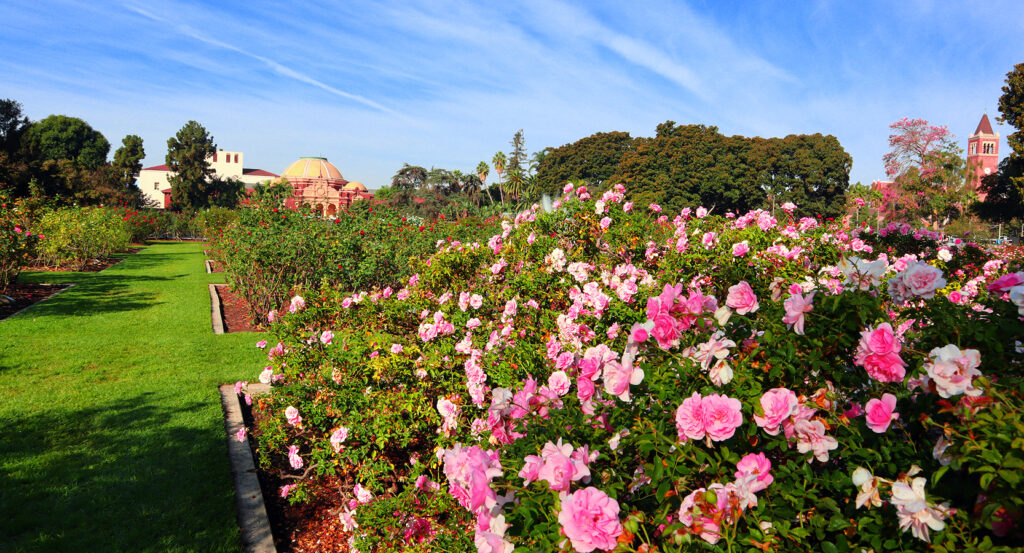
Plan your visit around midday light if possible, the museum's atriums catch the sun in golden hues, bathing its marble corridors in warmth. Afterwards, stroll into the adjacent Rose Garden for a quiet moment among the blooms, or stop by the café to let your mind settle. When you leave, you'll carry more than knowledge, you'll carry a renewed sense of wonder, the rarest souvenir of all.
Hear it from the Foresyte community.
Just enough life around you not to be overwhelming. Right pace.
Where your story begins.
Start your planning journey with Foresyte Travel.
Experience immersive stories crafted for luxury travelers.