
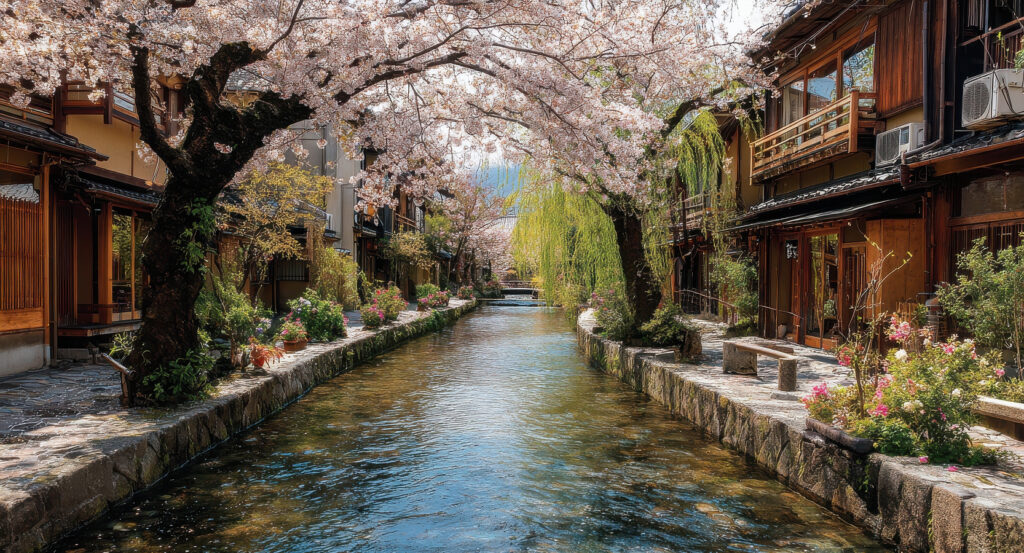
Why you should experience Nazuna Kyōto Tsubaki St. in Kyoto, Japan.
Nazuna Kyōto Tsubaki St. is Kyoto experienced as spatial calm, material intimacy, and thoughtfully paced presence, a ryokan-inspired retreat that situates you in the city's tempo.
Located near Kyoto Station and the Kamigyo Ward, this property occupies an urban edge that feels both connected and quietly removed from busier tourist corridors. Arrival is direct and composed. You step off the street into interiors that favor natural materials, warm tones, and proportions that feel human. Public spaces, the lobby, lounges, and circulation zones, are designed for gentle orientation rather than show, using wood, stone, and textured surfaces to absorb sound and light in a way that supports calm arrival and psychological ease. There is a clear sense of intention: the space exists to hold you, not dazzle you. Guest rooms at Nazuna Kyōto Tsubaki St. reflect this philosophy with remarkable coherence. They are generously sized by Kyoto standards and laid out to support rest, work, and reflection. Beds are deeply comfortable, engineered for restorative sleep after long days spent walking temple paths, shrine precincts, and Kyoto's layered streets. Windows frame quiet urban views, garden elements, or inner courtyards, embedding the city's rhythm into your stay. Furniture is purposeful yet subtle. Desks accommodate real work, seating invites lingering conversations or quiet reading, and storage allows you to unpack fully and inhabit the space. Lighting is layered and soft, enabling smooth transitions from morning to evening. Bathrooms are designed as private retreats. Deep soaking tubs, walk-in rain showers, and quality finishes make daily routines feel restorative. Nothing in the room demands your attention; everything supports your presence. Dining at Nazuna Kyōto Tsubaki St. reflects Kyoto's culinary sensibility: balanced, seasonal, and composed. Meals are presented thoughtfully, respecting local sourcing and refinement rather than performance, and spaces are arranged to support conversation and presence rather than performance. Shared spaces beyond the rooms, lounges, transitional areas, and quiet corners, act as pauses in your day. They are places to pause, plan, reflect, or simply sit with the city's energy at a distance. Service throughout the hotel is attentive, warm, and situationally aware. Interactions feel grounded rather than scripted, guided by local insight and practical support rather than performative hospitality gestures. Staff can help you navigate Kyoto's many layers with nuance: best routes to quieter gardens, timing for less crowded temple visits, or neighborhood discoveries that reward curiosity. Nazuna Kyōto Tsubaki St. attracts travelers who value coherence over flash: cultural explorers, repeat visitors to Kyoto, couples seeking calm rather than cliché, and anyone who wants the city to feel comprehendible rather than overwhelming. This is not a ryokan built on nostalgia, nor a hotel that emphasizes image over substance.
What you should know about Nazuna Kyōto Tsubaki St.
Nazuna Kyōto Tsubaki St. was conceptualized around the idea that modern hospitality in Kyoto should respect local rhythms and material logic rather than replicate heritage theatrics, creating spaces that feel lived in rather than displayed.
The hotel's architecture and interiors were developed through an understanding of Japanese spatial principles, proportion, translucency, surface tactility, and controlled transitions. Materials were selected not for immediate visual impact, but for how they age, absorb light, and interact with human presence: warm woods, textured stone, muted metals, and textiles that silence sound. Public areas were arranged as flows rather than fixed destinations, enabling movement that feels natural rather than choreographed. Sightlines lead toward calm spatial anchors, alcoves, gardens, light wells, rather than visual focal points meant to signal style or statement. Guest room planning was based on how people actually inhabit space over multiple nights: where they unpack, where they rest, how light changes over the day, and how space transitions between activity and stillness. This behavioral grounding resulted in interiors that feel intuitive and resolved. Storage, lighting adaptability, and workspace placement were integrated early. Bathrooms were conceived as ritual spaces rather than transitional zones, emphasizing water geometry, surface tactility, and circulation. Culinary spaces were envisioned as social infrastructure: environments that support nourishment, conversation, and calm. Operational culture reinforces this architecture. Staff training emphasizes contextual awareness, cultural fluency, and adaptive response. Interactions feel genuinely supportive rather than performed, helping guests navigate Kyoto's layered neighborhoods with autonomy and local insight. Over time, Nazuna Kyōto Tsubaki St. has built loyalty among travelers who return not for novelty or performance, but because the experience remains coherent and calming under repeated use. In a city where many hotels lean into historic mimicry or global uniformity, this property stands apart by honoring context through composed presence, architecture, service, and environment working together to support real travel life.
How to fold Nazuna Kyōto Tsubaki St. into your trip.
Nazuna Kyōto Tsubaki St. works best when you treat it as a base of rhythm, return, and measured presence.
Begin mornings slowly, stepping out toward Kyoto Station or the nearby Sanjūsangendō Temple while the city is still soft and human scaled. Walk hidden alleyways, quieter temple gardens, or river edges at a pace that feels responsive to light and season. Because the hotel sits outside the densest historic corridors, returning midday feels restorative. Come back to rest, read, or sit quietly before heading out again. Afternoons lend themselves to deeper exploration: local artisanal districts, small galleries, side temple paths, and neighborhood cafés reward unhurried attention. Use the hotel's local recommendations to discover routes that feel meaningful. Evenings unfold with coherence. Dine thoughtfully on seasonally driven cuisine here or nearby, attend musical performances or cultural events, or walk tree-lined streets as dusk softens. Returning late feels calm because the hotel's interior language absorbs energy. Nazuna Kyōto Tsubaki St. pairs especially well with extended stays, repeat visits, cultural immersion, and itineraries where presence matters as much as sights. By the time you leave, Kyoto will feel less like a sequence of destinations and more like a lived city, and this hotel will feel like the base that made that clarity possible: not softened, not diluted, but intelligently present. In a destination defined by nuance, ritual, and slow revelation, Nazuna Kyōto Tsubaki St. offers something genuinely rare: hospitality that listens to place.
Where your story begins.
Foresyte Travel reveals places that feel extraordinary long before you arrive.
Experience premium editorial crafted for luxury travelers.

















































































































