
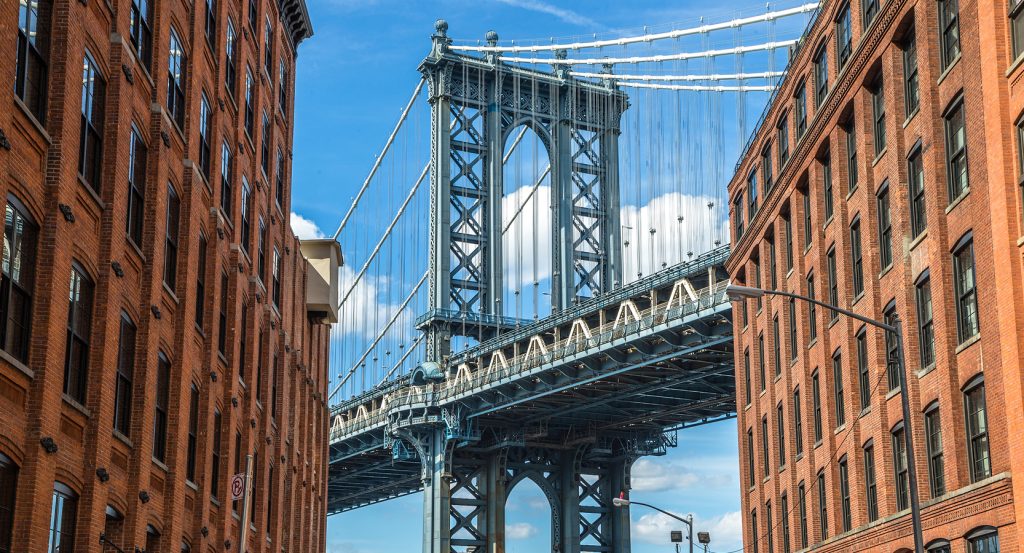
Why you should experience Norman Avenue in New York, NY.
Norman Avenue is a historic Greenpoint corridor where industrial heritage, Polish culture, and neighborhood reinvention converge along one of North Brooklyn's most enduring east-west streets.
Running through Greenpoint between Williamsburg and Long Island City, this historic corridor connects converted factory buildings, neighborhood businesses, waterfront industries, residential blocks, and creative workspaces that demonstrate Brooklyn's remarkable manufacturing legacy. Brick warehouses, classic rowhouses, family-owned shops, adaptive reuse projects, and architecturally varied industrial buildings create a streetscape where productive history and contemporary entrepreneurship comfortably intersect. Norman Avenue matured as Greenpoint emerged as one of America's foremost centers for shipbuilding, glassmaking, rope manufacturing, and heavy industry, attracting generations of skilled workers and immigrant families whose influence continues to define the neighborhood's identity. To the south, Williamsburg extends naturally from Norman Avenue through interconnected industrial corridors, waterfront destinations, and historic commercial streets that reinforce the avenue's enduring significance. The result is a corridor defined by industrial ingenuity, cultural continuity, and neighborhood authenticity.
What you should know about Norman Avenue.
Norman Avenue is best known for bordering the Newtown Creek Wastewater Resource Recovery Facility, whose iconic stainless-steel digester eggs were completed in 1998, creating one of New York City's most recognizable pieces of industrial infrastructure.
The eight illuminated digesters transformed a vital wastewater treatment complex into an unexpected architectural landmark while supporting one of the largest wastewater treatment operations in the city. Their distinctive elliptical forms have become visual symbols of Greenpoint's continuing relationship with heavy industry, engineering, and environmental infrastructure. Norman Avenue provides one of the closest approaches to this internationally recognized industrial landmark, highlighting the neighborhood's unique blend of manufacturing history and modern utility design. The corridor demonstrates how essential civic infrastructure has become an unmistakable part of Greenpoint's architectural identity.
How to fold Norman Avenue into your trip.
Norman Avenue works as an exploration of Greenpoint's industrial heritage, waterfront character, and evolving creative landscape.
Begin at WNYC Transmitter Park, where sweeping East River views immediately establish the avenue's connection to Greenpoint's historic waterfront. Continue toward Newtown Creek Nature Walk, whose innovative landscape design offers an unexpected perspective on one of New York City's most significant industrial waterways. From there, make your way to McGolrick Park, where beautifully preserved nineteenth-century landscaping and surrounding historic architecture provide a broader appreciation for the residential communities that developed alongside Greenpoint's manufacturing economy. Along the route, you'll encounter converted factories, neighborhood cafés, independent boutiques, historic churches, architecturally significant industrial buildings, and energetic public spaces that reveal the avenue's remarkable depth. The progression moves naturally from waterfront park to industrial landscape to historic neighborhood greenspace, demonstrating how Norman Avenue connects engineering, ecology, and community within one of Brooklyn's most distinctive neighborhoods. Norman Avenue remains one of the borough's most compelling corridors, preserving a distinctive balance between industrial legacy, architectural character, and neighborhood evolution.
Where your story begins.
Foresyte Travel reveals places that feel extraordinary long before you arrive.
Experience premium editorial crafted for luxury travelers.







































































































