Why Ohio Street matters.
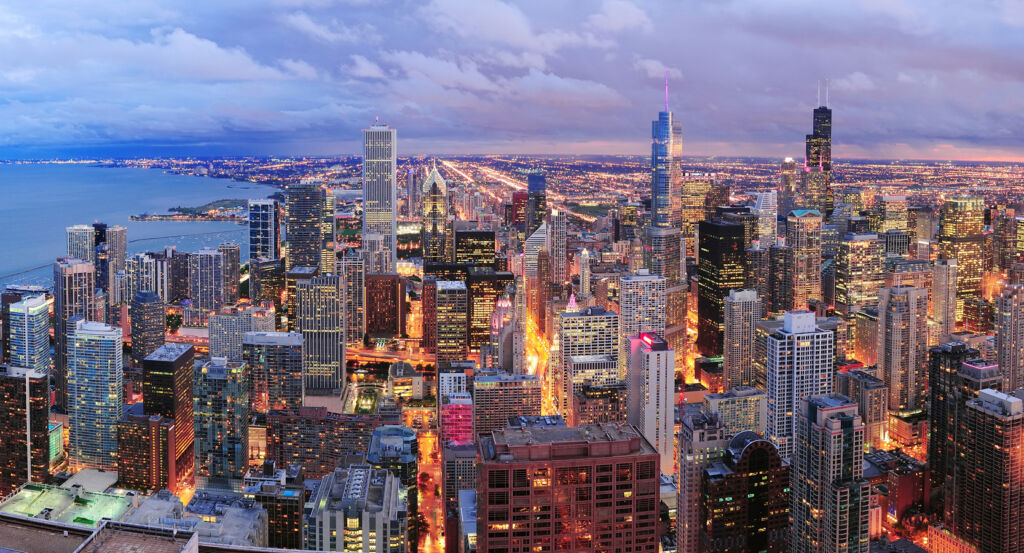
Ohio Street is a spirited corridor where River North's commercial heritage, engineering ingenuity, architectural evolution, and Chicago's downtown energy intersect across one of the city's most consequential east-west thoroughfares.
Running through River North between the Near West Side and Streeterville, Ohio Street links historic warehouse districts, river crossings, modern commercial towers, hospitality destinations, and transportation infrastructure that collectively reflect more than a century of urban transformation. The corridor demonstrates how wholesale commerce, industrial expansion, expressway construction, and continuing reinvestment reshaped the Near North Side while preserving key elements of its historic streetscape. Historic masonry buildings remain interwoven with contemporary development, revealing successive chapters of Chicago's commercial growth. The result is a corridor distinguished by economic vitality, engineering significance, and a lasting role within Downtown's evolution.
What defines Ohio Street.
Ohio Street is best known for serving as the primary downtown approach from the Kennedy Expressway after completion of the Ohio Street feeder system during the early 1960s, establishing one of Chicago's busiest east-west automobile gateways into the central business district. The corridor developed rapidly following reconstruction after the Great Chicago Fire of 1871 as warehouses, printing establishments, furniture manufacturers, wholesale merchants, and commercial loft buildings occupied the expanding River North district beside the North Branch of the Chicago River. Construction of successive Ohio Street bridges strengthened freight movement and commercial circulation while supporting nearby rail terminals, river docks, and industrial businesses that helped define Chicago's position as a national distribution center. Continuing redevelopment during the late twentieth century introduced hotels, residential towers, and office buildings while adaptive reuse preserved substantial portions of the neighborhood's nineteenth-century warehouse architecture.
Transportation planning continued reshaping Ohio Street through the Chicago Plan Commission, whose postwar downtown traffic studies identified the corridor as a critical component of distributing expressway traffic into the Loop and Near North Side. Completion of the Ohio Street Feeder Ramp under the direction of the Illinois Department of Transportation established a grade-separated interchange whose engineering substantially increased vehicle capacity while reducing congestion on surrounding downtown streets. North of the corridor, the River North Historic District preserves a remarkable concentration of late nineteenth-century loft buildings designed by architects including Holabird & Roche, whose steel-frame commercial architecture helped redefine large-scale warehouse construction following the Chicago School of architecture. Together, the Chicago Plan Commission, the Illinois Department of Transportation, the Ohio Street Feeder Ramp, the River North Historic District, and Holabird & Roche demonstrate how coordinated planning, engineering innovation, and architectural preservation collectively shaped Ohio Street into one of Downtown's defining transportation corridors.
How Ohio Street fits.
Ohio Street works as an exploration of Chicago's transportation history, commercial architecture, and riverfront transformation.
Begin at Chicago Water Tower, where one of the city's most recognizable survivors of the Great Chicago Fire introduces the resilience that shaped the surrounding district before following Ohio Street westward. Continue to Chicago Riverwalk, where public access to the Chicago River reveals the commercial waterway that fueled the neighborhood's early growth while offering a different perspective on downtown infrastructure. Conclude at Museum of Contemporary Art Chicago, whose internationally acclaimed exhibitions provide a fitting finale reflecting River North's continuing evolution from industrial commerce to cultural prominence. The progression moves naturally from post-fire rebuilding to riverfront commerce before concluding with one of Chicago's leading cultural institutions, revealing why Ohio Street remains deeply connected to the city's continuing story.
Where your story begins.
Foresyte Travel reveals places that feel extraordinary long before you arrive.
Enjoy editorial crafted for luxury travelers.
Foresyte may earn a commission when you book.