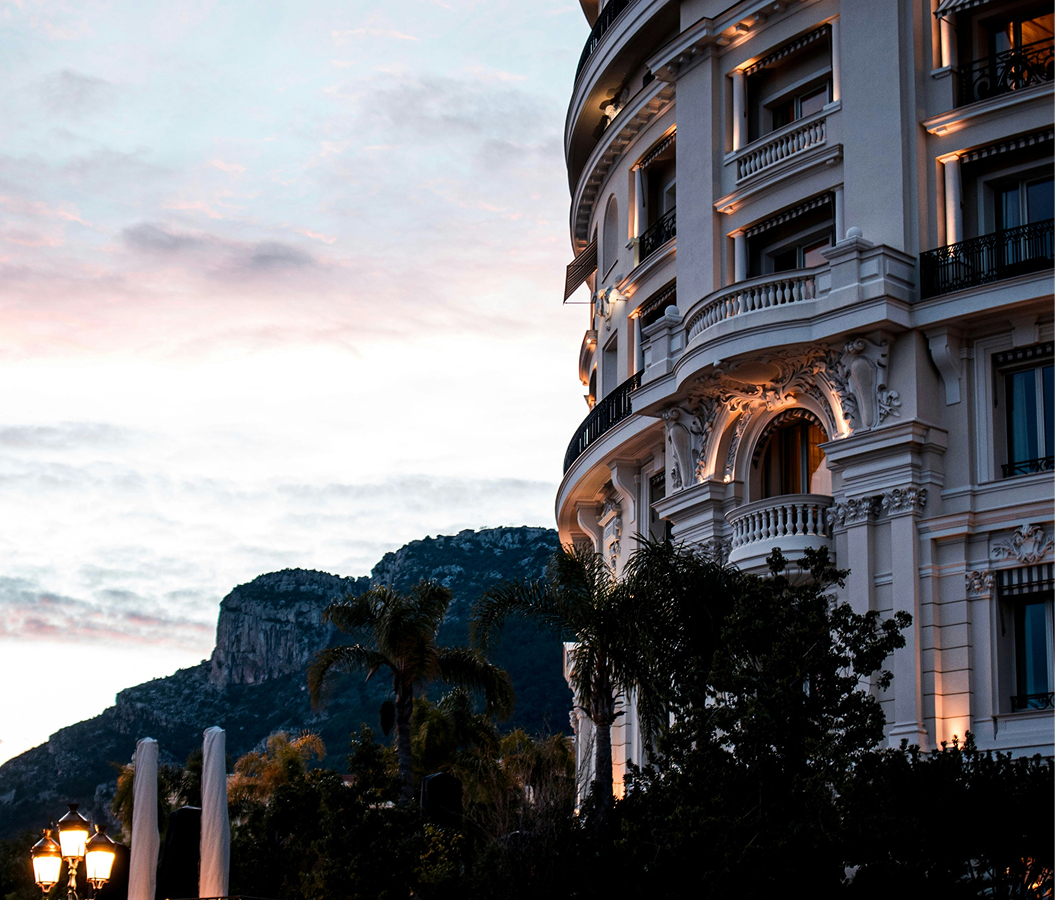
Why Palazzo Castiglioni matters.
Palazzo Castiglioni is a rebellious Liberty palazzo where Porta Venezia's patrician character meets Giuseppe Sommaruga's dramatic decorative architecture, sculpted stone and an early twentieth-century challenge to Corso Venezia's Neoclassical order.
Set along Corso Venezia near Via Marina and just steps from Via Palestro, the palazzo occupies a prominent stretch where stately eighteenth and nineteenth-century residences, walled gardens and tree-lined approaches toward the Giardini Pubblici frame one of Milan's richest sequences of historic domestic architecture. Its street front rises from massive rock-like rustication into tall windows, sculpted putti and dense floral ornament before metal bees trace the upper cornice. Behind that imposing frontage, the Via Marina elevation shifts to red brick, broad glazed loggias and lighter ironwork facing the garden. Corso Venezia carries the building into a streetscape dominated by restrained aristocratic palazzi, intensifying the contrast created by Sommaruga's asymmetry and concentrated decorative treatment. The result is a forceful architectural interruption whose stonework, sculpture and metal ornament announce Milanese Liberty within one of the city's most established residential corridors.
What defines Palazzo Castiglioni.
Palazzo Castiglioni is best known for establishing Giuseppe Sommaruga as a central architect of Milanese Liberty through a residence commissioned by entrepreneur Ermenegildo Castiglioni at the opening of the twentieth century. Castiglioni had inherited substantial wealth and selected Corso Venezia, a street associated with Milan's established aristocracy, for a house intended to depart sharply from its surrounding Neoclassical residences. Before developing the project, Castiglioni and Sommaruga traveled through France and England to study contemporary European architecture, with Hector Guimard's work providing a significant point of reference. Construction ran from 1901 to 1904, with the Fratelli Galimberti firm executing a three-story building whose grand Corso Venezia front contrasted with the lighter garden elevation. Sommaruga organized the facade above a rugged serizzo base punctured by circular windows, then shifted upward through ceppo cladding, floral panels, elongated openings, sculpted putti and an asymmetrical upper balcony. Ernesto Bazzaro supplied two semi-nude female figures representing Peace and Industry for the entrance, but their appearance triggered satirical treatment in the Guerin Meschino and the Milanese nickname “Ca' di ciapp.” Castiglioni ordered their removal in 1903, forcing Sommaruga to redesign the portal with a raised opening and floral crest. The displaced Bazzaro figures subsequently entered another Sommaruga project, Villa Faccanoni on Via Buonarroti, preserving physical pieces of Palazzo Castiglioni's original composition within a later commission. The episode made the building's architectural rupture inseparable from the public reaction it generated, turning a private residence into a defining event in Milan's early Liberty period.
Sommaruga extended the project inside through a coordinated sequence of stone, metal, glass and custom furnishings that treated architectural construction and decorative craft as parts of the same commission. The grand staircase remains its strongest surviving interior element, climbing beside polished black labradorite columns and a floral metal balustrade whose curving lines continue the botanical ornament of the exterior. The Sala dei Pavoni carries peacock imagery and plant forms across its decoration, creating another concentrated display of the naturalistic motifs developed throughout the residence. Alessandro Mazzucotelli's Lampada delle Libellule survives in the entrance hall, joining sculptural metalwork to the building's lighting design. Eugenio Quarti created original furnishings for the interiors, though later alterations removed those pieces and obscured much of Sommaruga's domestic arrangement. The building changed substantially after the Castiglioni heirs sold it to the Unione del Commercio in 1967. Eugenio Gerli and engineer Giorgio Keffer directed the 1968 to 1972 conversion, retaining the entrance, grand staircase, veranda, selected piano nobile rooms and historic facades as other sections were reorganized for offices and an auditorium was constructed beneath the garden. Those surviving interiors preserve enough of Sommaruga's integrated conception to connect the severe rock-faced exterior with the highly worked metal, stone and decorative craft that originally continued throughout Castiglioni's residence.
How Palazzo Castiglioni fits.
Palazzo Castiglioni works as the anchor for a daytime exploration along Corso Venezia and its adjoining streets using three nearby sites that move from late Enlightenment aristocratic architecture through a Napoleonic residence and public art collection into an eclectic palace assembled by a new generation of Milanese designers and artists.
Begin at Palazzo Serbelloni, where Duke Gabrio Serbelloni and his son Giò Galeazzo commissioned a residence whose reconstruction helped alter the former Borgo di Porta Orientale during the late eighteenth century. Simone Cantoni developed the imposing Neoclassical front completed in 1793, placing a columned loggia above the entrance and incorporating reliefs by Donato and Francesco Carabelli devoted to the Lombard League. Giuseppe Parini entered the household as tutor to Gabrio's children, connecting the palace with the intellectual culture of Enlightenment Milan. Napoleon occupied the residence for three months, and later occupants included Klemens von Metternich, Napoleon III and Vittorio Emanuele II; bombing in 1943 destroyed major sections, Giuliano Traballesi's frescoes and a library containing 75,000 volumes. Continue to Villa Reale, commissioned by Count Lodovico Barbiano di Belgiojoso and built between 1790 and 1796 by Leopoldo Pollack, the Austrian architect who worked with Giuseppe Piermarini. Pollack arranged the residence around a court facing Via Palestro and gave the garden elevation its grander composition of projecting sections, Ionic columns, reliefs and sculpture, with Ercole Silva contributing to the landscape design. The French government acquired the villa in 1804, and it became a Milanese residence associated with Napoleon before passing through Austrian and Italian royal ownership. Municipal control prepared its conversion into the Galleria d'Arte Moderna, installed there from 1921 and later enriched by collections that brought Hayez, Segantini, Previati, Cézanne, Renoir, Van Gogh and other nineteenth and early twentieth-century artists into the former aristocratic rooms. Conclude at Palazzo Berri Meregalli, built between 1911 and 1913 by Giulio Ulisse Arata for the Berri Meregalli family on the corner of Via Cappuccini and Via Vivaio. Arata combined exposed brick, stone arches and loggias with floral ornament, mosaics and sculptural decoration, drawing Romanesque, Gothic and Liberty forms into an intentionally dense composition. Pietro Adamo Rimoldi and Angiolo D'Andrea contributed painted and mosaic decoration, Alessandro Mazzucotelli worked on iron elements and several sculptors developed the figures and animals distributed across the exterior. Adolfo Wildt's gilded marble Vittoria Alata of 1919 occupies the entrance hall, adding a postwar sculptural commission to the building's earlier decorative program. The progression moves from Cantoni's late eighteenth-century aristocratic reconstruction through Pollack's Neoclassical villa and its conversion into a public collection into Arata's dense collaboration with painters, metalworkers and sculptors, carrying Corso Venezia's architectural culture from established patrician patronage into the experimental decades surrounding Palazzo Castiglioni.
Where your story begins.
Foresyte Travel reveals places that feel extraordinary long before you arrive.
Enjoy editorial crafted for luxury travelers.
Foresyte may earn a commission when you book.