
Why Arno matters.
Arno River in Florence is the city's eternal reflection, a place where art, architecture, and water converge in luminous dialogue.
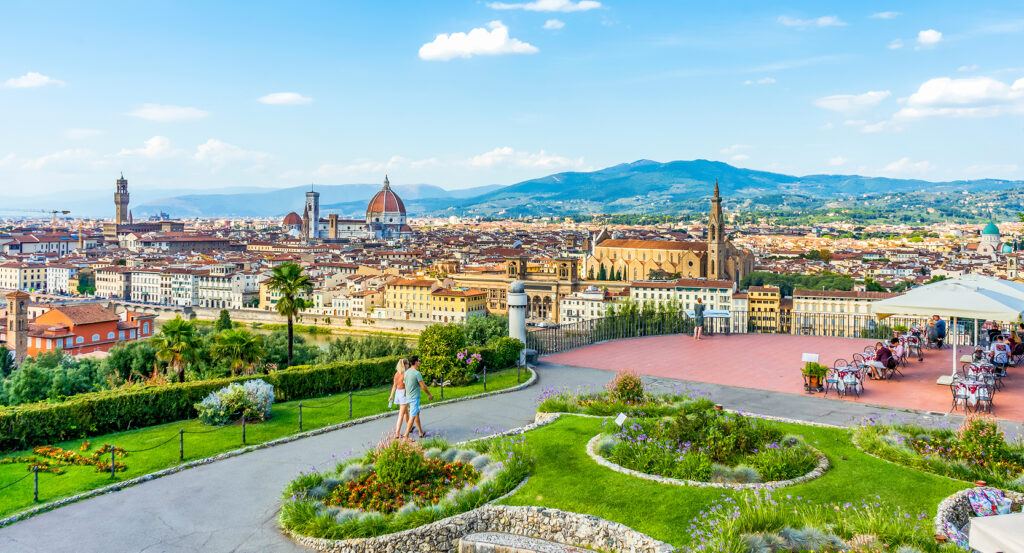
Standing along the terraces and embankments that trace the river's gentle curve, you see Florence unfold as a living painting: bridges arched in perfect rhythm, stone palaces mirrored in the current, and the Duomo's dome glowing softly against the hills beyond. From sunrise to twilight, the river transforms, silver in the morning, gold by afternoon, and violet beneath the moon. This is where the city breathes. Arno's stillness belies centuries of history: merchants once traded here, painters captured its light, and poets found in its reflections the metaphor of time itself. Whether viewed from the Ponte Vecchio, the Uffizi's loggia, or the quiet walkways near the Santa Trinita Bridge, Arno offers Florence in its purest form, balanced, harmonious, and endlessly alive.
What defines Arno.
Arno River is not a single site but a lineage of Florentine perspective, a series of viewpoints designed by nature and refined by human vision.
For centuries, Arno served as the city's lifeline, shaping trade routes, architecture, and even the rhythm of Florentine life. Its banks evolved deliberately, from medieval mills and boat docks to the 19th-century Lungarni boulevards engineered for leisure and beauty. Giuseppe Poggi, the same urban planner behind Piazzale Michelangelo, reimagined the riverfront as Florence's promenade, a place where citizens could walk, reflect, and witness the play of light that had long inspired its artists. The bridges themselves became architectural milestones: the Ponte Santa Trinita, rebuilt after World War II with stones recovered from the riverbed, remains a masterpiece of Renaissance grace; the Ponte Vecchio, lined with jewelers' shops, captures continuity between commerce and culture. Few realize that Arno's subtle tides, controlled by ancient sluice gates upstream, were once calibrated to preserve these reflections. The overlook, then, is not simply a view; it's a conversation across centuries, a collaboration between city and water to preserve the art of seeing.
How Arno fits.
Experiencing Arno River is best done unhurried, a ritual of walking, watching, and waiting for the light.
Begin your exploration at the Ponte alle Grazie and follow the river westward toward the Ponte Vecchio. Pause midway to watch the sunlight break across the rooftops, each reflection rippling like brushstrokes across the surface. Cross to the Oltrarno side for a more intimate perspective, the crowds thin, and the city's hum softens into rhythm. Visit during golden hour, when Arno transforms into a mirror of bronze and fire; every bridge, dome, and tower appears suspended between earth and sky. After dusk, the reflections of streetlamps shimmer across the water, turning the walkways into corridors of light. For solitude, return at dawn, when mist gathers along the river and Florence awakens in whispers. Before leaving, stand at the Ponte Santa Trinita, from here, the curve of the river frames the Duomo perfectly, a view unchanged for five hundred years. Arno River in Florence is not a single place but a feeling, a quiet certainty that beauty, like the river, will always find its way through time.
Where your story begins.
Foresyte Travel reveals places that feel extraordinary long before you arrive.
Enjoy editorial crafted for luxury travelers.
Foresyte may earn a commission when you book.




















































































































