Why Art Walk San José del Cabo matters.
Art Walk San Jose del Cabo is a distinctive cultural gathering where San José del Cabo's historic Gallery District meets the artistic ambitions of Baja California Sur, Mexico's contemporary gallery movement and a weekly tradition that has made the town's colonial streets a center of regional creative commerce.
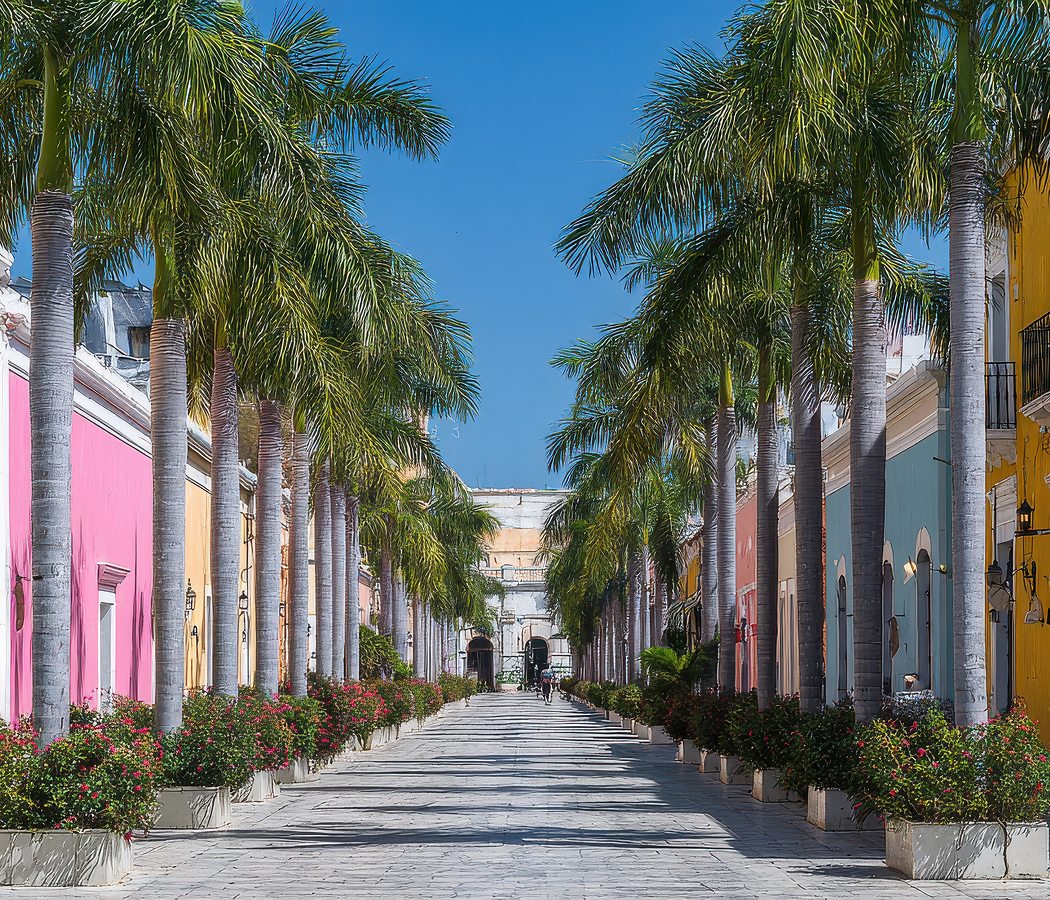
Centered on Álvaro Obregón behind Plaza Mijares and the historic parish church, the weekly gathering occupies a compact network of pedestrian-friendly streets in Central San José del Cabo, extending through the adjoining blocks of Vicente Guerrero and Ignacio Comonfort, where restored buildings accommodate galleries, studios and independent businesses. Low-rise facades painted in warm earth tones frame narrow sidewalks, wooden doorways and intimate courtyards that connect the district's exhibition rooms with the surrounding streets. Traditional masonry buildings stand alongside contemporary gallery interiors, creating a closely arranged collection of commercial spaces adapted to the historic urban fabric. During Thursday evenings, pedestrian circulation extends between open gallery entrances, outdoor displays and neighborhood restaurants, concentrating cultural activity within a few walkable blocks. The result is a recurring cultural event whose historic setting, concentrated exhibition spaces and direct encounters with working artists distinguish San José del Cabo's downtown from the resort-oriented coastline.
What defines Art Walk San José del Cabo.
Art Walk San Jose del Cabo is best known for its Thursday evening gallery openings, its collaborative organization by local art dealers and its contribution to the development of San José del Cabo as an important center for contemporary art in northwestern Mexico. The town's cultural foundations extend to the establishment of Mission San José del Cabo Añuití by Jesuit missionaries in 1730, an institution that became central to the settlement's early development. Agricultural activity along the San José estuary subsequently supported a community distinguished by its relationship with freshwater resources and the surrounding desert landscape. During the nineteenth century, maritime commerce and regional agricultural production contributed to the settlement's economic development, establishing commercial connections with other communities along the Baja California Peninsula. The expansion of Los Cabos tourism during the late twentieth century introduced new economic opportunities as international travelers increasingly visited the southern peninsula. San José del Cabo retained a historic downtown characterized by traditional street patterns, low-rise commercial buildings and a central civic plaza. Independent artists and gallery operators began occupying properties in the older commercial district, adapting existing structures for exhibitions and art sales. The concentration of galleries created opportunities for collaboration among businesses seeking to establish a more substantial cultural presence within the growing tourism economy. The Gallery District Association organized the Art Walk in 2006, establishing a recurring evening event intended to encourage exploration of the streets behind the main square. Participating galleries extended their Thursday opening hours, coordinating exhibitions and artist appearances across the district. Municipal support eventually enabled the temporary closure of Álvaro Obregón to automobile traffic during the event, improving pedestrian access between participating businesses. The initiative strengthened the relationship between galleries, restaurants and independent merchants, establishing a coordinated commercial district centered on artistic production. Its seasonal schedule developed around the region's principal travel months, with Thursday evening programming traditionally concentrated between November and June. The event's growth encouraged additional gallery investment and the restoration of commercial properties, contributing to the preservation and continued use of the historic center. San José del Cabo developed an arts district with a recognizable institutional structure, recurring public programming and a substantial concentration of independently operated exhibition spaces.
Frank Arnold established a working studio and gallery on Ignacio Comonfort, introducing an exhibition program centered on large-scale abstract-figurative painting and bronze sculpture. His paintings employ heavily textured surfaces, layered pigments and simplified human forms, creating compositions distinguished by substantial physical depth and expressive color. Sculptural works extend these concerns into three dimensions through elongated figures and carefully modeled surfaces. The gallery's integration with the artist's working studio establishes a direct connection between artistic production and the presentation of completed work. Iván Guaderrama developed a different approach through paintings, sculpture and interactive installations incorporating religious imagery and contemporary digital technology. His gallery, established in 2010, presents works addressing faith, affection and human connection through stylized figures, saturated colors and recognizable symbolic forms. Selected paintings incorporate augmented-reality components activated through mobile devices, introducing animation and sound into the presentation of physical artworks. The artist's interactive compositions expand the conventional relationship between paintings and their audiences through digitally programmed elements. Other participating galleries present Mexican folk art, contemporary photography, ceramics, jewelry and sculpture, introducing artistic practices associated with different regions of the country. Traditional craft techniques appear alongside contemporary materials, establishing connections between established Mexican decorative arts and recent artistic production. The district's exhibition program includes individual artist presentations, changing collections and opportunities for direct discussion with gallery representatives. Thursday evening openings create a coordinated schedule in which independent businesses contribute to a shared cultural event. The combination of working studios, commercial galleries and temporary exhibitions supports both established artists and smaller creative enterprises. Art Walk San Jose del Cabo's importance rests in the sustained collaboration between artists, gallery operators and the historic downtown businesses that support the region's cultural economy.
How Art Walk San José del Cabo fits.
Art Walk San Jose del Cabo works as the cultural anchor for an evening connecting the historic civic center, the colonial origins of the settlement and the natural landscape that supported the town's early agricultural and commercial development.
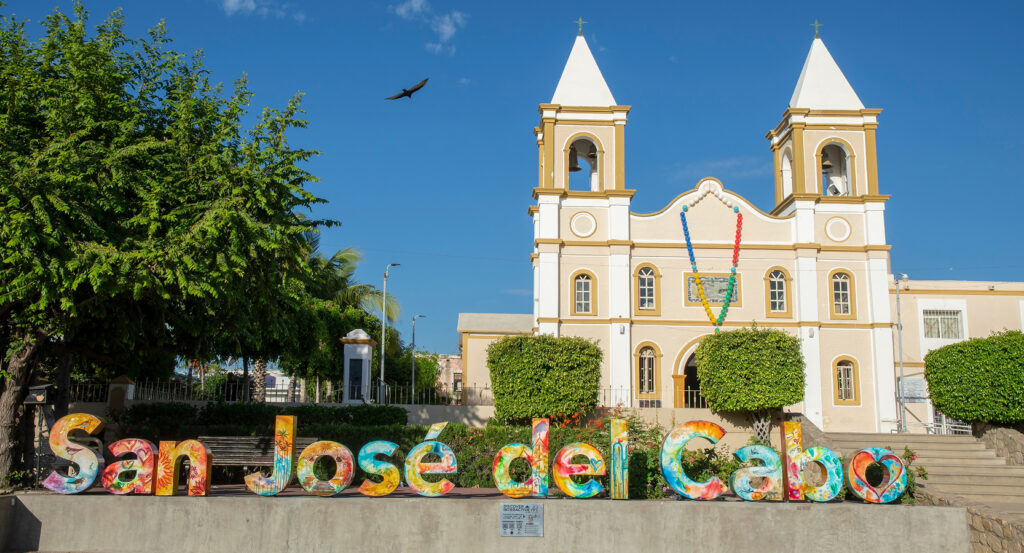
Begin at Plaza Mijares, the historic central square that has served as a focal point of San José del Cabo's civic and commercial life. The plaza occupies a prominent position within the old town, surrounded by traditional buildings, municipal facilities and businesses associated with the settlement's development. Landscaped gardens, shaded seating areas and pedestrian pathways establish a public gathering place used for community celebrations and seasonal events. Its position within the original town center preserves the relationship between religious institutions, local government and the commercial activities that historically shaped the surrounding streets. Continue to Misión San José del Cabo Añuití, the historic religious institution founded in 1730 by Jesuit missionary Nicolás Tamaral. The original mission became a focal point of Spanish colonial activity among the Indigenous Pericú communities of the southern peninsula. Conflict between missionaries and local populations culminated in the Pericú rebellion of 1734, during which Tamaral was killed and mission facilities were attacked. The surviving parish church occupies a later structure associated with the original mission site, incorporating twin bell towers, a symmetrical facade and a traditional interior arrangement. Its prominent position beside the central square preserves the institutional relationship between the colonial mission and the development of San José del Cabo. Conclude at Estero de San José del Cabo, the coastal estuary formed where the San José River reaches the Gulf of California. The wetland occupies an important ecological position between the surrounding desert landscape and the marine environment, supporting freshwater vegetation, migratory birds and resident wildlife. Historically, the availability of water sustained agricultural settlement in the valley and contributed to the development of the surrounding community. The estuary's reed beds, shallow channels and coastal vegetation provide habitat for numerous bird species, establishing a substantial natural refuge within the expanding urban area. Its protected status recognizes the ecological importance of maintaining freshwater habitats along the arid southern Baja California coast. The progression moves from Plaza Mijares' historic civic setting through Misión San José del Cabo Añuití's colonial history and culminates at Estero de San José del Cabo's freshwater landscape, connecting Art Walk San Jose del Cabo with the settlement, cultural development and natural geography of the town.
Where your story begins.
Foresyte Travel reveals places that feel extraordinary long before you arrive.
Enjoy editorial crafted for luxury travelers.
Foresyte may earn a commission when you book.