
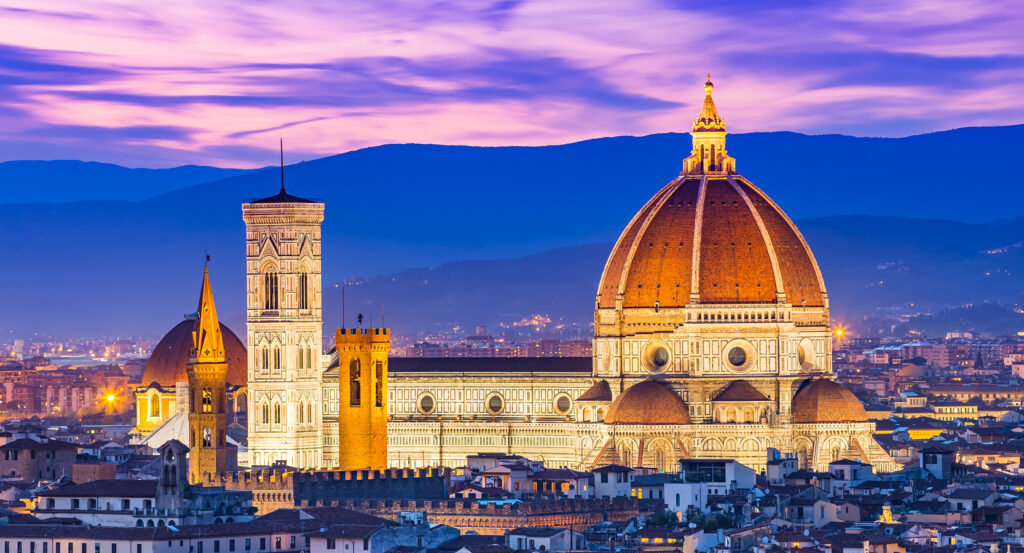
Why you should experience Porta al Prato in Florence, Italy.
Porta al Prato is a transitional urban district where historic gateways, grand boulevards, and Florence's evolution beyond its medieval walls converge along one of the city's most important western approaches.
Wide avenues, nineteenth-century architecture, former industrial spaces, and modern developments create a neighborhood that reveals how Florence expanded from its Renaissance core into a contemporary European city. The district serves as a connective corridor between the historic center and the broader metropolitan landscape, giving it a character shaped by movement, commerce, and transformation. Historic structures stand alongside business centers, residential developments, and transportation links that continue to shape daily life. The neighborhood's broad streets and open urban form contrast with the dense medieval fabric found closer to the Duomo, offering a different perspective on Florence's growth through the centuries. Public spaces, civic buildings, and commercial corridors reinforce the district's role as a gateway into the city. To the east, Santa Maria Novella's grand churches and Renaissance landmarks extend naturally from Porta al Prato toward Florence's historic heart, reinforcing the neighborhood's position along one of the city's most important urban axes. Every boulevard and piazza reflects a district shaped by expansion, connectivity, and progress.
What you should know about Porta al Prato.
Porta al Prato is best known for being home to Porta al Prato, among the principal surviving gates of Florence's fourteenth-century defensive walls.
Constructed as part of the city's medieval fortifications, the gate controlled access to Florence from the west and played an important role in commerce, transportation, and defense. Its survival provides a tangible connection to a period when powerful walls defined the limits of the city and protected one of Europe's most influential centers of trade and culture. As Florence expanded beyond its historic boundaries, the area surrounding the gate evolved into an important urban corridor while retaining this significant architectural landmark. Few neighborhoods provide such a clear illustration of the transition from medieval Florence to the modern city.
How to fold Porta al Prato into your trip.
Porta al Prato works as an exploration of the historic gateways, civic landmarks, and urban corridors that reveal Florence beyond its medieval center.
Begin at Porta al Prato, where the neighborhood's defining connection to the city's defensive past immediately comes into focus. Continue toward Parco delle Cascine, Florence's largest public park, whose expansive green spaces and riverside pathways reveal another side of the city rarely experienced by visitors. From there, make your way to Stazione Leopolda, a landmark former railway station transformed into one of Florence's most important cultural and event venues. Along the route, you'll encounter historic avenues, contemporary architecture, public plazas, cultural spaces, transportation landmarks, and civic institutions that showcase the district's evolution through time. The progression moves naturally from medieval gateway to public landscape to adaptive reuse landmark, revealing the forces that shaped the neighborhood. Porta al Prato remains one of the city's most important transitional districts, preserving a remarkable balance between history, accessibility, and urban renewal.
Where your story begins.
Foresyte Travel reveals places that feel extraordinary long before you arrive.
Experience premium editorial crafted for luxury travelers.




















































































































