Why Prince's Palace of Monaco matters.
Prince's Palace of Monaco is a historic sovereign residence where Monaco-Ville's medieval fortifications meet the political endurance of the Grimaldi dynasty, the artistic ambitions of the Italian Renaissance and more than seven centuries of Mediterranean princely government.
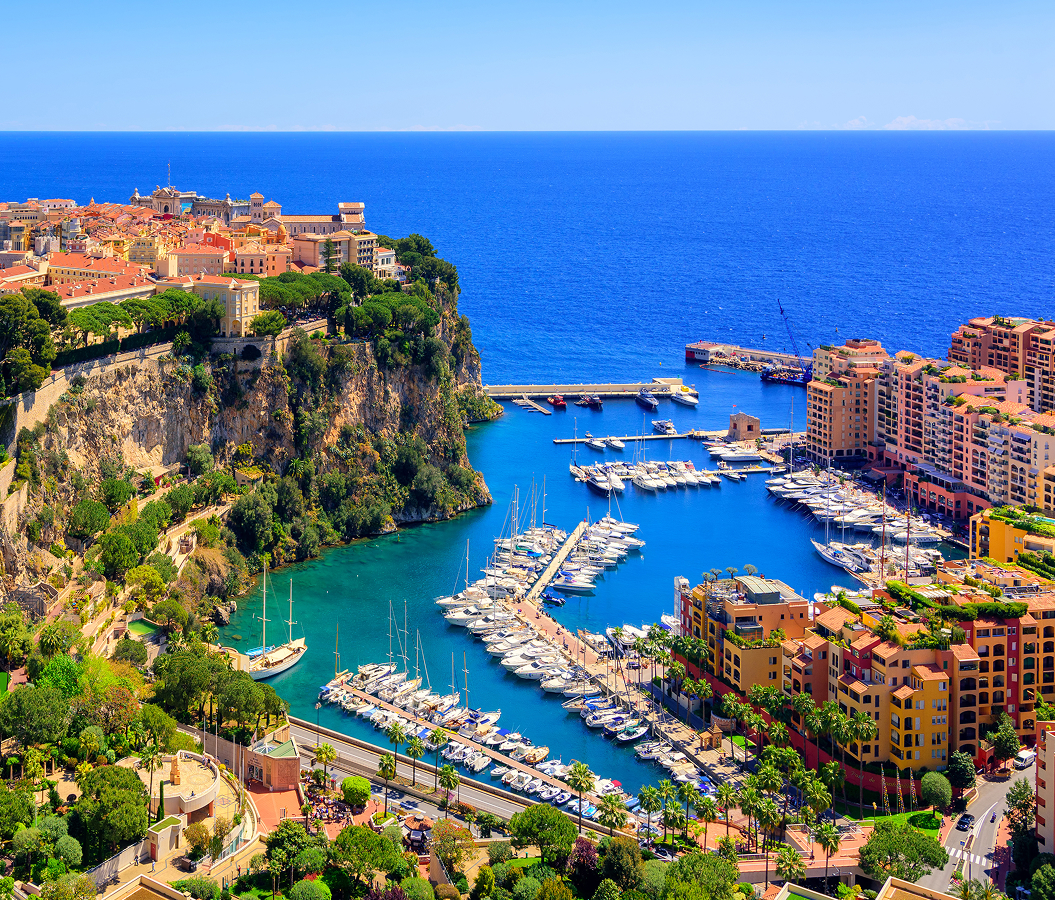
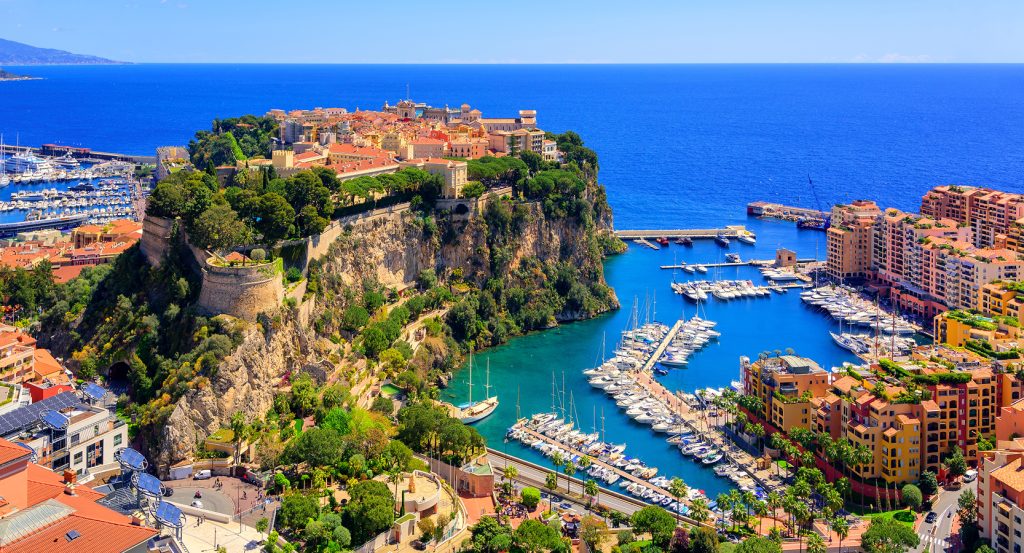
Occupying the western summit of the Rock of Monaco, the palace overlooks Port Hercule and the densely developed waterfront below, with the narrow streets of the old town extending eastward toward Monaco Cathedral and the Oceanographic Museum. Its exterior combines pale stone and ochre façades, crenellated defensive towers, Renaissance windows and an irregular arrangement of wings developed around an enclosed ceremonial courtyard. The principal entrance faces a broad paved square, where historic cannons, military sentry boxes and elevated terraces establish a physical connection between the building's defensive origins and its present ceremonial functions. Inside, expansive staircases, painted ceilings, marble floors, gilded ornament and richly furnished reception rooms occupy a succession of interconnected chambers whose architectural character developed through several centuries of princely patronage. The result is an architecturally complex royal residence whose medieval foundations, Renaissance courtyards and ceremonial apartments preserve the physical development of Monaco's ruling dynasty.
What defines Prince's Palace of Monaco.
Prince's Palace of Monaco is best known for serving as the ancestral residence of the Grimaldi dynasty, whose establishment on the Rock transformed a Genoese military fortress into the political center of an independent Mediterranean principality. Its origins developed through the territorial expansion of the Republic of Genoa, which secured imperial recognition of its authority over the Ligurian coast during the twelfth century. Emperor Frederick I Barbarossa recognized Genoese dominion over the surrounding coastline in 1162, establishing an important political foundation for the republic's western Mediterranean possessions. On May 30, 1191, Emperor Henry VI granted Genoa sovereignty over the Rock of Monaco, its harbor and adjoining territory, together with authorization to construct defensive fortifications. The republic subsequently acquired the necessary land rights in 1197, completing the territorial arrangements required for the development of a permanent military installation. Construction of the fortress began in 1215, establishing a fortified outpost intended to protect Genoese commercial interests and maritime routes along the coast. Its original military function reflected the strategic importance of the Rock, whose steep cliffs and commanding position above a natural harbor provided substantial defensive advantages. The fortress subsequently became involved in the political conflicts between the Guelph and Ghibelline factions that divided Genoa and other Italian city-states. François Grimaldi, a member of a prominent Guelph family, entered the fortress on January 8, 1297, in an operation traditionally associated with his disguise as a Franciscan monk. Accompanied by armed supporters, he seized control of the stronghold, establishing the episode that became central to the dynasty's historical memory. The Grimaldi family subsequently experienced periods of displacement and renewed occupation as rival Genoese factions contested control of the territory. Charles I Grimaldi secured a more durable position during the fourteenth century, contributing to the consolidation of the family's authority over Monaco. The fortress gradually developed into a hereditary residence as the Grimaldi lords established increasingly independent political relationships with neighboring European powers. French recognition of Monegasque independence in 1512 strengthened this position, followed by recognition from Emperor Charles V and the papacy in 1524. The early sixteenth century also introduced a substantial transformation of the medieval fortress following the Genoese siege of 1506-1507, which damaged portions of the original defensive complex. Augustin Grimaldi, bishop of Grasse and regent of Monaco, initiated important reconstruction work that contributed to the residence's development beyond its original military function. Étienne Grimaldi, guardian of the young Honoré I, subsequently directed additional architectural improvements during the second quarter of the century. These projects introduced the influence of Italian Renaissance architecture, transforming the fortified residence through more elaborate courtyards, decorative façades and ceremonial interiors. The construction program also incorporated extensive painted decoration, including mythological and allegorical subjects associated with classical antiquity and princely authority. The palace's development accelerated under Honoré II, who became the first Grimaldi ruler to adopt the title of prince in 1612. Educated in Milan, Honoré II developed an interest in Italian court culture and architectural patronage, establishing a more elaborate ceremonial environment within the residence. His commissions involved architect Jacques Cantone and sculptor Martino Solaro, whose contributions supported the transformation of the palace into a residence appropriate to a sovereign European court. The architectural program included the construction of the Royal Quarter, an extension of the southern wing designed to accommodate princely apartments and ceremonial functions. The Pavilion of the Baths introduced another substantial addition, establishing an elaborate residential component that survived until the nineteenth-century restoration period. Honoré II also commissioned the Chapel of Saint John the Baptist in 1654, strengthening the relationship between the palace's ceremonial architecture and the religious practices of the ruling family. The Treaty of Péronne in 1641 established French protection of Monaco, replacing the principality's earlier dependence on Spain and reshaping its diplomatic position within European politics. The agreement also granted the Grimaldi family substantial French territorial possessions, including the Duchy of Valentinois, the Marquisate of Les Baux and the County of Carladès. These acquisitions strengthened the dynasty's position within the French aristocracy and contributed to the development of its extensive European property holdings. Prince Louis I subsequently commissioned the expansive horseshoe staircase in the Court of Honour, introducing a Mannerist architectural feature inspired by the ceremonial staircase at the Château de Fontainebleau. The project established an important connection between Monaco's princely architecture and the formal traditions of the French royal court. During the seventeenth and eighteenth centuries, the palace accumulated substantial collections of paintings, furniture, decorative objects and embroidered textiles, developing into an important center of aristocratic artistic patronage. Prince Antoine I contributed to this development through the decoration of the royal apartments, incorporating French court furnishings and elaborate silk wall coverings. The palace's political and cultural position changed dramatically during the French Revolution, when Monaco was annexed to France and the Grimaldi family lost control of its sovereign residence. The building's collections were dispersed through confiscation, sale and removal, and its ceremonial rooms were adapted to new institutional functions. The former princely residence served as a military hospital before becoming a workhouse during the Napoleonic period, resulting in substantial deterioration of its historic interiors. The restoration of the Grimaldi rulers in 1814 initiated a prolonged period of architectural recovery, beginning under Honoré IV and continuing through the reigns of Honoré V and Florestan. Prince Charles III subsequently undertook major restoration projects during the second half of the nineteenth century, introducing renewed decorative programs and recovering portions of the residence's ceremonial character. The Royal Chamber underwent substantial reconstruction in 1864-1865, incorporating a gilded four-poster bed and decorative arrangements inspired by the French royal apartments at Versailles. Additional projects restored the palace chapel, introduced painted decoration and strengthened the architectural treatment of the principal reception rooms. The twentieth century introduced another period of dynastic transformation under Prince Rainier III, whose reign began in 1949 and continued until 2005. His marriage to American actress Grace Kelly in 1956 brought unprecedented international attention to Monaco's ruling family, establishing a new relationship between the principality and global popular culture. The palace subsequently became associated with major state ceremonies, official receptions and international diplomatic events, strengthening its function as a working sovereign residence. Prince Albert II succeeded Rainier III in 2005, continuing the dynasty's political and ceremonial traditions. His reign introduced a major conservation initiative that transformed the understanding of the palace's Renaissance artistic heritage. Restoration work beginning in 2013 led to the discovery of substantial sixteenth-century frescoes concealed beneath later decorative layers. The discoveries expanded considerably from 2015 onward, revealing an interconnected program of mythological imagery associated with the political ambitions of the Grimaldi rulers. Approximately 600 square meters of Renaissance frescoes were subsequently uncovered and incorporated into a comprehensive conservation program supported by Prince Albert II. The project introduced environmentally responsible restoration techniques and extensive investigation into the original decorative arrangements of the palace. A multidisciplinary conference held in Monaco from March 19 to 21, 2026, examined the discoveries and their importance to the history of Renaissance artistic patronage. The palace's historical significance extends from Genoese military expansion and the consolidation of Grimaldi sovereignty to Renaissance architectural transformation, French court influence and the modern conservation of one of Europe's longest continuously associated dynastic residences.
How Prince's Palace of Monaco fits.
Prince's Palace of Monaco works as the starting point for an exploration connecting the religious traditions of the Grimaldi dynasty, the development of Monaco's public gardens and the scientific ambitions of its nineteenth-century sovereigns.
Begin at Monaco Cathedral, the principal Roman Catholic church of the principality and the burial place of successive members of the Grimaldi dynasty. Construction began in 1875 on the site of the earlier Church of Saint Nicholas, establishing a substantial new religious building within the historic center of Monaco-Ville. Architect Charles Lenormand developed the cathedral in a Romanesque-Byzantine style, incorporating pale limestone, rounded arches and an expansive façade inspired by medieval ecclesiastical architecture. The building was completed in 1903 and consecrated in 1911, establishing its position as the principal church of the principality. Its interior incorporates an elaborate altar, religious paintings and the tombs of Prince Rainier III and Princess Grace, connecting the cathedral's religious functions to the modern history of the ruling family. Continue to Saint-Martin Gardens, the landscaped public gardens extending along the southeastern cliffs of the Rock. Their development began in 1816 under Prince Honoré V, who introduced a public employment program during a period of economic hardship following the Napoleonic Wars. The gardens occupied previously undeveloped land near the historic defensive walls, creating one of the principality's earliest public recreational spaces. Their landscaped terraces incorporate Mediterranean trees, ornamental shrubs, winding pathways and sculptures positioned above the steep coastal cliffs. A major redevelopment undertaken between 1983 and 1986 introduced additional horticultural improvements, strengthening the gardens' relationship with the surrounding urban landscape. The site preserves an important connection between public welfare, nineteenth-century princely government and the development of Monaco's landscaped coastal environment. Conclude at Oceanographic Museum of Monaco, the expansive scientific institution founded by Prince Albert I and constructed on the eastern cliffs of Monaco-Ville. The prince began developing the concept of a marine research institution during the 1880s, drawing on his extensive oceanographic expeditions and scientific collections. The museum's foundation stone was laid on April 25, 1899, and construction continued for more than a decade before its inauguration on March 29, 1910. Architect Paul Delefortrie designed the expansive building, incorporating a substantial limestone façade decorated with marine imagery, sculptural allegories and references to scientific exploration. The institution's collections developed through the prince's expeditions, establishing a substantial body of marine specimens, research equipment and historical materials associated with the emerging discipline of oceanography. Its contemporary exhibitions extend that scientific mission through aquariums, marine conservation programs and educational displays concerning the biodiversity of the Mediterranean and the world's oceans. The progression moves from Monaco Cathedral's dynastic religious heritage through Saint-Martin Gardens' nineteenth-century public landscaping and culminates in Oceanographic Museum of Monaco's scientific collections, connecting the political, civic and intellectual ambitions of successive Grimaldi rulers.
Where your story begins.
Foresyte Travel reveals places that feel extraordinary long before you arrive.
Enjoy editorial crafted for luxury travelers.