Why you should experience Pyramid of Menkaure in Giza, Egypt.
Pyramid of Menkaure is the quiet finale of Giza's eternal trilogy, smaller, subtler, and yet profoundly human.
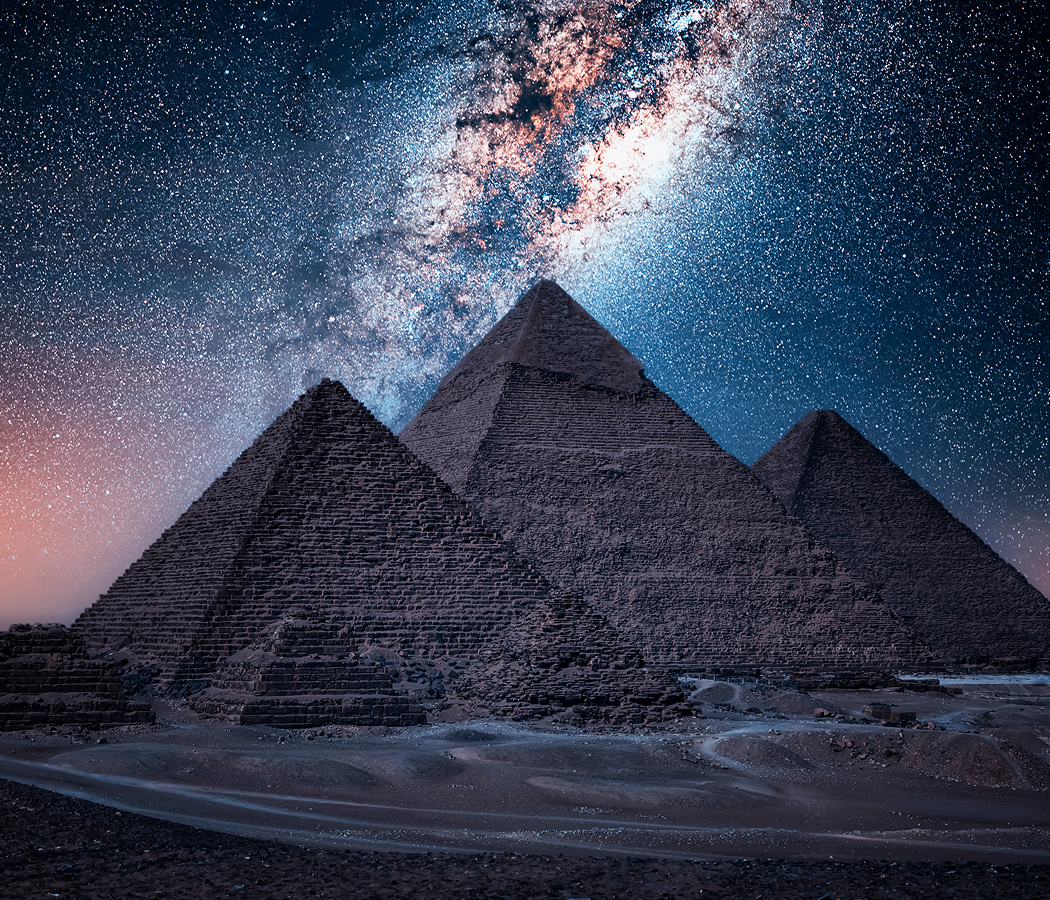
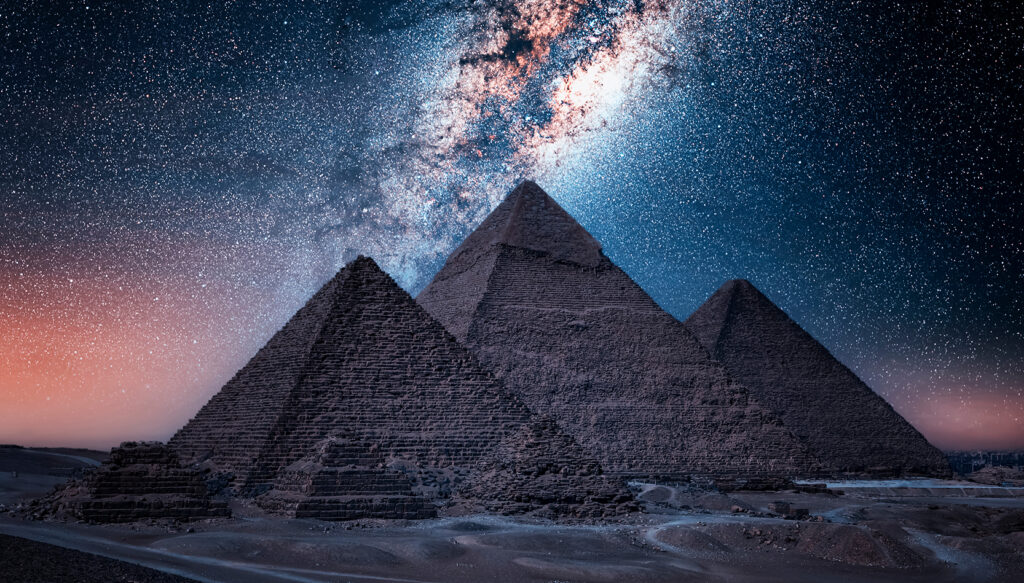
While its towering siblings, Khufu and Khafre, dominate the skyline, Menkaure's pyramid feels intimate, almost contemplative. Its proportions draw you closer instead of overwhelming you, its weathered stones radiating warmth rather than grandeur. Set against the backdrop of endless desert, it stands as a reminder that immortality doesn't always roar; sometimes, it whispers. The pyramid's base is layered in granite, its reddish tones glowing under the Egyptian sun, a contrast to the pale limestone above, as if it carries both the fire and dust of the earth within its form. Standing at its base, you sense a deliberate humility in its design, as though Pharaoh Menkaure sought not to eclipse his ancestors, but to refine their pursuit of eternity into something more personal, more human. It is a monument that doesn't demand reverence, it earns it, quietly.
What you should know about Pyramid of Menkaure.
Pyramid of Menkaure, built around 2490 BCE, is the smallest of the three great pyramids at Giza, yet it holds some of the most intriguing details in all of Egyptian architecture.
Originally standing at 65 meters (213 feet), the pyramid was constructed from limestone and red Aswan granite, a costly material that signaled both reverence and restraint. Menkaure, the grandson of Khufu and son of Khafre, ruled during a period of renewed cultural and religious stability, and his pyramid reflects that shift from sheer might to measured devotion. Archaeological excavations have revealed that the lowest sixteen courses of stone were intended to be fully encased in polished granite, though unfinished sections suggest the king's death interrupted the work. Inside, the descending passage leads to a complex of chambers and a beautifully crafted sarcophagus, carved from basalt, tragically lost at sea in the 19th century while being transported to England. Surrounding the pyramid are three smaller satellite pyramids, built for queens or royal daughters, their symmetry mirroring the familial devotion of Menkaure's reign. His mortuary temple, constructed in both limestone and mudbrick, marks one of the earliest transitions to hybrid architecture, a design adapted after the king's death by his successors. Excavations also uncovered a remarkable set of triad statues depicting Menkaure flanked by the goddess Hathor and a regional deity, embodying the unity between ruler, divinity, and land. These sculptures, now housed in the Egyptian Museum in Cairo, are among the most graceful ever created in the Old Kingdom, their lines fluid, their faces alive with idealized calm. While the pyramid's scale suggests humility, its artistry suggests transcendence, a balance of faith and finesse that still connects across millennia.
How to fold Pyramid of Menkaure into your trip.
A visit to Pyramid of Menkaure is a moment of quiet revelation amid the vast theater of the Giza Plateau.
Located at the southern end of the complex, it's often the least crowded of the three, allowing you to experience the site in rare peace. Begin your walk from the Khafre Pyramid and follow the path downhill toward Menkaure's complex, the descent itself feels symbolic, as though you're stepping from majesty into reflection. The pyramid's compact form makes it ideal for slow exploration: circle its base to appreciate the reddish granite casing that still clings to its lower layers, a reminder of the craftsmanship that once defined Egypt's golden age. Entry into the interior requires a separate ticket and is generally available on rotation with the other pyramids. The passageway, though narrower than Khufu's, feels deeply atmospheric, the air cool, the silence absolute. Pause in the inner chamber to let your eyes adjust; the dim light on the rough stone walls evokes both the permanence of death and the persistence of belief. Outside, take time to visit the three Queen's Pyramids, positioned in graceful alignment beside the main structure. For photographers, the late afternoon is magnetic here, the smaller pyramid catches the low sun as Khafre's shadow stretches toward it, a visual conversation between generations. From this vantage point, the Great Sphinx is visible in the distance, and if you wait until dusk, the desert turns to gold and violet, framing Menkaure's pyramid in a palette as timeless as its design. Combine your visit with a stop at the nearby Solar Boat Museum or the Grand Egyptian Museum, where Menkaure's statues tell the rest of his story in perfect sculpted form. Pyramid of Menkaure at Giza is not a monument of dominance, but of grace, proof that in the architecture of eternity, humility can shine just as brightly as power.
Where your story begins.
Foresyte Travel reveals places that feel extraordinary long before you arrive.
Experience premium editorial crafted for luxury travelers.