
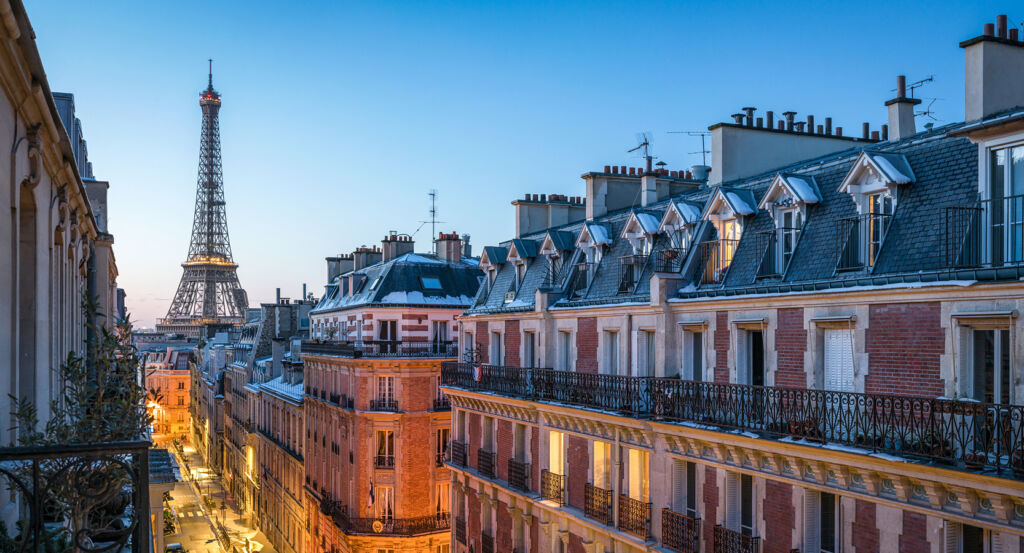
Why Quai de Gesvres matters.
Quai de Gesvres is a historic Saint-Merri riverside corridor where medieval commerce, royal authority, architectural heritage, and Seine-side vitality converge along one of the capital's oldest waterfront promenades.
Running through Saint-Merri between Pont Notre-Dame and Pont au Change, this distinguished riverside corridor unfolds through historic embankments, elegant civic buildings, celebrated river views, lively public spaces, centuries-old streets, and beautifully preserved architecture that reflects the origins of Paris as a thriving commercial center. Broad stone quays, mature riverside trees, traditional bouquiniste stalls, and uninterrupted panoramas across the Seine create a dynamic setting where merchants, monarchs, artisans, and travelers have shaped the city for nearly a thousand years. Every stretch of the corridor reveals another chapter in the remarkable evolution of medieval Paris into one of the world's great capitals. The result is a corridor defined by commercial heritage, historical significance, and one of Paris' most enduring riverfront landscapes.
What defines Quai de Gesvres.
Quai de Gesvres is best known for occupying the historic waterfront where the medieval Port de Grève developed into the principal commercial harbor of Paris, supplying the capital with timber, grain, wine, stone, and countless other goods transported along the Seine from the Middle Ages onward. The quay derives its name from Henri de Gondi, Duke of Retz and Lord of Gesvres, whose title became attached to this section of the riverfront during the seventeenth century as royal authorities reorganized the city's embankments. Throughout the medieval and early modern periods, the neighboring Place de Grève, today's Place de l'Hôtel de Ville, served not only as Paris' busiest riverside marketplace but also as the traditional location for royal proclamations, civic ceremonies, and public executions, making the corridor one of the principal stages upon which French political history unfolded. During the nineteenth century, Baron Haussmann transformed the medieval waterfront into a grand embankment integrated with modern bridges, improved flood protection, and elegant stone quays while preserving the corridor's strategic relationship with Hôtel de Ville and the historic commercial heart of the Right Bank. As part of the UNESCO-listed Banks of the Seine, Quai de Gesvres continues preserving nearly a millennium of commercial, civic, and architectural history within one of Europe's most significant urban riverfronts.
Historic embankments, carefully preserved river perspectives, UNESCO-recognized heritage landscapes, and the enduring presence of Paris' famed bouquinistes continue expressing the quay's remarkable continuity between medieval commerce and contemporary public life. The relationship between the Seine, Hôtel de Ville, and the former Port de Grève demonstrates how river trade shaped the economic growth of Paris long before the city's grand architecture emerged. Few riverfront corridors preserve such a complete record of commerce, municipal government, transportation, and civic history across so many centuries.
How Quai de Gesvres fits.
Quai de Gesvres works as a riverside exploration through Saint-Merri's celebrated civic landmarks and historic waterfront.
Begin at Hôtel de Ville, where Paris' grand city hall introduces centuries of municipal history before strolling along Quai de Gesvres beside the Seine. Continue to Pont Notre-Dame, whose long history as one of Paris' oldest river crossings reflects the commercial importance that defined the medieval waterfront. Conclude at Saint-Jacques Tower, the surviving Gothic remnant of the former Church of Saint-Jacques-de-la-Boucherie, where centuries of pilgrimage, architecture, and civic history provide a memorable finale celebrating the remarkable evolution of historic Paris. The progression moves naturally from civic government to medieval commerce before culminating in one of the city's most iconic Gothic monuments, revealing why Quai de Gesvres remains one of Paris' most historically significant riverside corridors.
Where your story begins.
Foresyte Travel reveals places that feel extraordinary long before you arrive.
Experience premium editorial crafted for luxury travelers.
Foresyte Travel may earn a commission when you book through the link on this page.














































































































