Why Robben Island matters.
Robben Island is a historic island where Table Bay's maritime geography meets the colonial history of southern Africa, the institutional segregation of successive governments and the struggle against apartheid, preserving one of the world's most significant sites associated with political imprisonment and democratic liberation.
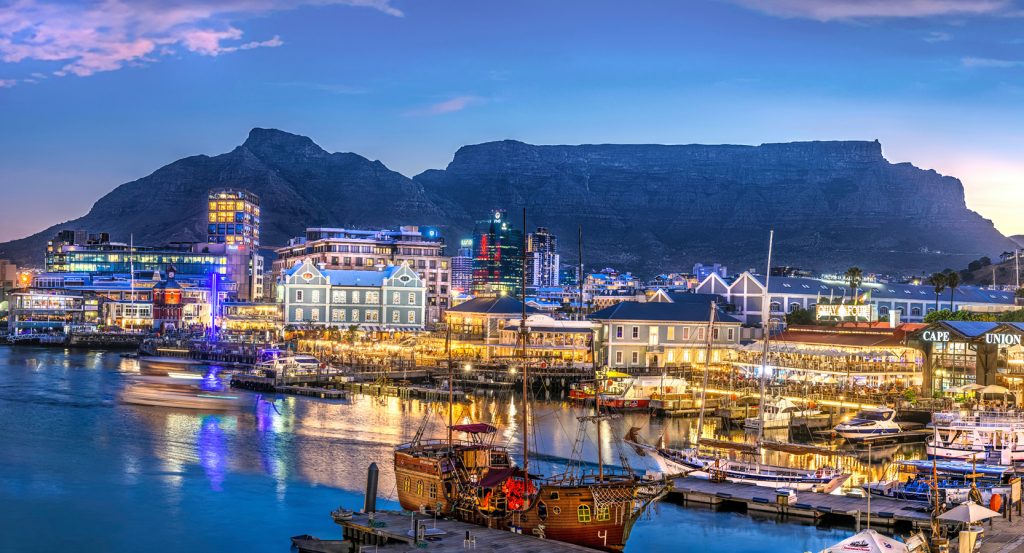
Lying northwest of Cape Town's harbour entrance, beyond the shipping channels connecting the Atlantic Ocean to the working docks, Robben Island occupies an isolated position across Table Bay, with the Cape Peninsula extending southward and the mountainous coastline forming its distant eastern and southern backdrop. Its low-lying terrain contrasts with the steep escarpments of the mainland, incorporating rocky shores, sandy stretches and exposed grassland across a broad, comparatively level surface. Historic stone buildings, whitewashed residential structures and utilitarian institutional complexes occupy the developed sections, connected by narrow roads crossing the island's open interior. The coastline incorporates substantial boulder formations and sheltered landing areas, with seabirds gathering along the rocky margins and indigenous vegetation covering sections of the surrounding landscape. The result is a geographically isolated heritage landscape whose restrained architecture, exposed maritime setting and surviving institutional buildings preserve the physical character of centuries of enforced separation.
What defines Robben Island.
Robben Island is best known for its centuries-long association with political imprisonment, forced isolation and the resistance movements that contributed to the establishment of democratic government in South Africa. The island's history of human occupation predates European settlement, with Indigenous communities maintaining relationships with the surrounding coastal environment through fishing, gathering and maritime activity. Portuguese sailors reached its shores during the expansion of European navigation around the Cape of Good Hope, and a group of seafarers sought refuge there in 1498. Its name derives from the Dutch word robben, meaning seals, reflecting the substantial marine mammal populations encountered by early European navigators. Dutch colonial authorities began using the island as a place of imprisonment and banishment during the seventeenth century, exploiting its geographical isolation to confine individuals regarded as threats to colonial administration. Autshumato, a Khoekhoe leader and interpreter associated with the early Cape settlement, was imprisoned there in 1658 and escaped the following year, establishing an important early episode in the island's history of resistance. Indigenous political leaders from southern Africa subsequently joined prisoners transported from territories across the Dutch East India Company's trading network. Sheikh Yusuf of Makassar arrived at the Cape in 1694 following his resistance to Dutch colonial expansion in Southeast Asia, contributing to the development of Islamic religious traditions among communities subjected to exile and enslavement. Another significant political prisoner was the Xhosa leader Makana, also known as Nxele, who was confined following the failed attack on Grahamstown in 1819. Makana died in December 1819 during an attempted escape by boat, establishing an enduring association between the island and resistance to colonial dispossession. British colonial administration introduced further institutional changes during the nineteenth century, transforming substantial portions of the island into facilities for people subjected to compulsory medical isolation. A leprosy settlement was established in 1846, initiating a period in which patients were separated from mainland communities under prevailing medical and social policies. The island also accommodated people with mental illnesses and other medical conditions, creating an extensive institutional population administered through separate residential and treatment facilities. The leprosy settlement continued into the twentieth century, with the remaining patients transferred to mainland institutions in 1931. South African military authorities subsequently assumed control of the island, developing coastal defensive infrastructure during the years preceding the Second World War. Artillery installations, observation positions and military accommodation formed part of the defensive network protecting Cape Town and its strategically important maritime approaches. The island became a fortified military station during the war, contributing to the protection of Allied shipping routes around southern Africa. Following the expansion of apartheid legislation under the National Party government, the island returned to use as a prison during the early 1960s. The state transferred political prisoners convicted under security legislation to the isolated facility, establishing a central institution within its system of racial segregation and political repression. Nelson Mandela arrived in June 1964 following his conviction in the Rivonia Trial, joining fellow African National Congress activists Walter Sisulu, Govan Mbeki, Ahmed Kathrada and Raymond Mhlaba. The Rivonia proceedings had resulted in life sentences for eight defendants, marking a decisive escalation in the government's campaign against organized resistance. Mandela spent eighteen of his twenty-seven years of imprisonment on the island before his transfer to Pollsmoor Prison in 1982. Other prominent prisoners included African National Congress leader Jacob Zuma, future president Kgalema Motlanthe and political activists associated with the Pan Africanist Congress and other liberation organizations. The imprisonment of political leaders created an unusual concentration of intellectual and organizational experience, contributing to sustained political discussion and informal education among incarcerated activists. Prisoners developed collective systems of learning, legal advocacy and political communication despite restrictions on correspondence, reading and association. International opposition to apartheid intensified during the 1970s and 1980s, with the continued detention of Mandela and other political prisoners becoming central to campaigns for sanctions and democratic reform. The government released its remaining political prisoners from the island during the transition toward constitutional democracy, and the final criminal prisoners departed in 1996. Robben Island Museum was established in 1997, creating a public institution responsible for preserving the island's cultural heritage and presenting its historical significance. UNESCO inscribed Robben Island on the World Heritage List in 1999, recognizing its association with political oppression and the eventual establishment of democratic government. Its significance derives from the continuity of forced confinement across colonial and apartheid administrations and the central role of its political prisoners in South Africa's democratic transformation.
Robben Island Museum's preservation program encompasses an unusually extensive historical environment, combining institutional architecture, maritime infrastructure, religious buildings and natural habitats within a single protected cultural landscape. The island covers 475 hectares, establishing a substantial geographical setting for the interpretation of successive periods of settlement and confinement. Its built environment incorporates structures associated with colonial administration, medical isolation, military occupation and twentieth-century incarceration, allowing the physical organization of different institutions to be examined across the surrounding terrain. Stone masonry, corrugated roofing, concrete construction and simple rendered façades preserve contrasting approaches to institutional building over several centuries. The surviving residential village introduces another dimension through houses, administrative facilities and community buildings associated with the families and employees who lived alongside the island's institutional populations. The Garrison Church, constructed in 1841 using convict labor, preserves an early religious building associated with British colonial occupation. Its modest architectural character reflects the practical requirements of an isolated settlement administered through military and penal institutions. The Church of the Good Shepherd, completed in 1895, developed specifically for the island's leprosy community and survives as an important architectural reminder of compulsory medical segregation. Its construction incorporated stone quarried locally, connecting the building's material character to the island's geological resources. The surrounding burial grounds preserve the histories of communities subjected to prolonged separation from mainland society, including people whose deaths occurred during periods of compulsory medical confinement. A separate Muslim burial site incorporates the Kramat of Tuan Matarah, associated with the religious traditions of political exiles transported to the Cape from Southeast Asia. The island's religious buildings and burial places preserve the cultural diversity of communities confined there under different colonial institutions. Maritime infrastructure contributes another substantial historical component through the surviving harbour facilities, navigational installations and coastal defensive structures. The island's lighthouse, completed in 1865, rises eighteen meters above its foundations and occupies an elevated position on Minto Hill. Its construction responded to the navigational hazards associated with the surrounding waters, where reefs and changing weather conditions threatened vessels approaching Cape Town. The lighthouse's continuing architectural presence connects the island to the development of maritime navigation around the Cape of Good Hope. The surrounding coastline also supports substantial wildlife populations, including African penguins, seabirds and marine mammals. African penguins established a breeding colony on the island during the 1980s, contributing to its ecological importance within the marine environments of Table Bay. The surrounding vegetation incorporates coastal grasses, shrubs and introduced plant species, reflecting successive periods of settlement and environmental change. The museum's conservation responsibilities extend to these natural resources, connecting the preservation of historic buildings to the management of sensitive coastal habitats. Public interpretation operates through guided visits organized around the island's surviving structures and historical environments. Ferries depart from the Nelson Mandela Gateway at the V&A Waterfront, establishing a maritime connection that reinforces the physical separation between the island and the mainland. The standard excursion incorporates three and a half hours, including the return crossing and guided transportation across the island. Former political prisoners have contributed to the interpretation of the prison environment, introducing personal testimony into the museum's educational program. The institution also maintains archival collections, educational initiatives and heritage conservation projects devoted to the preservation of South Africa's political and social history. Robben Island's distinctive importance emerges from the preservation of an entire institutional landscape, allowing centuries of colonial administration, medical segregation, military occupation and political resistance to be understood through their surviving physical environments.
How Robben Island fits.
Robben Island works as the starting point for an exploration connecting the suppression of African nationalist movements, the conditions imposed on political prisoners and the leadership that emerged from South Africa's struggle against apartheid.
Begin at Robert Sobukwe House, the former residence used to confine the founder of the Pan Africanist Congress following his imprisonment under apartheid security legislation. Sobukwe established the organization in 1959 after breaking with the African National Congress over fundamental questions concerning African nationalism and political leadership. His role in organizing opposition to the pass laws contributed to the demonstrations of March 1960, including the protest at Sharpeville that ended in the killing of sixty-nine people by police. Parliament subsequently introduced legislation permitting his continued detention after completion of his original sentence. Sobukwe spent six years in solitary confinement on the island, living separately from other political prisoners under exceptional restrictions. Continue to Limestone Quarry, the former extraction site where political prisoners performed demanding manual labor during the apartheid period. The exposed limestone surfaces created difficult working conditions through intense sunlight, reflected glare and airborne dust. Prisoners excavated and transported stone using basic equipment, enduring physical demands that contributed to long-term health problems. Mandela experienced damage to his eyesight associated with prolonged exposure to the quarry's reflective surfaces. The site also became associated with informal political education, as prisoners used opportunities for conversation to exchange knowledge and develop organizational relationships. A pile of stones assembled by former prisoners during a reunion in 1995 preserves a commemorative association with their shared incarceration. Conclude at Maximum Security Prison, the institutional complex constructed during the early 1960s to accommodate political prisoners and individuals convicted under South Africa's criminal justice system. Its organization incorporated communal accommodation blocks, individual isolation cells, administrative facilities and enclosed exercise yards. Racial discrimination extended into prison regulations, producing differences in food allowances, clothing and other conditions imposed on incarcerated men. Mandela occupied a small individual cell measuring two meters by two and a half meters, with a floor mat, blankets and basic sanitary facilities defining its original furnishings. The prison became a central location in the history of organized resistance, preserving the spaces in which political leaders maintained intellectual relationships and prepared for the eventual dismantling of apartheid. The progression moves from Robert Sobukwe House's history of political isolation through Limestone Quarry's forced labor and culminates in Maximum Security Prison's institutional architecture, connecting the conditions of incarceration to the resistance movements that contributed to South African democracy.
Where your story begins.
Foresyte Travel reveals places that feel extraordinary long before you arrive.
Enjoy editorial crafted for luxury travelers.
Foresyte may earn a commission when you book.