Why Wrigley Rooftops matters.
Wrigley Rooftops are renowned baseball viewing venues where Wrigleyville's neighborhood character, architectural ingenuity, fan tradition, and sporting history create one of the most distinctive spectator experiences in professional sports.
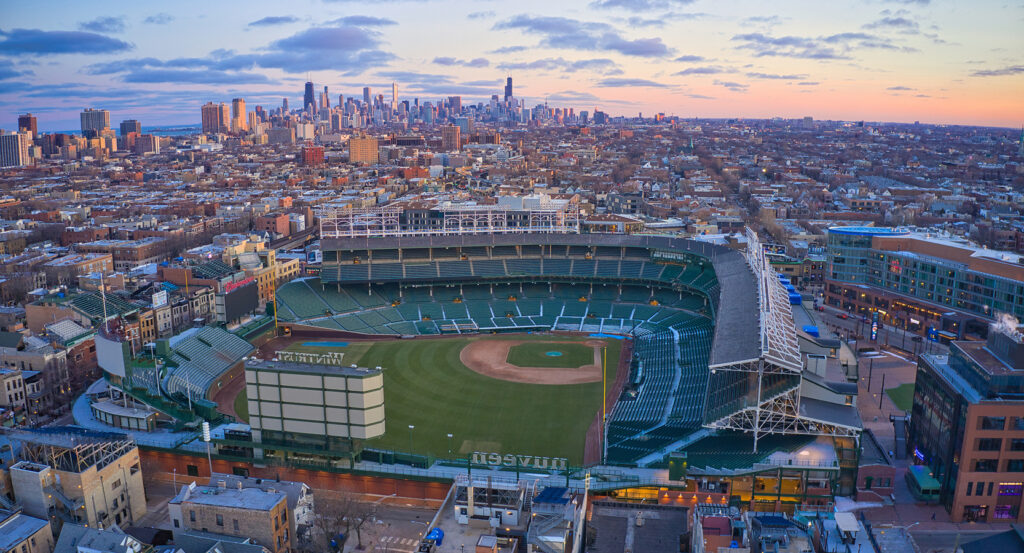
Set atop historic residential buildings along Waveland Avenue and Sheffield Avenue near Wrigley Field and just steps from Gallagher Way, these celebrated rooftop venues offer elevated views into one of baseball's most iconic ballparks, pairing the excitement of Chicago Cubs baseball with open-air seating, neighborhood hospitality, and panoramic perspectives found nowhere else in Major League Baseball. Historic brick buildings, intimate grandstands, and the unmistakable atmosphere of Wrigleyville transform every game into a uniquely Chicago tradition. Every inning celebrates more than a century of neighborhood baseball culture. The result is an experience defined by authenticity, architectural adaptation, and one of the world's most recognizable sports viewing traditions.
What defines Wrigley Rooftops.
Wrigley Rooftops are best known for evolving organically alongside Wrigley Field shortly after the ballpark opened in 1914, when residents gathered atop apartment buildings overlooking the outfield before the tradition expanded into organized rooftop venues, including the first commercial rooftop admission during the 1938 World Series, ultimately growing into sixteen rooftop clubs that transformed ordinary residential buildings into one of Major League Baseball's most distinctive spectator experiences. Located primarily along Waveland Avenue beyond left field and Sheffield Avenue beyond right field, the rooftops evolved from folding chairs and informal neighborhood gatherings into professionally engineered hospitality venues featuring grandstands, climate-controlled lounges, premium dining, and event spaces while preserving their unparalleled views into the historic ballpark. During the early 2000s, the rooftops became the center of a landmark legal dispute over broadcasting and viewing rights that concluded with a 2004 agreement requiring participating venues to share 17 percent of gross revenue with the Chicago Cubs in exchange for official recognition through 2023, reinforcing the rooftops' unique relationship with one of baseball's oldest stadiums. Over time, the Ricketts family acquired a majority of the rooftop properties, integrating many into the official Wrigley Rooftops portfolio while preserving one of Chicago's most celebrated neighborhood traditions.
The rooftop venues demonstrate an extraordinary example of adaptive urban architecture, where century-old residential buildings were carefully reinforced with steel grandstands, elevators, hospitality suites, kitchens, and observation decks. Their existence has influenced stadium design well beyond Chicago, inspiring rooftop viewing concepts at newer professional baseball venues while reinforcing Wrigleyville's character as a neighborhood where the city itself becomes part of the ballpark. Despite modern renovations to Wrigley Field, expanded scoreboards, and evolving ownership, the rooftops remain a defining feature of the game's atmosphere, offering perspectives that blend baseball, architecture, and community unlike anywhere else in the sport. Every rooftop demonstrates how neighborhood entrepreneurship, historic preservation, baseball tradition, and urban design combine to create one of America's most iconic sporting experiences.
How Wrigley Rooftops fits.
Wrigley Rooftops are best experienced as the neighborhood centerpiece of an exploration through Wrigleyville's celebrated baseball landmarks.
Begin at Gallagher Way, where lively public gathering spaces introduce the extraordinary culture surrounding Wrigley Field before enjoying a game from the Wrigley Rooftops. Continue to the Ernie Banks Statue, whose bronze tribute celebrates the enduring legacy of “Mr. Cub.” Conclude at the Wrigley Field Marquee, where one of baseball's most recognizable landmarks provides a memorable finale celebrating the remarkable relationship between neighborhood tradition, architectural character, and America's pastime. The progression moves naturally from energetic public plaza to renowned rooftop experience before concluding through two defining Wrigleyville landmarks, revealing why Wrigley Rooftops remain one of Chicago's most unforgettable sporting traditions.
Where your story begins.
Foresyte Travel reveals places that feel extraordinary long before you arrive.
Enjoy editorial crafted for luxury travelers.
Foresyte may earn a commission when you book.