Why Wrigleyville matters.
Wrigleyville is a historic North Side neighborhood where baseball tradition, neighborhood hospitality, architectural character, and year-round entertainment create one of Chicago's most recognizable cultural districts.
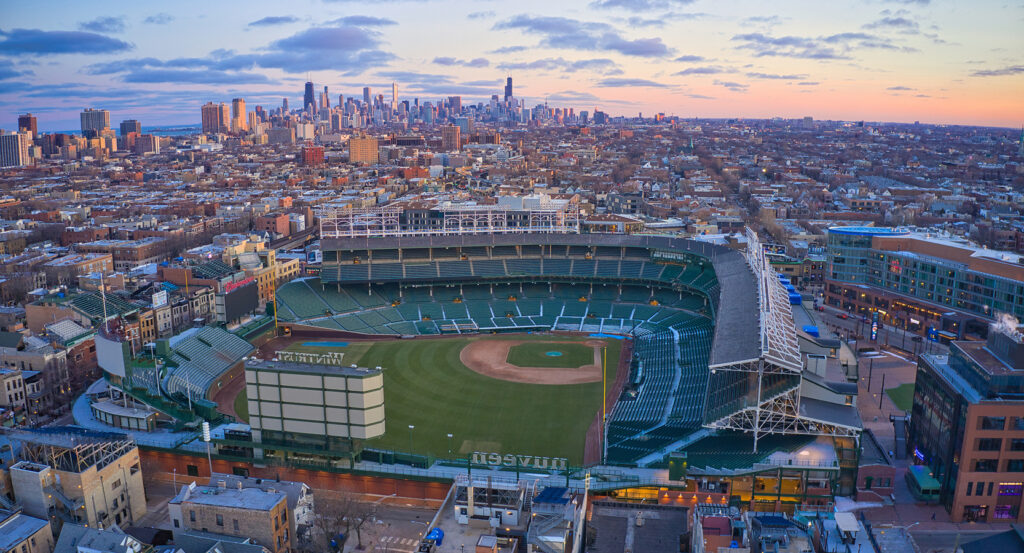
Positioned around Wrigley Field between Lake View East and Graceland West, this energetic neighborhood blends century-old brick streets, iconic sports landmarks, lively restaurants, historic taverns, music venues, and welcoming public spaces into a destination that thrives long after the final pitch. Historic architecture, thriving sidewalks, and an unmistakable game-day atmosphere create an environment where generations of Chicagoans and visitors celebrate one of baseball's most enduring traditions. Every visit reflects the neighborhood's remarkable evolution from residential enclave to internationally recognized entertainment district. The result is a destination defined by civic identity, sporting heritage, and one of America's most beloved baseball neighborhoods.
What defines Wrigleyville.
Wrigleyville is best known for developing around Wrigley Field after the ballpark opened as Weeghman Park in 1914, evolving from a quiet residential section of Lake View into one of the world's most recognizable sports neighborhoods through more than a century of Chicago Cubs baseball, historic preservation, neighborhood entrepreneurship, and continuous reinvestment. Originally anchored by two- and three-flat residential buildings constructed during Lake View's late nineteenth-century expansion, the neighborhood experienced a dramatic transformation after chewing gum executive William Wrigley Jr. acquired the Cubs in 1921 and renamed the ballpark Wrigley Field in 1926, establishing the area as the symbolic heart of Cubs fandom. Today Wrigleyville encompasses dozens of historic commercial blocks centered along Clark Street, Addison Street, Sheffield Avenue, and Waveland Avenue, where renowned destinations including the Wrigley Rooftops, Gallagher Way, Murphy's Bleachers, and numerous independently owned restaurants and taverns attract millions of visitors annually. The district underwent its most significant modernization during the $1 billion 1060 Project, completed across the 2010s, which restored the century-old ballpark while adding Gallagher Way, new public plazas, hospitality venues, offices, hotels, and year-round community spaces that transformed Wrigleyville into a four-season entertainment destination.
Beyond baseball, Wrigleyville has become one of Chicago's most dynamic urban neighborhoods, hosting outdoor concerts, winter markets, fitness events, film screenings, holiday celebrations, and community festivals that activate Gallagher Way throughout the year. The neighborhood's collection of historic brick buildings, landmark sports bars, rooftop venues, and preserved residential streets demonstrates an unusual balance between large-scale tourism and long-established local character. Designated portions of the surrounding area contribute to Chicago's broader historic preservation efforts while continued investment has strengthened pedestrian connectivity, public transit access through the CTA Red Line, and neighborhood walkability. Every block demonstrates how architectural preservation, professional sports, community investment, and civic pride combine to create one of America's most influential neighborhood entertainment districts.
How Wrigleyville fits.
Wrigleyville works as the historic centerpiece of an exploration through Chicago's celebrated baseball district.
Begin at Wrigley Field, where one of Major League Baseball's most historic ballparks introduces the extraordinary legacy of the neighborhood before exploring Wrigleyville's restaurants, rooftops, and lively streets. Continue to Gallagher Way, whose year-round public programming extends the neighborhood's community atmosphere beyond game days. Conclude at the Ernie Banks Statue, where a tribute to “Mr. Cub” provides a memorable finale celebrating the remarkable relationship between baseball, neighborhood identity, and Chicago tradition that defines Wrigleyville. The progression moves naturally from renowned ballpark to energetic neighborhood before concluding through two defining district landmarks, revealing why Wrigleyville remains one of America's essential sports destinations.
Where your story begins.
Foresyte Travel reveals places that feel extraordinary long before you arrive.
Enjoy editorial crafted for luxury travelers.
Foresyte may earn a commission when you book.