
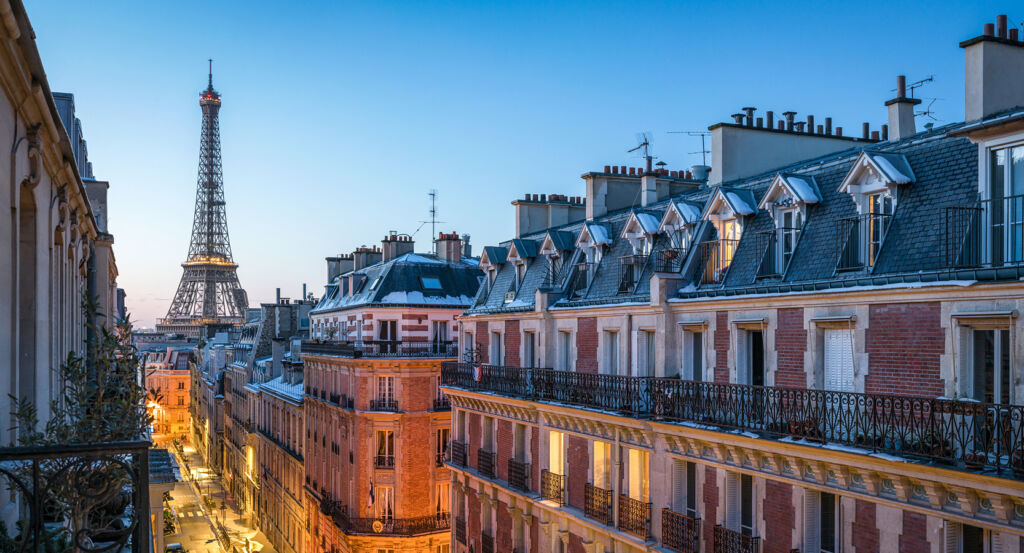
Why Rue Saint-Martin matters.
Rue Saint-Martin is a renowned Arts-et-Métiers corridor where medieval foundations, architectural innovation, commercial ambition, and centuries of Parisian life converge along one of the capital's oldest continuously active streets.
Running through Arts-et-Métiers between Centre Pompidou and Porte Saint-Martin, this remarkable historic corridor unfolds through Gothic churches, Renaissance landmarks, celebrated museums, independent galleries, neighborhood cafés, artisan workshops, and elegant stone façades that chronicle nearly two millennia of urban evolution. Ancient street alignments, sculpted portals, hidden courtyards, and richly layered architecture reveal a thoroughfare that has continually adapted to changing eras while preserving the physical character that distinguishes historic Paris. Every block uncovers another chapter of the city's remarkable story, creating an experience where history, creativity, and everyday neighborhood life remain inseparably connected. The result is a corridor defined by architectural continuity, historical significance, and one of Central Paris' most compelling urban journeys.
What defines Rue Saint-Martin.
Rue Saint-Martin is best known for preserving the route of the ancient Roman road leading north from Lutetia before evolving into one of medieval Paris' principal thoroughfares, taking its name from the Priory of Saint-Martin-des-Champs, founded in 1060 and later transformed into the Musée des Arts et Métiers, among the world's oldest science and technology museums. The corridor also became home to extraordinary architectural landmarks including the Gothic Tour Saint-Jacques, the Renaissance Fontaine Maubuée, and the Centre Pompidou, whose revolutionary inside-out design by Renzo Piano and Richard Rogers permanently redefined twentieth century museum architecture while reinforcing the street's remarkable continuity between medieval heritage and modern innovation.
Centuries of architectural ambition remain visible along Rue Saint-Martin through an exceptional succession of churches, civic monuments, museums, residential buildings, and commercial storefronts that demonstrate the continual reinvention of Paris. Independent businesses, neighborhood cafés, cultural institutions, and thriving public spaces sustain a lively urban atmosphere that reflects the corridor's enduring importance as one of the capital's defining historic streets.
How Rue Saint-Martin fits.
Rue Saint-Martin works as an exploration through Arts-et-Métiers' remarkable architectural heritage, scientific innovation, and cultural landmarks.
Begin at Centre Pompidou, where one of the world's most influential museums of modern and contemporary art establishes an inspiring introduction before following Rue Saint-Martin through centuries of Parisian history. Continue to Musée des Arts et Métiers, whose extraordinary collection of scientific inventions and engineering achievements celebrates the legacy of the former Priory of Saint-Martin-des-Champs. Conclude at Tour Saint-Jacques, where one of the city's finest surviving Gothic towers provides a grand finale celebrating medieval craftsmanship, architectural resilience, and the enduring story of historic Paris. The progression moves naturally from groundbreaking contemporary architecture to world changing scientific innovation before concluding through one of Paris' greatest medieval landmarks, revealing why Rue Saint-Martin remains one of the capital's essential historic corridors.
Where your story begins.
Foresyte Travel reveals places that feel extraordinary long before you arrive.
Experience premium editorial crafted for luxury travelers.
Foresyte Travel may earn a commission when you book through the link on this page.














































































































