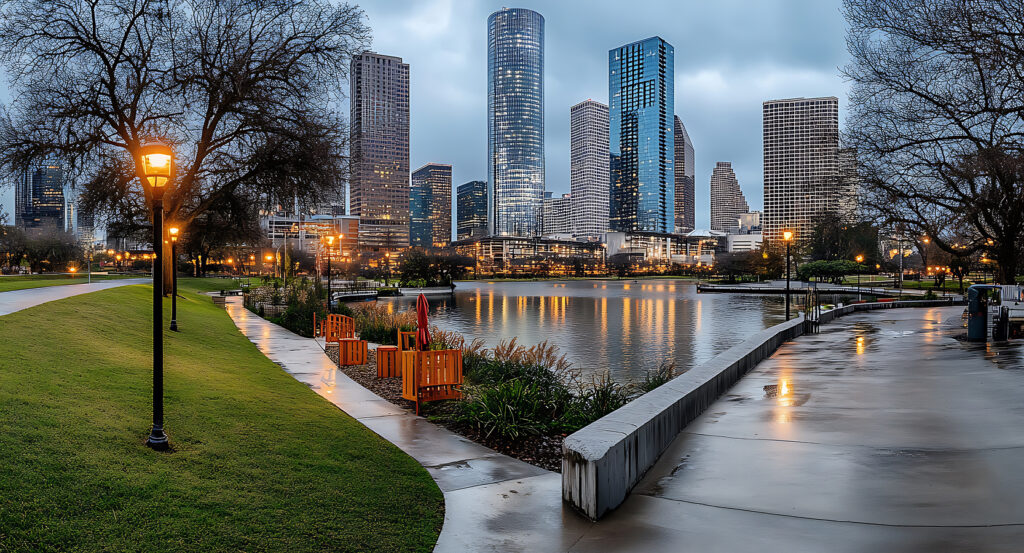
Why Sabine Street matters.
Sabine Street is an elegant corridor where Washington Avenue Coalition / Memorial Park's riverfront heritage, architectural character, cultural vitality, and civic character converge along one of Houston's most distinctive urban streets.
Running through Washington Avenue Coalition / Memorial Park between Downtown and Rice Military, the corridor connects historic neighborhoods, parkland, cultural institutions, and riverfront landscapes that collectively reflect Houston's evolution from a Buffalo Bayou trading settlement into a modern metropolitan center. Mature oak canopies, preserved residential blocks, carefully designed public spaces, and sweeping views across Buffalo Bayou create a streetscape where the city's earliest geography remains inseparable from contemporary urban life. Continued investment has strengthened the corridor while preserving the landscape and architectural structure that distinguish this section of Houston. The result is an experience defined by historical depth, scenic character, and one of Houston's most engaging corridors.
What defines Sabine Street.
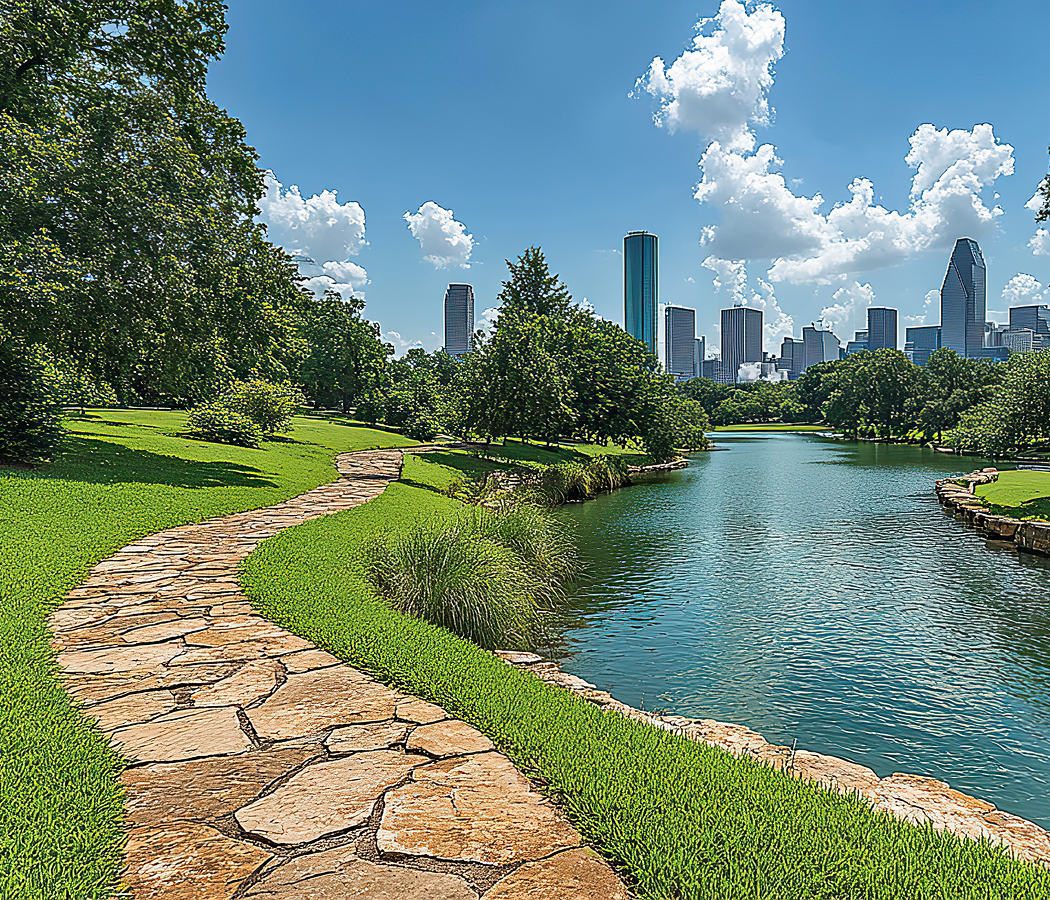
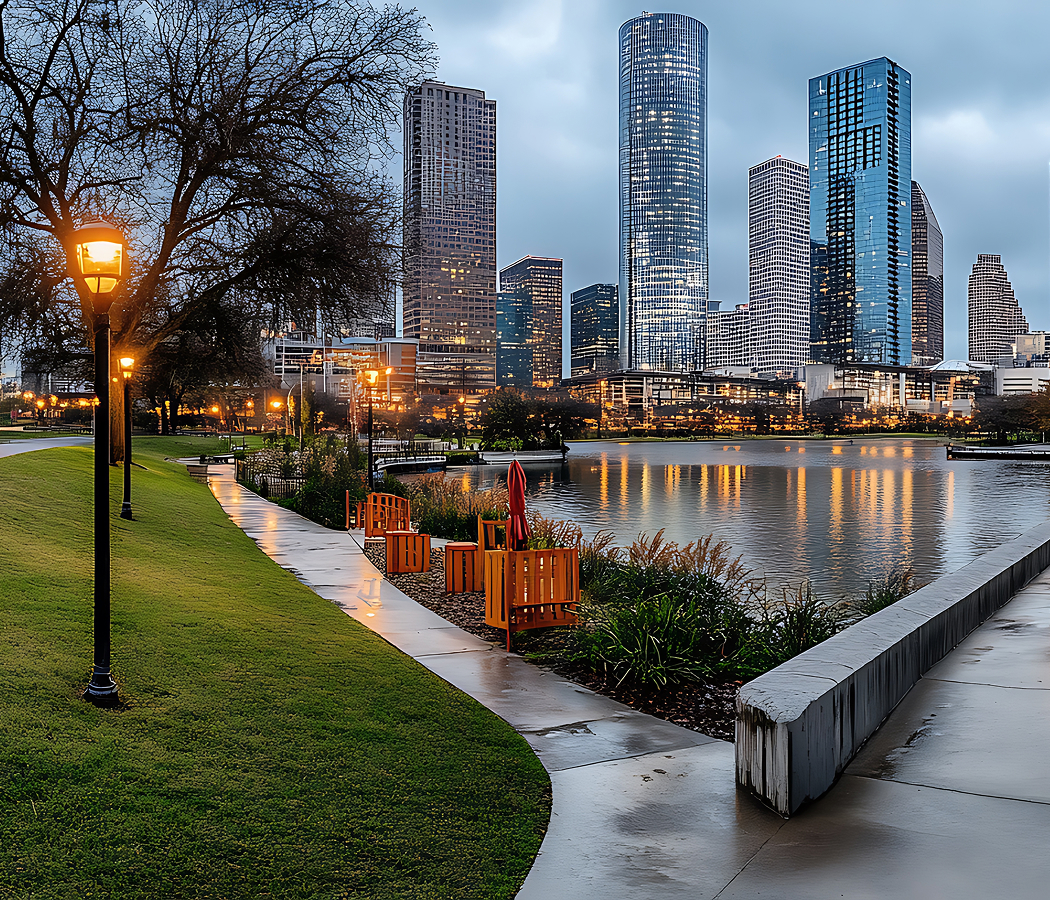
Sabine Street is best known for crossing Buffalo Bayou, the waterway that gave rise to Houston after Augustus Chapman Allen and John Kirby Allen founded the city in 1836 upon natural bluffs overlooking its navigable channel. The corridor developed alongside Buffalo Bayou Park, whose origins trace to the late nineteenth century before a comprehensive redesign led by SWA Group reopened major sections of the park in 2015, restoring 160 acres of riverfront landscape through native planting, ecological rehabilitation, trails, and public gathering spaces. The surrounding district preserves substantial examples of Craftsman, Colonial Revival, Mid-Century Modern, and contemporary residential architecture that document successive phases of westward expansion beyond Houston's original townsite. Nearby engineering works, including the Sabine Street Bridge, continue illustrating the enduring relationship between Buffalo Bayou's geography and Houston's transportation history while framing uninterrupted views of the downtown skyline. Collectively, the corridor's founding history, environmental setting, landscape architecture, engineering heritage, and architectural diversity establish Sabine Street as one of Houston's defining historic corridors.
Along the corridor, Glenwood Cemetery, established in 1871, preserves the graves of Howard Hughes Sr., Anson Jones, and numerous early civic leaders, reinforcing Sabine Street's direct association with Houston's nineteenth- and twentieth-century history. That historical narrative continues through the nearby Houston Fire Museum, housed within Fire Station No. 7, completed in 1899, where preserved apparatus, archival collections, and original brick construction document the evolution of municipal firefighting during Houston's formative decades. The adjacent Lost Lake restoration within Buffalo Bayou Park reintroduced native wetland habitat supporting great egrets, green herons, red-eared sliders, and Gulf Coast vegetation, demonstrating how ecological restoration has strengthened the natural landscape surrounding Sabine Street without altering its historic relationship to the bayou. Together, these historic institutions, preserved landscapes, and enduring environmental resources demonstrate how Sabine Street developed within a corridor where Houston's founding history, civic memory, and natural setting remain closely connected.
How Sabine Street fits.
Sabine Street works as an exploration of Houston's natural landscape, architectural heritage, and artistic identity.
Begin at Buffalo Bayou Park, where winding trails, restored native landscapes, and dramatic riverfront overlooks introduce the geography that shaped Houston from its earliest days. Continue to Bayou Bend Collection and Gardens, where American decorative arts, historic architecture, and formal gardens broaden the experience through one of the city's finest cultural estates. Conclude at The Menil Collection, where internationally renowned works of art provide the historical payoff by illustrating Houston's enduring commitment to world-class cultural institutions. The progression moves naturally from Houston's defining landscape through architectural heritage before culminating in one of the city's foremost artistic collections.
Where your story begins.
Foresyte Travel reveals places that feel extraordinary long before you arrive.
Enjoy editorial crafted for luxury travelers.
Foresyte may earn a commission when you book.