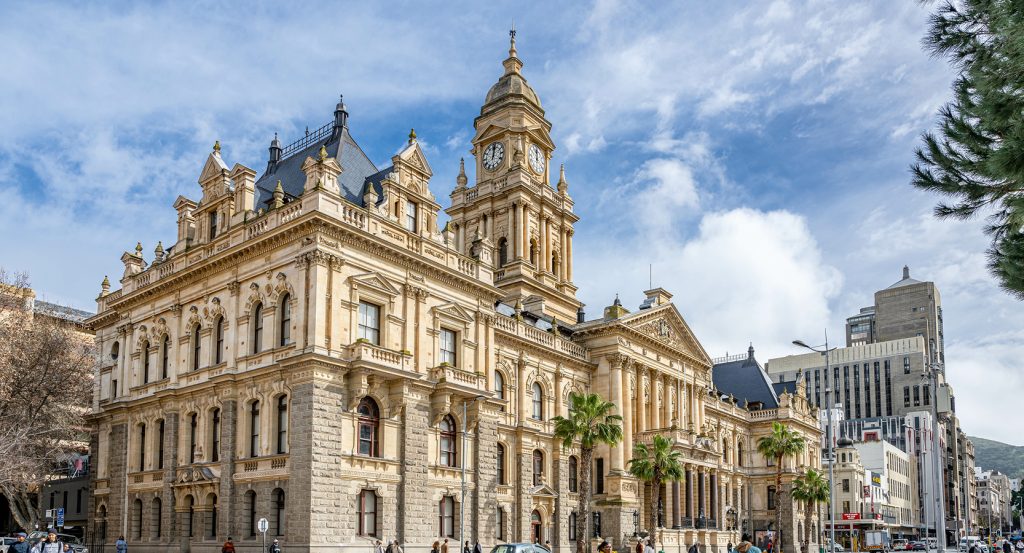
Why Salt River matters.
Salt River is a historic industrial district where railway heritage, creative reinvention, and working-class roots converge at one of the most consequential crossroads in the city's urban evolution alongside neighboring Woodstock.
Rail lines fan outward from one of Cape Town's busiest transportation corridors while former factories, warehouses, and manufacturing facilities continue to define the physical character of the neighborhood. Freight infrastructure, commercial workshops, educational institutions, and emerging creative businesses occupy a landscape shaped by more than a century of industrial activity. The district carries a distinctly urban texture. Brick facades, railway sidings, and industrial-era architecture remain visible throughout streets that once powered much of Cape Town's manufacturing economy. Students move between campuses and cafés. Entrepreneurs occupy repurposed industrial spaces. Longtime residents continue traditions rooted in communities that helped build the neighborhood through generations of labor and resilience. Salt River reveals a side of Cape Town often overlooked by visitors, one defined not by scenery alone but by production, movement, and transformation. The neighborhood stands as a living record of the forces that helped shape the modern city.
What defines Salt River.
Salt River is best known for being home to Salt River Railway Station, among the oldest and most historically significant railway junctions in South Africa's transportation network.
The station became a critical component of Cape Town's industrial development, connecting the city center to growing suburbs, manufacturing districts, and regional trade routes during the nineteenth and twentieth centuries. Its presence helped establish Salt River as a transportation and industrial hub whose influence extended far beyond the neighborhood itself. Factories, workshops, warehouses, and commercial enterprises concentrated around the railway infrastructure, transforming the district into one of Cape Town's most important centers of production and employment. The neighborhood also played a significant role in the social history of the city, serving generations of working-class communities whose contributions remain embedded in the area's identity. Today, Salt River occupies a unique position within Cape Town, balancing industrial heritage, educational institutions, residential growth, and creative redevelopment. Few districts demonstrate the city's economic and urban evolution as clearly as Salt River.
How Salt River fits.
Salt River works as an exploration of the industrial heritage, educational institutions, and creative energy that continue to shape one of Cape Town's most dynamic urban districts.
Begin at Salt River Railway Station, where the neighborhood's defining relationship with transportation and industry immediately comes into focus. Continue toward the Cape Peninsula University of Technology District Six Campus, whose presence reflects the educational and professional development that increasingly contributes to the area's identity. From there, make your way to The Old Biscuit Mill, a landmark destination whose successful adaptive reuse demonstrates how former industrial infrastructure continues to find new life within the surrounding neighborhoods. Along the route, you'll encounter historic factory buildings, creative studios, murals, and commercial corridors that reveal the many layers of the district's transformation. The progression moves naturally from transportation heritage to education to contemporary urban renewal, creating a fuller understanding of the forces shaping this part of the city. Salt River remains one of the clearest expressions of Cape Town's industrial legacy, preserving the infrastructure, communities, and entrepreneurial spirit that continue to drive its evolution.
Where your story begins.
Foresyte Travel reveals places that feel extraordinary long before you arrive.
Enjoy editorial crafted for luxury travelers.
Foresyte may earn a commission when you book.