
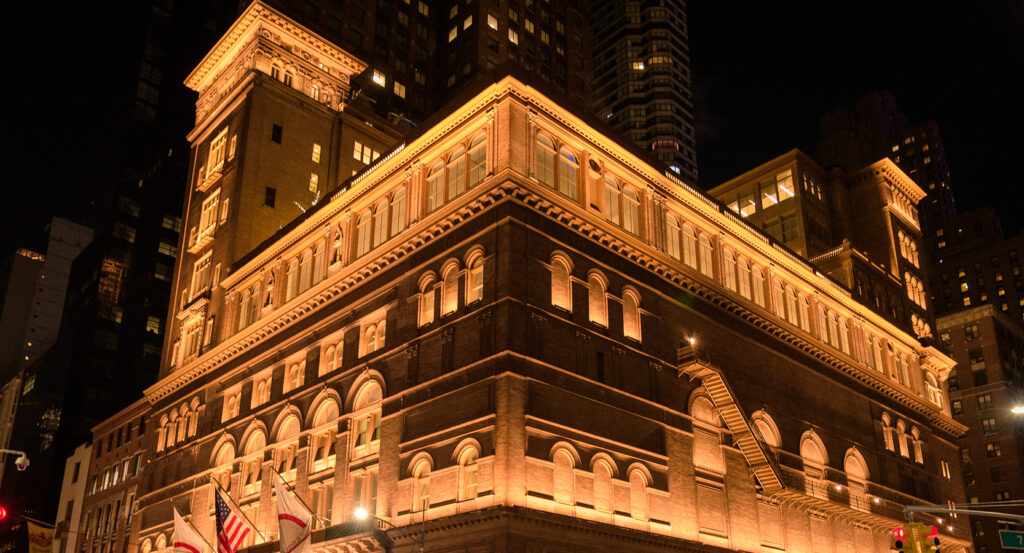
Why you should experience Stern Auditorium / Perelman Stage in New York, NY.
There are few places in the world where sound transcends its physical form, wrapping around the listener like a living thing, Stern Auditorium Perelman Stage is one of them. It's the heart of Carnegie Hall, a masterpiece of proportion and reverence, where the energy of performance ignites even the quietest soul. The gilded arches and soft amber glow evoke the grandeur of another era, yet every performance feels timeless. To sit beneath its iconic proscenium is to feel tethered to history and yet wholly present in the now. The acoustics are so pure they seem almost supernatural, every note hovers in the air, each silence deliberate and alive. Whether it's a full orchestra or a single voice, this is not a venue to hear music; it's a place to feel it in its truest, most human form.
The real power of Stern Auditorium lies in its connection between performer and audience. It transforms artistry into communion. You'll find yourself breathing in rhythm with the music, swept into a current that's both intimate and monumental. It's no wonder this hall remains one of the most coveted stages on Earth, a space where excellence is expected, and transcendence feels inevitable.
What you should know about Stern Auditorium / Perelman Stage.
What many don't realize is that Stern Auditorium isn't merely old-world elegance; it's an acoustic miracle shaped by scientific precision. When Andrew Carnegie commissioned the hall in 1891, its architect, William Burnet Tuthill, was a cello player, and that made all the difference. He designed it with a musician's ear, relying on intuition rather than blueprints, resulting in the warm resonance that has never been successfully replicated. Beneath the floorboards, subtle air pockets and curved walls guide the sound, reflecting it evenly to every tier. Even today, sound engineers study its design for clues to its perfection. And hidden behind its velvet curtains are small private rehearsal chambers where legends like Leonard Bernstein, Ella Fitzgerald, and Yo-Yo Ma once tuned their instruments in solitude before stepping into immortality.
The hall itself underwent a meticulous restoration in 1986, preserving every detail, even the imperfections, because the smallest alteration risked altering the magic. So when you visit, you're not just entering a performance space, but stepping into a living, breathing relic of artistic precision and cultural devotion.
How to fold Stern Auditorium / Perelman Stage into your trip.
To fold Stern Auditorium into your trip, make an evening of it. Book early for the New York Philharmonic, or find a one-night-only performance that piques your curiosity. Arrive before the doors open to linger in the marble foyer, where the anticipation of sound already hums in the air. Take your seat, silence your phone, and surrender. Afterward, exit onto 7th Avenue and let the rush of traffic feel like applause echoing through the streets. For those who crave reflection, stroll a few blocks south to unwind at a quiet jazz lounge, where the night's resonance continues in a different form, softer, but equally unforgettable.
Experiencing Stern Auditorium isn't about checking a landmark off your list. It's about immersion, a moment of shared humanity through sound, where the city's chaos fades and you find yourself completely present, lost in something larger than language.
Where your story begins.
Foresyte Travel reveals places that feel extraordinary long before you arrive.
Experience premium editorial crafted for luxury travelers.







































































































