Why Sushi Sho matters.
Sushi Sho is an exceptional Japanese omakase restaurant where Waikīkī's international hospitality culture meets Keiji Nakazawa's mastery of Edomae sushi, bringing traditional Japanese preservation techniques and carefully selected Hawaiian seafood into an intimate dining experience distinguished by extraordinary technical precision.
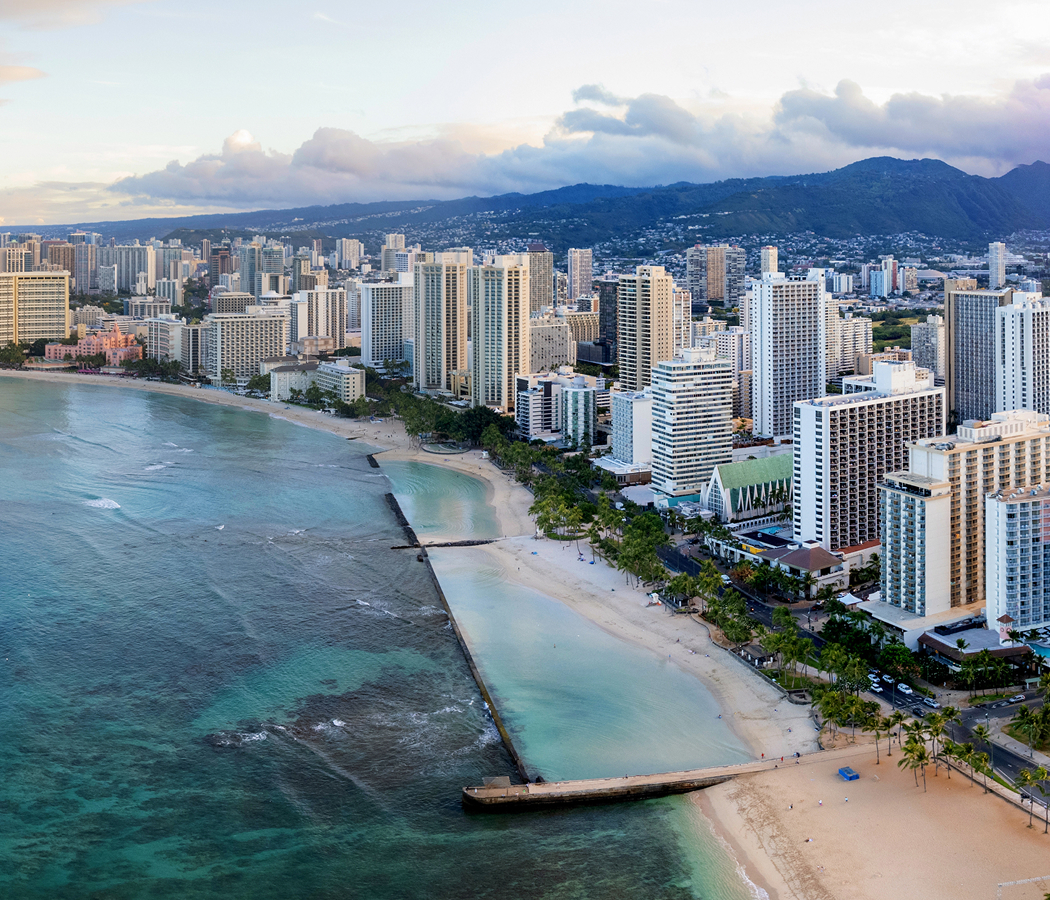
Positioned along Kalaimoku Street within The Ritz-Carlton Residences, Waikiki Beach, between Kūhiō Avenue, Kalākaua Avenue and the resort district surrounding Fort DeRussy, the restaurant occupies a discreet setting within walking distance of Waikīkī's principal shopping and cultural destinations. Its ten-seat counter establishes a direct relationship between the sushi chefs and their guests. Pale hinoki cypress, carved wooden surfaces and carefully controlled lighting give the interior the character of a traditional Japanese sushi establishment. The compact arrangement concentrates attention on the preparation and presentation of individual pieces, with the chefs working directly before the seated diners. The result is a highly specialized restaurant whose restrained interior and carefully organized counter service support one of Honolulu's most ambitious interpretations of Japanese gastronomy.
What defines Sushi Sho.
Sushi Sho is best known for Keiji Nakazawa's revival of traditional Edomae sushi techniques and his decision to establish his first international restaurant in Honolulu. Born in Japan in 1962, Nakazawa entered professional restaurant kitchens in 1978 at fifteen, beginning an apprenticeship that eventually took him through more than twenty establishments. His early career developed during a period when Japanese sushi restaurants increasingly emphasized the freshness of seafood, placing his growing interest in historical preservation techniques outside the prevailing culinary fashion. Nakazawa became fascinated with the methods developed by sushi merchants in nineteenth-century Edo, whose preparations relied on salting, curing, simmering and fermentation to preserve fish before widespread refrigeration. He established his first independent sushi restaurant near Tokyo's Haneda Airport in 1989, beginning a sustained period of experimentation with these techniques. The restaurant initially struggled to attract customers, giving Nakazawa opportunities to refine unconventional preparations and investigate the effects of maturation on different fish. His work eventually attracted a dedicated following, establishing Sushi Sho among Tokyo's most influential sushi establishments. Nakazawa developed a distinctive approach to omakase through the careful arrangement of nigiri and prepared dishes, giving the chef responsibility for selecting ingredients and determining their order of presentation. His reputation extended through the professional training of younger chefs, many of whom subsequently established independent restaurants bearing variations of the Sushi Sho name. Among his prominent protégés were Yasushi Zenda, Takuya Sato and chefs associated with Sushi Sho Masa, Sushi Sho Shingo and Sushi Sho Saito. Nakazawa also appeared in a culinary competition against Masaharu Morimoto, extending his professional reputation beyond the traditional sushi community. His book Sushiya no Ningenryoku explored the professional qualities and personal discipline associated with sushi craftsmanship. After decades of restaurant ownership in Japan, Nakazawa selected Honolulu for his first establishment outside his home country, recognizing Hawaiʻi's connections with Japanese food culture and its access to seafood from across the Pacific. Sushi Sho opened at The Ritz-Carlton Residences, Waikiki Beach, in September 2016, introducing his interpretation of Edomae sushi to an American dining audience. The restaurant's opening team included Zenda and Sato, whose previous training under Nakazawa helped preserve the standards of his Tokyo establishment. Sato had previously operated a MICHELIN-starred sushi restaurant in Japan before joining the Honolulu venture. The project incorporated Hawaiian ingredients into the traditional Edomae repertoire, creating new opportunities for techniques Nakazawa had developed through decades of experimentation. National attention followed through coverage in Honolulu Magazine and Eater, whose critics recognized the restaurant's distinctive treatment of aged and cured seafood. Nakazawa subsequently entrusted greater responsibility for the Honolulu counter to his trained chefs, extending the professional succession that had characterized his career in Japan. In 2024, he opened Sushi Sho in New York, bringing his approach to another international dining destination. The Manhattan restaurant received three MICHELIN stars in 2025, becoming the first sushi restaurant in the United States to achieve the distinction. Although that award belongs specifically to the New York establishment, it reinforced the international standing of the culinary tradition developed by Nakazawa and his protégés. Sushi Sho Honolulu's significance rests on its position as the chef's first international venture, introducing his historically grounded sushi techniques to Hawaiʻi through a restaurant whose cooking draws upon the seafood traditions of Japan and the Pacific.
How Sushi Sho fits.
Sushi Sho works as the dining culmination of an exploration of Waikīkī's Hawaiian royal heritage, historic entertainment culture and coastal military architecture, connecting the district's earlier political significance with the institutions that accompanied its development during the twentieth century.
Begin at International Market Place, the historic commercial destination associated with Waikīkī's postwar entertainment industry. Entrepreneur Donn Beach established the original marketplace in 1956, developing a complex of shops, restaurants and performance spaces around a mature banyan tree. Beach had previously founded Don the Beachcomber, helping popularize tropical cocktails and Polynesian-themed hospitality in the United States. The Waikīkī marketplace subsequently became associated with musicians including Martin Denny and Don Ho, whose performances contributed to the district's international entertainment reputation. A major redevelopment culminated in the marketplace's reopening in August 2016, preserving the historic banyan tree within a redesigned commercial complex. Continue to Royal Hawaiian Center, the shopping and cultural destination occupying the historic lands of Helumoa. The area served as a residence and gathering place for Hawaiian royalty, with an extensive coconut grove associated with the ruling families of the Hawaiian Kingdom. Kamehameha I established a royal residence at Helumoa, strengthening the site's association with the political history of Waikīkī. The land subsequently became connected with Princess Bernice Pauahi Bishop, whose legacy supported the establishment of Kamehameha Schools. Royal Hawaiian Center opened in 1980 and incorporated cultural programming devoted to Hawaiian music, hula, lei making and traditional crafts. Conclude at U.S. Army Museum of Hawaiʻi, the military history institution occupying Battery Randolph within Fort DeRussy. The reinforced-concrete coastal fortification was completed in 1911 as part of the American military defenses protecting Honolulu and Pearl Harbor. Its two fourteen-inch disappearing guns were designed to rise above protective walls during firing and return to concealed positions afterward. The battery entered service during a period of substantial investment in coastal artillery following the American annexation of Hawaiʻi, becoming part of the defensive system surrounding Oʻahu. The U.S. Army Museum opened inside the preserved structure in 1976, developing exhibitions devoted to Hawaiian military history, Pacific campaigns and the contributions of island residents to American military service. The progression connects Waikīkī's entertainment heritage with the former royal lands of Helumoa and concludes at a preserved coastal fortification whose history illuminates the district's military significance.
Where your story begins.
Foresyte Travel reveals places that feel extraordinary long before you arrive.
Enjoy editorial crafted for luxury travelers.