
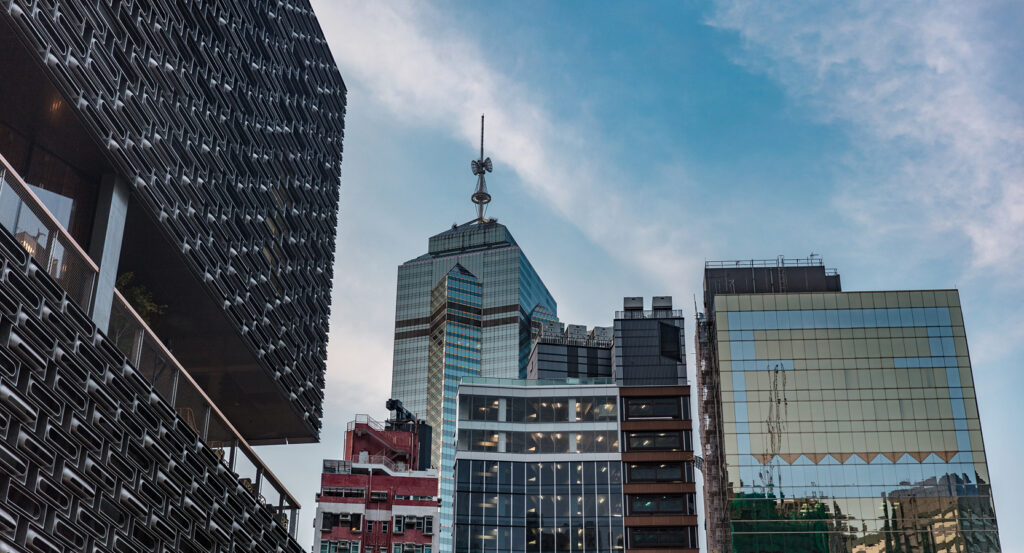
Why you should experience Central Police Station Compound in Hong Kong.
Central Police Station Compound is one of Hong Kong's most astonishing transformations, a place where walls of confinement have become corridors of creation.
Once the nerve center of British colonial law enforcement, this cluster of stately red-brick buildings in the heart of Central now breathes with art, dialogue, and renewal. Walk through its iron gates and you can still feel the gravity of history underfoot, the echo of boots on stone, the clang of cell doors, yet sunlight and laughter fill those same spaces now. The air hums with energy: open-air performances in the courtyards, art installations glowing through barred windows, and conversations spilling from café tables beneath century-old banyan trees. The tension between old and new is palpable, and electric. The compound doesn't deny its past; it redeems it. Every façade, from the watchtowers to the clock-topped barracks, stands as a living tribute to Hong Kong's genius for reinvention, for turning control into creativity, and order into openness.
What you should know about Central Police Station Compound.
This historic site was first built in 1864 as the headquarters of colonial authority, a fortress of governance overlooking the narrow streets of Old Hong Kong.
Over the next century and a half, it grew into a sprawling complex housing the Central Police Station, the Victoria Prison, and the Central Magistracy. Each building told a story of hierarchy and power, from the officers' quarters with their wide verandas to the stark, airless cells that held those who challenged the system. When the site was decommissioned in 2006, it stood silent for years, its walls crumbling and its ghosts intact. Then came an act of visionary preservation: the Hong Kong Jockey Club partnered with world-renowned architects Herzog & de Meuron to revive the compound under a single guiding idea, transformation. The result is Tai Kwun, meaning “Big Station,” the colloquial name locals once used for the site. Every beam and brick was meticulously restored, blending heritage with modernity in a way that feels both reverent and radical. The compound's layered history, law and punishment, justice and resistance, now serves as fertile ground for contemporary art, film screenings, and public exhibitions that examine freedom, authority, and the evolution of Hong Kong's identity.
How to fold Central Police Station Compound into your trip.
Enter through the Hollywood Road gate and let the space unfold like a story told in three acts.
Begin in the lower courtyard, where the original police barracks surround you with Georgian symmetry and tropical stillness. Then step into the old prison yard, now the beating heart of Tai Kwun, where exhibitions change seasonally and the scent of coffee mingles with the sound of street musicians. Don't rush; every staircase, doorway, and balcony reveals a new perspective on how deeply history runs through this place. Visit the heritage galleries to see artifacts from the compound's law enforcement days, old uniforms, handcuffs, and records, then cross into the sleek JC Contemporary wing to experience cutting-edge art installations that challenge those very institutions. When evening falls, ascend to the rooftop bar for a view that captures everything Tai Kwun represents: the collision of past and present, framed by glass towers and crimson brick. Central Police Station Compound in Hong Kong isn't just an architectural marvel, it's a reckoning, a resurrection, and a reminder that even the most rigid walls can learn to breathe again.
Where your story begins.
Foresyte Travel reveals places that feel extraordinary long before you arrive.
Experience premium editorial crafted for luxury travelers.

















































































































