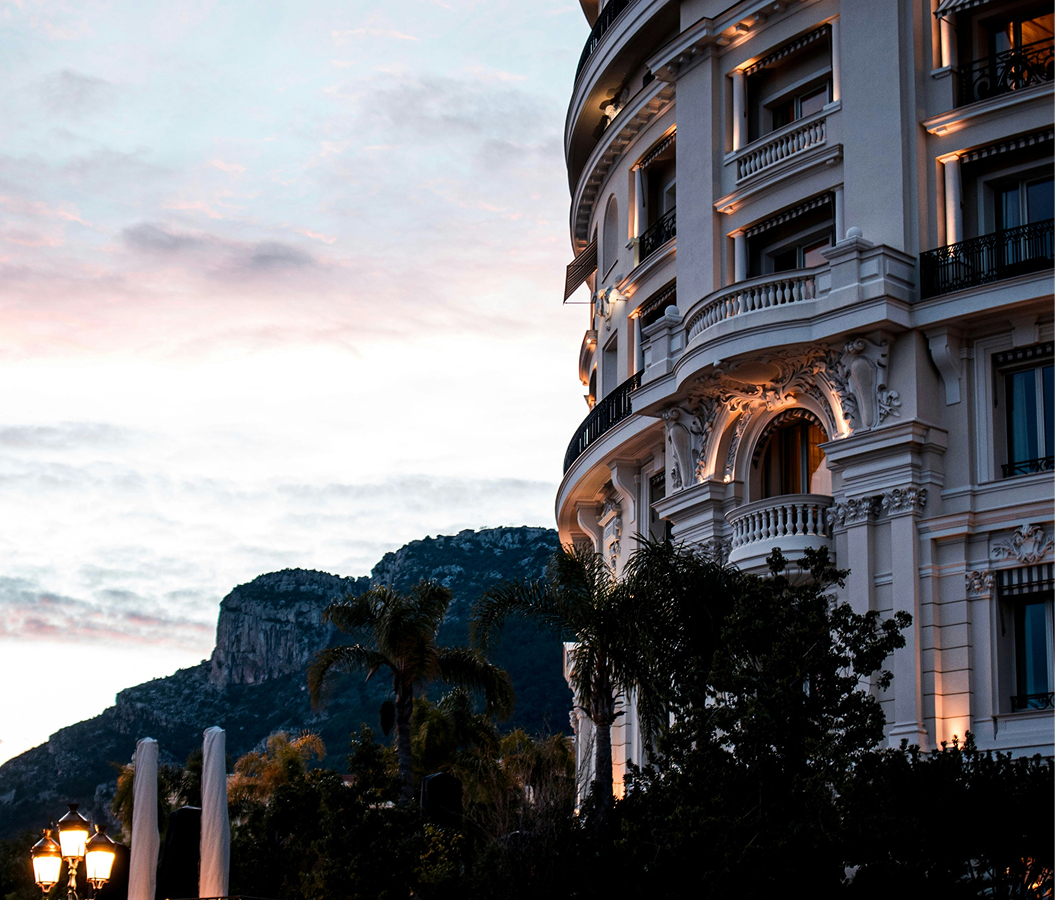
Why Teatro Carcano matters.
Teatro Carcano is an enduring repertory theater where Guastalla's cultivated centrality, Corso di Porta Romana's historic cultural character, large-scale dramatic performance and an ambitious contemporary production program converge inside one of Milan's most substantial theatrical halls.
Set along Corso di Porta Romana near Via della Commenda and just steps from Crocetta, the theater occupies a distinguished central corridor where churches, university buildings, historic gardens and former charitable institutions accumulate along the ancient route running southeast from Milan's center. The entrance opens into broad public areas before the auditorium reveals a sweeping platea and elevated balcony focused tightly on a deep traditional stage, creating the spatial weight of a major metropolitan theater without sacrificing clear sightlines across its nearly thousand-seat room. Prose, dance, musical theater, comedy, lectures and participatory projects share the calendar, giving actors, dancers, writers and public intellectuals access to a hall capable of carrying both intimate speech and ensemble performance across a substantial audience. The result is a theater whose scale gives contemporary productions genuine civic presence, anchoring one of Central Milan's oldest cultural corridors with an unusually broad program of performance and public thought.
What defines Teatro Carcano.
Teatro Carcano is best known for a history beginning when Giuseppe Carcano commissioned a major new theater during the Napoleonic reorganization of Milan, choosing a site formerly occupied by the suppressed convent of San Lazzaro and entrusting the project to Luigi Canonica. Construction began in 1802 and the theater opened on September 3, 1803 with Vincenzo Federici's Zaira and Paolo Franchi's ballet Alfredo il Grande, establishing a new high-bourgeois alternative within a theatrical city dominated by La Scala and the Cannobiana. Niccolò Paganini produced one of the early hall's celebrated episodes in December 1813, when his performance of Le Streghe prompted his proclamation as the “first violinist in the world.” Giuditta Pasta arrived in 1829 and became central to another extraordinary period, creating the title role in Gaetano Donizetti's Anna Bolena at its world premiere on December 26, 1830 alongside Giovanni Battista Rubini and Filippo Galli. Vincenzo Bellini followed with La sonnambula on March 6, 1831, again written around Pasta, before Maria Malibran brought her formidable presence to productions of Norma and La sonnambula in 1833. Carlo Bertolazzi opened another chapter in 1893 when El nost Milan first reached the stage, connecting the Carcano with a defining work of Milanese theater built around the social divisions of the modernizing city. Closure followed in 1904, and Luigi Gianoli drove the theater's revival through a reconstruction by Nazareno Moretti that reopened in 1913 with a new semicircular frontage and architectural language combining neoclassical forms with floral decoration. The building became a cinema after its 1946 closure, reopening in 1948, before Piccolo Teatro returned prose to the stage on March 2, 1965 with Heinar Kipphardt's Sul caso Oppenheimer during an early experiment in theatrical decentralization. Giulio Bosetti assumed artistic leadership in 1997 and reinforced a repertory centered on major dramatic authors and established Italian performers. Lella Costa and Serena Sinigaglia took over artistic direction in 2021, with Mariangela Pitturru overseeing programming, and the 2026/2027 season carries that chapter through Carcano productions and co-productions involving Costa, Sinigaglia, INDA, ATIR and other Italian companies.
The auditorium contains 990 seats divided between 703 positions in the platea and 287 across the balcony, making the audience itself a substantial architectural component of performance. Twenty-seven platea rows spread outward from the stage before the balcony adds another elevated arc of spectators, producing long frontal sightlines through a room whose capacity remains unusually large for contemporary Milanese prose. The stage supports theatrical scenery, live music and dance, and the production operation incorporates dedicated lighting, audio, video and communications systems across stage and auditorium. A fly system above the playing area carries suspended scenic and lighting elements, giving productions vertical working territory beyond the visible performance floor. Orchestra requirements are supported through dedicated stage configurations, allowing music-driven productions and works combining actors with live instrumental forces to enter the repertory. Contemporary production at the Carcano exploits that infrastructure across strikingly different forms: Lisistrata combines Lella Costa and an ensemble with Filippo Del Corno's music, Ensemble Sentieri Selvaggi musicians and choreography by Alessio Maria Romano. L'eredità di Manzoni turns the hall toward participatory theater through two audience teams competing onstage inside a theatrical quiz devised by Costa, Eleonora Mazzoni, Gabriele Scotti and Sinigaglia. The 2026/2027 calendar broadens the operating range through prose, ballet, musical theater, stand-up, literary performance and the Follow the Monday series, allowing the 990-seat room to function simultaneously as production theater and large civic forum.
How Teatro Carcano fits.
Teatro Carcano works as the anchor for an afternoon tracing early Christian Milan, Renaissance hospital architecture and aristocratic philanthropy through the historic corridor surrounding Crocetta and Guastalla.
Begin at Basilica di San Nazaro in Brolo, erected between 382 and 386 under Bishop Ambrose along the Roman road leading south from Mediolanum and consecrated as the Basilica Apostolorum after relics of the apostles were deposited there. Its cruciform plan carried theological significance within Ambrose's campaign to establish major Christian buildings around the city, and surviving archaeological remains preserve traces of the late antique structure beneath later medieval and Renaissance interventions. Continue to Ca' Granda, where Francesco Sforza and Bianca Maria Visconti commissioned a unified hospital and placed Antonio Averlino, known as Filarete, in charge of construction beginning in 1456. Filarete organized male and female infirmaries around cruciform wards and square courtyards, Giovanni Antonio Amadeo continued the fifteenth-century work and a major 1624 bequest from banker Giovanni Pietro Carcano financed Francesco Maria Richini's expansion around the central courtyard, carrying the complex across successive architectural generations. Conclude at Giardino della Guastalla, commissioned by Paola Ludovica Torelli, Countess of Guastalla, as part of the charitable institution she created for young women and completed in 1555. Milan acquired the complex in 1938, and Renzo Gerla and Gaetano Fassi opened the previously enclosed garden toward the city through a restoration preserving its Baroque fishpond, seventeenth-century shrine and Luigi Cagnola's neoclassical temple. The progression moves from Ambrose's fourth-century apostolic basilica through Sforza, Filarete and Carcano's centuries-long hospital project into Torelli's philanthropic garden and its twentieth-century public conversion, tracing successive institutions built around religion, care and civic culture near Teatro Carcano.
Where your story begins.
Foresyte Travel reveals places that feel extraordinary long before you arrive.
Enjoy editorial crafted for luxury travelers.
Foresyte may earn a commission when you book.