Why you should experience The Metropolitan Museum of Art in New York.
The Metropolitan Museum of Art, affectionately known as The Met, isn't just a museum. It's an empire of human imagination, a cathedral to creativity where five thousand years of culture unfold beneath one roof.
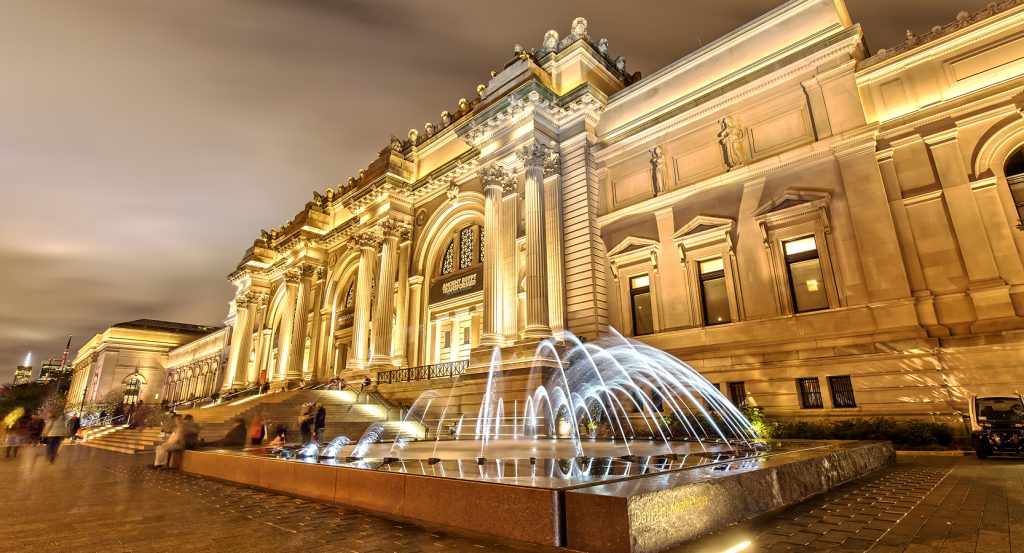
Standing like a stone guardian along Fifth Avenue beside Central Park, The Met is both monumental and deeply personal, a place where civilizations whisper to one another across centuries. The moment you climb its grand steps and pass beneath the bronze doors, you feel it, the quiet hum of time itself. You move from the ancient splendor of Egyptian temples to the serenity of Japanese scrolls, from the grandeur of European oil paintings to the vibrancy of African masks and textiles. One room hums with the haunting calm of Greek marble; another bursts to life with the bold geometry of modern abstraction. It's not just art you're seeing, it's the evolution of thought, the heartbeat of humanity rendered visible. Few places on Earth remind you so vividly of what we've dreamed, built, and believed. And then there's the emotion of standing face-to-face with icons, Van Gogh's Irises, Vermeer's Woman with a Lute, Rodin's The Thinker, Degas' dancers frozen mid-pirouette. Each work seems to hold a piece of something universal: longing, faith, joy, fear. At The Met, you don't just look at history, you feel it.
What you didn’t know about The Metropolitan Museum of Art.
The Met's story began not in marble halls but in the restless idealism of a few visionaries.
In 1870, a small group of Americans, artists, financiers, and intellectuals, gathered with a bold idea: to create a museum that would rival Europe's greatest institutions and make art accessible to everyone. The Met opened in 1872 in a modest building on Fifth Avenue and 54th Street before moving to its current site along Museum Mile. Over time, it grew not just in size but in purpose, evolving into one of the most comprehensive museums in the world, now spanning over two million works of art. Its Egyptian Wing alone contains the reconstructed Temple of Dendur, a 2,000-year-old sandstone shrine gifted by Egypt to the United States in gratitude for preserving monuments during the construction of the Aswan Dam. Few know that The Met was once at the heart of the city's social revolution, from hosting wartime exhibitions that raised morale during World War II to the birth of The Met Gala, which transformed the museum into a global stage for art and fashion. Today, its collection expands from medieval armor to contemporary installation, from ancient Assyrian reliefs to musical instruments that once serenaded royal courts. But behind the elegance lies an extraordinary democratic spirit, the belief that art belongs to everyone. Its famous “suggested admission” policy began with the conviction that cost should never be a barrier to beauty.
How to fold The Metropolitan Museum of Art into your trip.
To experience The Met is to give yourself to wonder, not to conquer it, but to let it change you.
Begin your visit early, when the museum's marble steps are still kissed by morning light. Enter through the Great Hall, where soaring arches and chandeliers seem to expand time itself. Don't rush. Choose a single theme to anchor your visit, perhaps the Impressionists in the European Paintings Wing, or the Ancient Near East galleries, where gods and kings once shared space in carved stone. Lose yourself in the details: the texture of a brushstroke, the shimmer of gold leaf, the patience of centuries in a sculptor's hand. When the museum starts to stir with crowds, retreat to the Temple of Dendur, a sunlit oasis where reflections ripple on the reflecting pool, and the hum of the city fades away. For lunch, slip into The American Wing Café or ascend to The Cantor Roof Garden, where sculpture meets skyline and the view stretches endlessly over Central Park. Stay as day folds into evening, there's a rare beauty in watching the galleries quiet again, the light dimming over relics that have outlived empires. When you finally step outside, the city feels changed, as if New York itself has borrowed a little of the museum's timeless grace. The Met isn't a checklist; it's a pilgrimage. It's where art teaches you not just how to look, but how to see.
Where your story begins.
Start your planning journey with Foresyte Travel.
Experience immersive stories crafted for luxury travelers.