Why you should experience Zabeel Palace in Dubai, United Arab Emirates.
Zabeel Palace is a regal royal residence where Zabeel's landscaped serenity, Emirati statecraft, architectural refinement, and national leadership embody the ceremonial heart of Dubai's ruling heritage.
Set along Zabeel Palace Road near Al Wasl Road and just steps from Zabeel Park, this stately royal complex rises behind ornate gates, expansive gardens, palm-lined avenues, and meticulously maintained grounds that project quiet authority. Elegant Islamic architectural influences, manicured landscapes, and carefully choreographed security preserve an atmosphere befitting the official residence of Dubai's ruling family, while freely roaming peacocks beyond the palace gates have become an enduring feature of the surrounding streetscape. Although the residence itself remains closed to public tours, its distinguished setting offers an uncommon glimpse into the architectural language, ceremonial traditions, and civic symbolism that continue defining modern Dubai. The result is a destination defined by royal heritage, architectural dignity, and enduring national identity.
What you should know about Zabeel Palace.
Zabeel Palace is best known for serving as the principal residence of His Highness Sheikh Mohammed bin Rashid Al Maktoum, Vice President and Prime Minister of the United Arab Emirates and Ruler of Dubai, whose leadership has guided the emirate's transformation into one of the world's foremost centers for trade, aviation, finance, logistics, and innovation since assuming the rulership in 2006. Constructed within the Zabeel district during the latter half of the twentieth century as the ruling family's principal Dubai residence, the palace occupies an expansive landscaped estate whose ceremonial gates, Islamic-inspired architecture, and formal gardens have become enduring symbols of Emirati governance. The residence regularly hosts official receptions for visiting heads of state, diplomats, ministers, and international delegations, reinforcing its role as one of the country's most important settings for state protocol and high-level diplomacy. While the palace itself remains inaccessible to the public, its prominent position within a district that also accommodates government institutions and royal residences reflects the deliberate planning of Zabeel as the administrative and ceremonial heart of Dubai's modern leadership.
Beyond its governmental role, the palace demonstrates the restrained architectural style favored by the Al Maktoum family, emphasizing symmetry, traditional Arab design motifs, elegant arcades, geometric ornamentation, and extensive landscaped buffers over grand height or ostentatious display. The surrounding gardens are carefully maintained with native and ornamental plantings, broad lawns, fountains, and shaded avenues that soften the estate while preserving privacy for the royal household. Outside the ceremonial entrance, visitors frequently encounter the peacocks that have become closely associated with the palace grounds, creating an unexpected contrast between formal state architecture and the natural setting. Together, the residence, gardens, and ceremonial approaches demonstrate how architecture, landscape design, and civic planning combine to express continuity, stability, and the enduring traditions of Dubai's ruling family.
How to fold Zabeel Palace into your trip.
Zabeel Palace works as part of an exploration through Dubai's civic, cultural, and architectural heart.
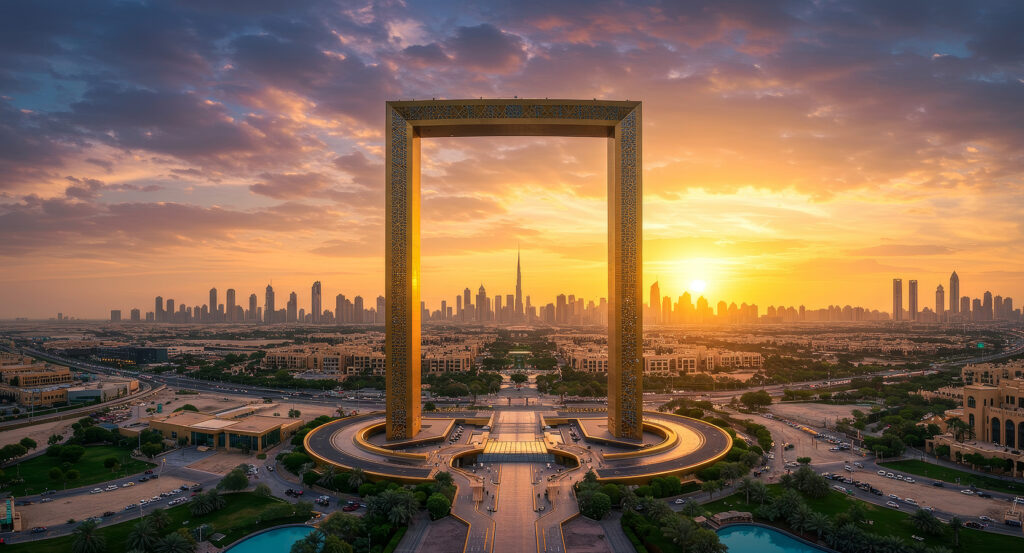
Begin at Zabeel Park, where one of Dubai's largest urban parks introduces the district through landscaped gardens and panoramic city views before continuing to Zabeel Palace to admire one of the emirate's most distinguished royal residences from its ceremonial entrance. Continue to Dubai Frame, whose soaring observation galleries offer extraordinary perspectives across both historic and contemporary Dubai while illustrating the city's remarkable evolution. Conclude at Etihad Museum, where immersive exhibitions recount the formation of the United Arab Emirates and provide valuable historical context for the institutions represented by the palace. The progression moves naturally from landscaped public space to royal architecture before concluding through two defining cultural experiences, revealing why Zabeel Palace occupies such an important place within Dubai's civic identity.
Where your story begins.
Foresyte Travel reveals places that feel extraordinary long before you arrive.
Experience premium editorial crafted for luxury travelers.