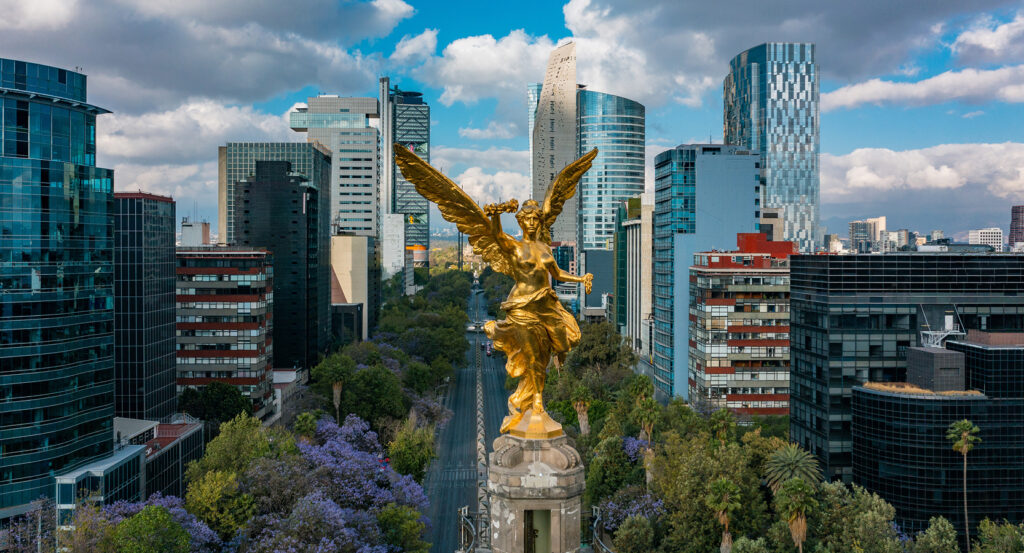
Why The Ritz-Carlton matters.
The Ritz-Carlton is altitude as authority, a glass-clad observatory where the city stops pressing against you and instead unfurls beneath your gaze with deliberate, almost hypnotic grace.
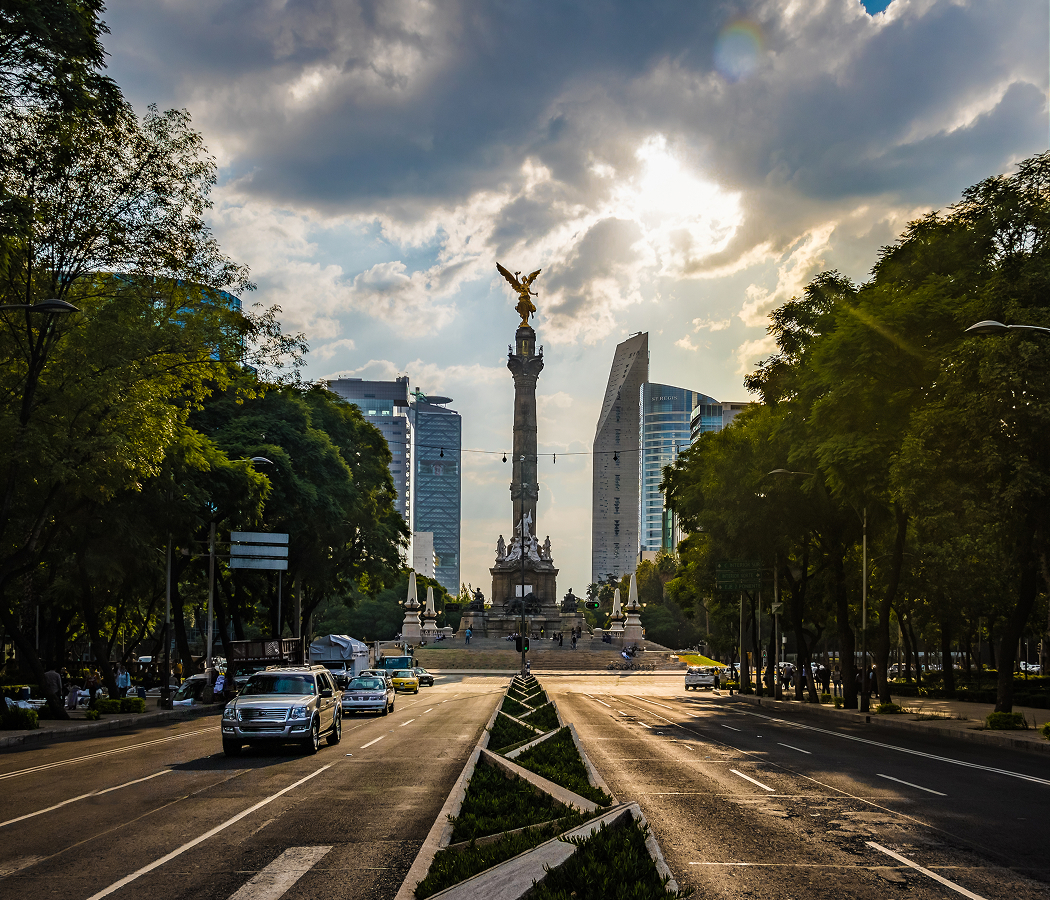
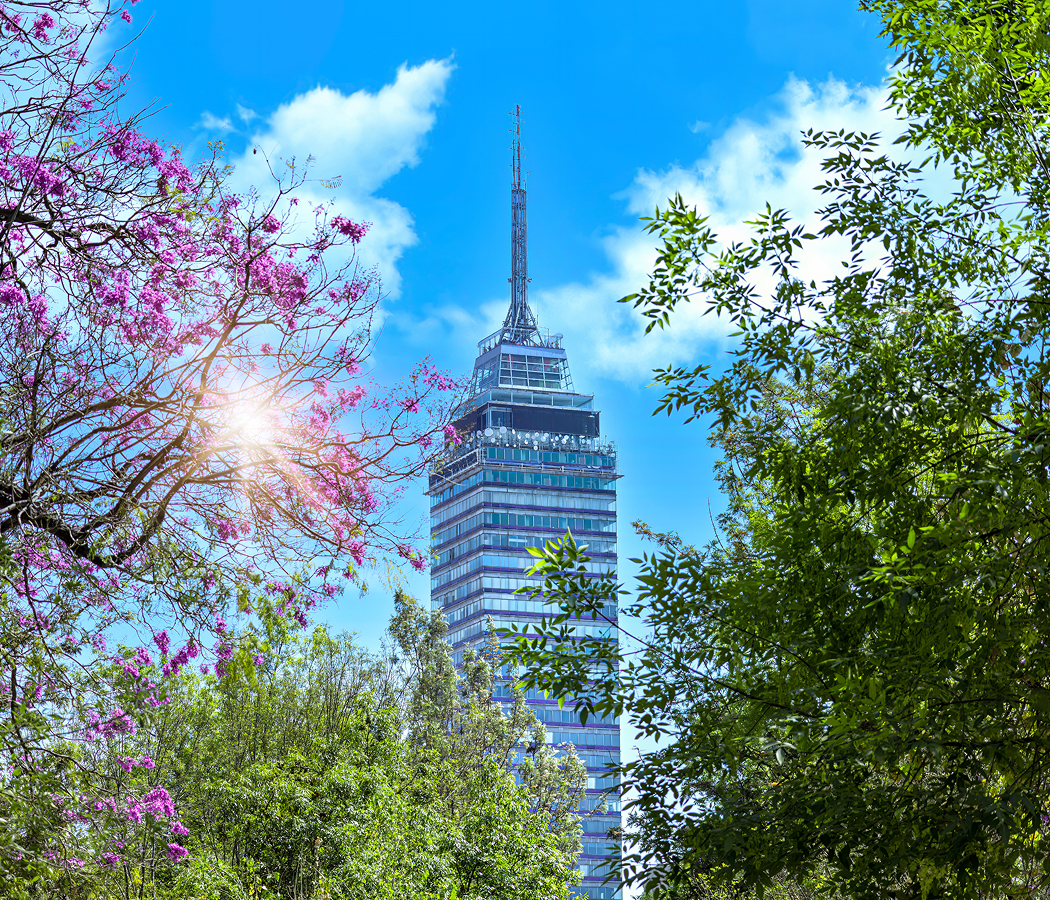
Perched high above Paseo de la Reforma, the hotel establishes a relationship with Mexico City that is radically different from the capital's traditional inward-facing luxury sanctuaries, offering not refuge through enclosure but clarity through elevation. Arrival is engineered as a controlled reveal: elevators lift you swiftly upward, pressure shifts, doors open, and the city is suddenly no longer something you navigate but something you witness, a vast living organism stretching toward distant mountains, punctuated by green expanses, dense neighborhoods, and architectural contradictions that only resolve themselves from this height. The design philosophy is intentionally restrained, almost disciplined, allowing scale and light to carry the resonant weight. Interiors lean modern and cosmopolitan, composed of polished stone, warm woods, sculptural lighting, and a palette of soft neutrals that recede just enough to let the skyline dominate. Floor-to-ceiling windows dissolve the boundary between inside and outside, framing Bosque de Chapultepec as an expansive green anchor amid the urban sprawl, shifting color and texture throughout the day like a living painting. Guest rooms feel suspended rather than grounded, generous in proportion and meticulously calibrated for stillness, with plush beds wrapped in crisp linens, spa-like marble bathrooms, deep soaking tubs, rain showers, and uninterrupted sightlines that make even moments of rest feel expansive. This is a Ritz-Carlton that expresses luxury through precision and perspective rather than ceremony, where silence carries status and space signals confidence. Service operates with surgical intuition, present without presence, exact without intrusion, reinforcing the sensation that you are being quietly held above the city rather than immersed within its momentum. Staying here does not soften Mexico City; it sharpens your understanding of it, transforming complexity into composition and scale into something almost meditative.
What defines The Ritz-Carlton.
The Ritz-Carlton represents a deliberate shift in how luxury hotels position themselves within one of the world's most complex megacities, embracing verticality not as performance but as strategy.
Unlike legacy properties rooted in courtyards, gardens, and inward calm, this hotel aligns itself with a more globalized vision of power, one defined by transparency, height, and panoramic command rather than enclosure. Its placement high within a modern tower along Paseo de la Reforma is both symbolic and practical, situating the hotel along Mexico City's most politically and economically charged corridor while physically removing guests from the density, noise, and visual saturation below. The building itself was engineered to meet the city's stringent seismic requirements, incorporating advanced structural systems designed to flex safely during earthquakes, a quiet but essential feat in a metropolis shaped as much by geology as by history. This relationship with the earth, acknowledged rather than ignored, subtly reinforces the hotel's authority, grounding its modernity in technical mastery rather than bravado. Nearly every public space and guest room maintains a visual discussion with Bosque de Chapultepec, among the largest and most historically significant urban parks in the Western Hemisphere, whose presence tempers the city's intensity and anchors the hotel's character within Mexico City's cultural and environmental narrative. Internally, the hotel's design resists visual clutter, opting instead for negative space and clean lines that allow the city itself to function as the primary decorative element. This restraint extends into the culinary and wellness programs, which emphasize refinement, balance, and execution over excess, mirroring the hotel's broader philosophy. Staff training prioritizes discretion, spatial awareness, and timing, critical skills in an environment defined by exposure and elevation, resulting in service that feels almost choreographed in its subtlety. In many ways, the hotel operates less as a traditional landmark and more as a lens, reframing Mexico City not by adding to its density but by offering a vantage point from which its complexity becomes legible.
How The Ritz-Carlton fits.
The Ritz-Carlton functions best as a command center, a place that structures your experience through ascents and descents, allowing the city to be absorbed in deliberate intervals.
Begin mornings above the traffic with breakfast overlooking Chapultepec Park as light moves across the canopy and the city slowly animates below, creating a sense of orientation before stepping into its scale. From here, access to Paseo de la Reforma makes exploration feel intentional, whether walking toward the museums and paths of Bosque de Chapultepec, visiting the Museo Nacional de Antropología, or continuing onward toward Polanco's galleries, restaurants, and boutiques. Midday returns to the hotel are not indulgent but strategic, offering restoration through altitude, silence, and perspective, a pause in your room, time in the spa, or simply watching the city breathe through glass as afternoon shadows stretch across the skyline. Evenings invite contrast: descend into Roma Norte, Condesa, or the Historic Center for dining, culture, and texture, then rise back up as night transforms Mexico City into a constellation of lights beneath you, its energy softened by distance. A final drink framed by the illuminated city reframes the day not as accumulation but as sequence, each moment held in balance by the hotel's quiet authority.
Where your story begins.
Foresyte Travel reveals places that feel extraordinary long before you arrive.
Enjoy editorial crafted for luxury travelers.
Foresyte may earn a commission when you book.