Why The St. Regis Mexico City matters.
The St. Regis Mexico City is a high-rise hotel where Cuauhtémoc's diplomatic boulevard meets César Pelli's seismic architecture, Grupo 1818's luxury development, and the global expansion of the St. Regis brand.
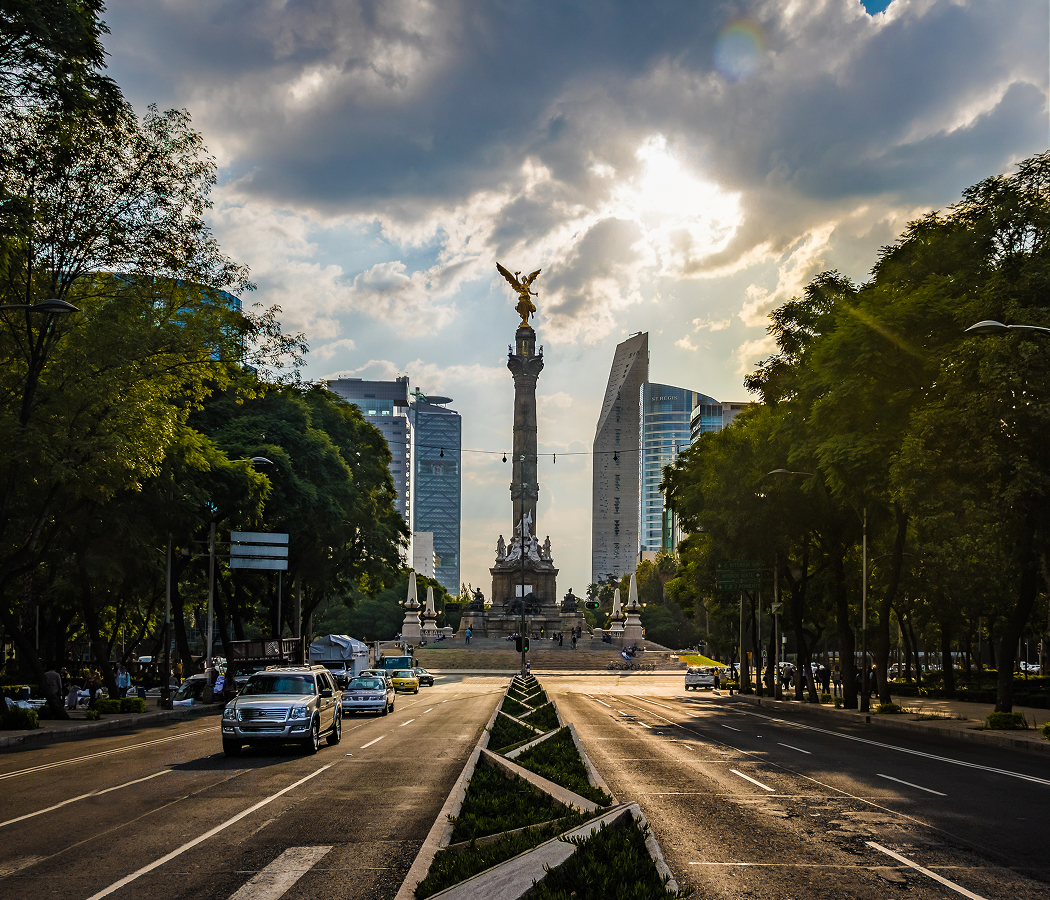
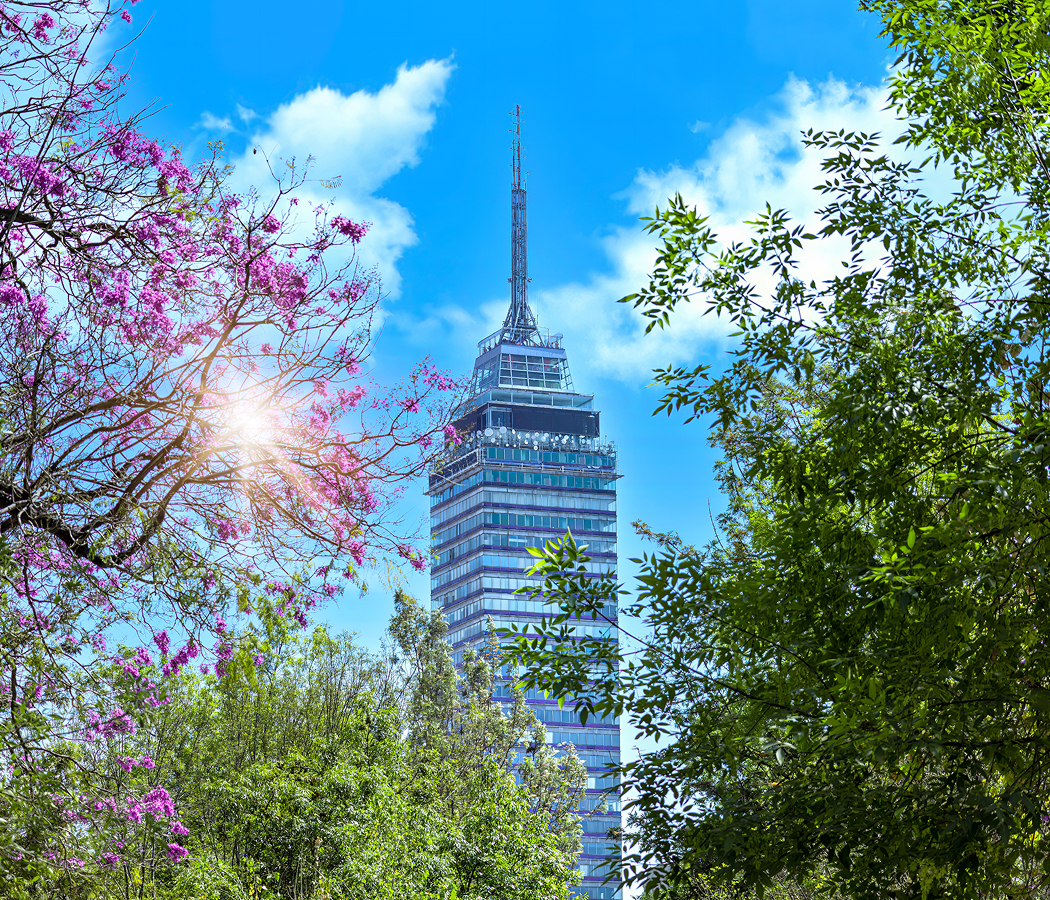
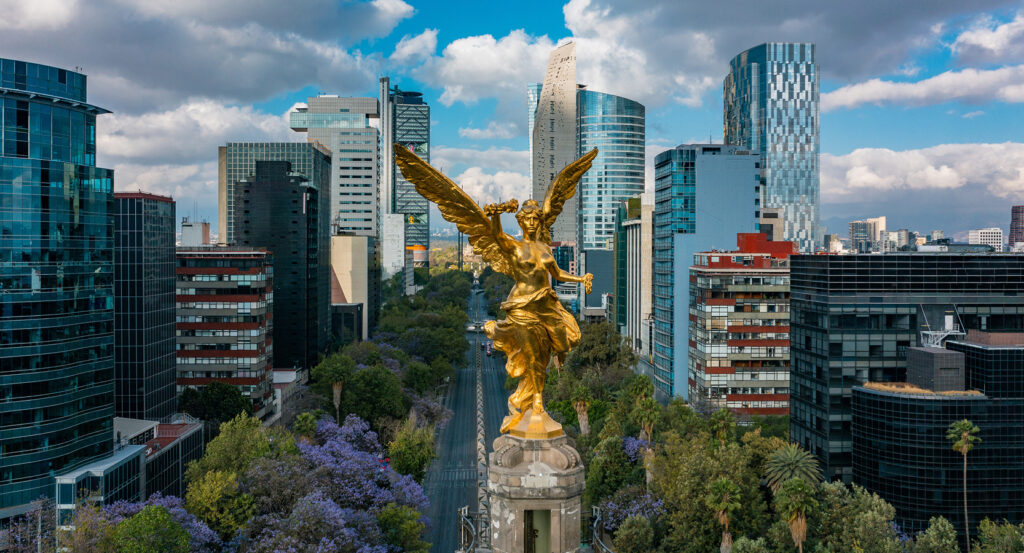
Set along Paseo de la Reforma near Río Elba, a short drive from Mexico City International Airport, The St. Regis Mexico City occupies Cuauhtémoc's western edge between Avenida Insurgentes, Circuito Interior, Colonia Juárez, Río Lerma, and the Reforma business corridor. Its position beside the Glorieta de la Diana Cazadora places a narrow glass-and-steel tower between embassy compounds, corporate headquarters, historic neighborhoods, expansive traffic arteries, and Chapultepec's wooded slopes. The tower's vertical form makes arrival a movement from Reforma's dense street activity into a structure shaped by deep foundations, reinforced engineering, and elevated views across the capital. Changing light across the façade, distant mountain horizons, and the continuous movement of vehicles deepen the relationship between the building and its metropolitan setting. The result is a substantial high-rise hotel whose history follows the development of Paseo de la Reforma as an international business, diplomatic, and cultural corridor.
What defines The St. Regis Mexico City.
The St. Regis Mexico City is best known for bringing César Pelli's vertical architecture and Yabu Pushelberg's interior direction into Grupo 1818's Torre Libertad, a project that joined international hospitality with one of Mexico City's most consequential avenues. The tower rose between 2004 and 2008 as Paseo de la Reforma gained a new generation of high-rise development organized around finance, diplomacy, luxury commerce, and international investment. Pelli Clarke Pelli Architects shaped the exterior, while Yabu Pushelberg directed the interiors, giving the project two distinct layers of architectural authorship. The structure rises 150.1 meters across 32 floors and rests on 200 concrete and steel piles reaching 60 meters underground, a technical response to Mexico City's unstable lakebed and severe earthquake risk. Engineers designed the tower for a theoretical 9.0 earthquake, making structural performance central to the project's significance. Grupo 1818 developed Torre Libertad as a larger real-estate undertaking incorporating hotel, residential, and commercial components along the Reforma corridor. The St. Regis name supplied an established international luxury standard, while the building itself carried the architectural argument through height, engineering, and skyline presence. The hotel opened in August 2009, giving Mexico City a purpose-built St. Regis address instead of adapting an older palace, mansion, or historic civic building. Its arrival marked a significant step in the brand's expansion across Latin America and joined Mexico City to a wider network of international hospitality capitals. The tower also extended a private-investment cycle that had been reshaping Reforma after decades of lower-rise development. Its significance rests on the way seismic engineering, Argentine architectural authorship, Canadian interior design, Mexican development capital, and an international hotel brand converged within one vertical project. The St. Regis Mexico City stands as a major expression of Reforma's private development era and as a technically ambitious addition to the capital's modern skyline.
Where your story begins.
Foresyte Travel reveals places that feel extraordinary long before you arrive.
Enjoy editorial crafted for luxury travelers.