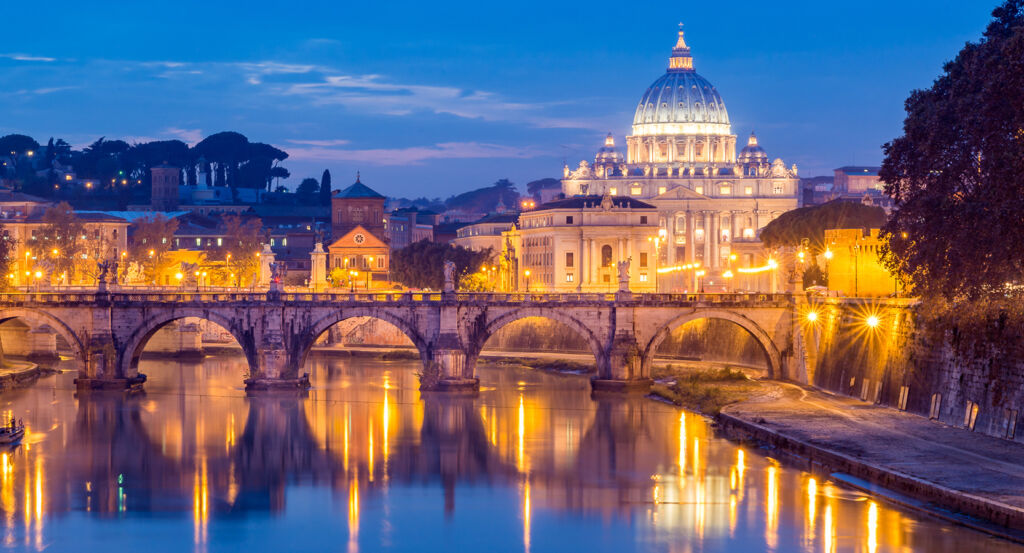
Three days in Rome, Italy.
Rome doesn't seduce you with noise, it overwhelms you with permanence.
This city is not a backdrop; it is a layered civilization that refuses to flatten into a postcard. Each piazza feels like a living room built centuries before you arrived, each church ceiling a declaration of ambition that still holds its breath, each meal an argument for continuity. The days move through open squares and fortified stone, through fountains that still command silence and dining rooms that understand the weight of legacy. Rome doesn't perform for attention. It simply stands, and expects you to adjust.
Three days you'll remember.
📍 let it ruin
Day 1: Piazza Navona
Piazza Navona unfolds as one of Rome's most theatrical public spaces, built atop the footprint of an ancient stadium. Bernini's Fountain of the Four Rivers anchors the square with baroque authority, balancing motion and marble in a composition that still feels deliberate. It's a setting that captures Rome's instinct to layer spectacle onto history.
Day 1: EMME Ristorante
EMME Ristorante delivers contemporary Italian dining grounded in technique. The menu leans on clean flavors and disciplined execution, allowing ingredients to carry weight without embellishment. It introduces Rome's culinary precision with quiet confidence.
Day 2: Castel Sant'Angelo
Castel Sant'Angelo rises along the Tiber as both fortress and mausoleum, its cylindrical mass signaling centuries of adaptation. From imperial tomb to papal refuge, the structure embodies Rome's ability to repurpose power without erasing it. Climbing its terraces reframes the city as an unbroken continuum of stone and sky.
Day 2: Agrodolce Roma
Agrodolce Roma approaches Roman tradition with restraint, honoring classic techniques while refining presentation. The atmosphere is intimate and deliberate, favoring substance over spectacle. It demonstrates how Rome evolves its cuisine.
Day 2: Trevi Fountain
The Trevi Fountain commands attention with baroque drama, water cascading over sculpted stone in a composition that feels almost cinematic. The ritual of coin-throwing persists, yet the architecture remains the true spectacle. It's Rome at its most unapologetically grand.
Day 2: Pietro al Pantheon
Pietro al Pantheon occupies a prime vantage near one of antiquity's most intact monuments, pairing traditional Roman dishes with a setting steeped in continuity. The dining experience favors familiarity and steadiness, reinforcing the city's refusal to chase novelty. It's Rome expressed through repetition perfected over time.
Day 3: Da Mariolino
Da Mariolino channels Roman hospitality through disciplined simplicity, centering its menu on recognizable flavors executed cleanly. The space feels grounded rather than performative, encouraging attention to the plate rather than the room. It's an unforced reminder that tradition remains Rome's strongest asset.
Day 3: Vatican City
Vatican City operates as both sovereign state and spiritual epicenter, compact yet immeasurably influential. Its scale is deceptive; within its walls sit institutions that have shaped centuries of theology and art. The visit carries gravity without requiring spectacle.
Day 3: Sistine Chapel
The Sistine Chapel stands as one of the most consequential artistic achievements in Western history, Michelangelo's ceiling still commanding silence centuries later. The frescoes are not decorative; they are architectural statements painted into permanence. It's a space that insists on stillness.
Day 3: A Casa Tua
A Casa Tua brings a sense of private Roman hospitality into a composed dining environment. The menu emphasizes classic Italian structure delivered with polish. It closes the itinerary with warmth and familiarity, echoing Rome's enduring instinct to gather around the table.
Rome Itinerary FAQ.
What are the best things to do in Rome for a weekend trip?
The best things to do in Rome include visiting the Colosseum, Vatican City, the Pantheon, Trevi Fountain, and wandering through charming neighborhoods like Trastevere.
When is the best time to visit Rome for a weekend getaway?
Spring (April to June) and fall (September to October) are the best times to visit Rome, offering pleasant weather and fewer crowds compared to peak summer months.
Where should I stay in Rome for a weekend trip?
Top areas to stay in Rome include Centro Storico for history, Trastevere for charm, and Monti for a local vibe close to major attractions.
What food should I try in Rome during a weekend visit?
Must-try Roman dishes include carbonara, cacio e pepe, supplì (fried rice balls), artichokes (carciofi), and gelato from a traditional gelateria.
Is Rome walkable for a weekend itinerary?
Yes, Rome is very walkable, especially in the historic center. Many iconic sights are within walking distance of each other, and exploring on foot reveals hidden gems.
How do I get around Rome on a weekend trip?
Rome's metro, buses, and trams make it easy to get around. Walking is ideal for the historic center, while taxis and rideshare apps can help cover longer distances.