Why Trastevere matters.
Trastevere is a bohemian maze of cobblestones and character, where medieval charm, artistic spirit, and Roman tradition converge across one of the city's most beloved neighborhoods.
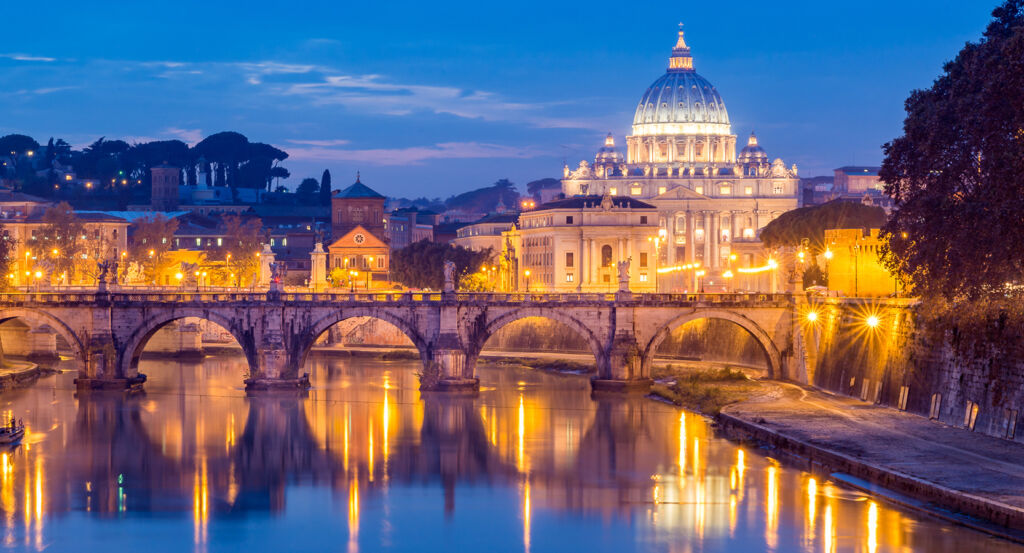
Ivy-covered buildings, lively piazzas, historic churches, family-run trattorias, artisan workshops, hidden courtyards, and lantern-lit streets create a neighborhood that feels both timeless and deeply alive. Originally settled on the western bank of the Tiber by traders, sailors, and immigrant communities, Trastevere developed a fiercely independent character distinct from the rest of Rome. Generations of craftsmen, artists, restaurateurs, musicians, and local families helped shape a district defined by authenticity and cultural expression. Its medieval street pattern survived centuries of change, preserving an intimate urban landscape that continues to attract visitors and residents alike. Today, visitors encounter a neighborhood where tradition and creativity remain inseparable. The result is a neighborhood that feels soulful, thriving, and unmistakably Roman. To the east, Rome City Centre's celebrated monuments and historic landmarks extend naturally from Trastevere across the Tiber River, reinforcing the neighborhood's place within the broader story of the Eternal City. Every piazza, alleyway, and café terrace reflects a district shaped by resilience, artistry, and local pride.
What defines Trastevere.
Trastevere is best known for being home to Santa Maria in Trastevere, where one of the oldest churches in Rome preserves glittering medieval mosaics that have inspired worshippers and visitors for centuries.
Tradition holds that a Christian place of worship existed on the site as early as the third century, making it among the earliest centers of Christian devotion in the city. The basilica's celebrated twelfth-century mosaics, commissioned during a period of artistic flourishing, remain among the finest surviving examples of medieval art in Rome. Its prominent position at the heart of the neighborhood established it as both a spiritual and civic landmark for generations of residents. Over time, the church became inseparable from the character of Trastevere itself. Today, it remains one of the most admired religious and artistic treasures in the city. Few neighborhoods possess a landmark so closely connected to both their cultural character and historical continuity.
How Trastevere fits.
Trastevere works as an exploration of the historic piazzas, cultural landmarks, and atmospheric streets that define one of Rome's most charismatic neighborhoods.
Begin at Santa Maria in Trastevere, where the neighborhood's defining connection to faith, art, and history immediately comes into focus. Continue toward Piazza di Santa Maria in Trastevere, whose lively atmosphere and centuries of community life reveal the social traditions that have shaped the district for generations. From there, make your way to Gianicolo Hill, where panoramic views across Rome provide a broader perspective on the landscape and character that continue to define Trastevere today. Along the route, you'll encounter medieval alleyways, artisan workshops, neighborhood cafés, historic churches, public squares, cultural venues, and architectural landmarks that reveal the neighborhood's remarkable appeal. The progression moves naturally from sacred landmark to civic gathering place to panoramic overlook, revealing the forces that shaped the neighborhood. The experience showcases a side of Rome defined by authenticity, creativity, and an enduring sense of place.
Where your story begins.
Foresyte Travel reveals places that feel extraordinary long before you arrive.
Enjoy editorial crafted for luxury travelers.
Foresyte may earn a commission when you book.