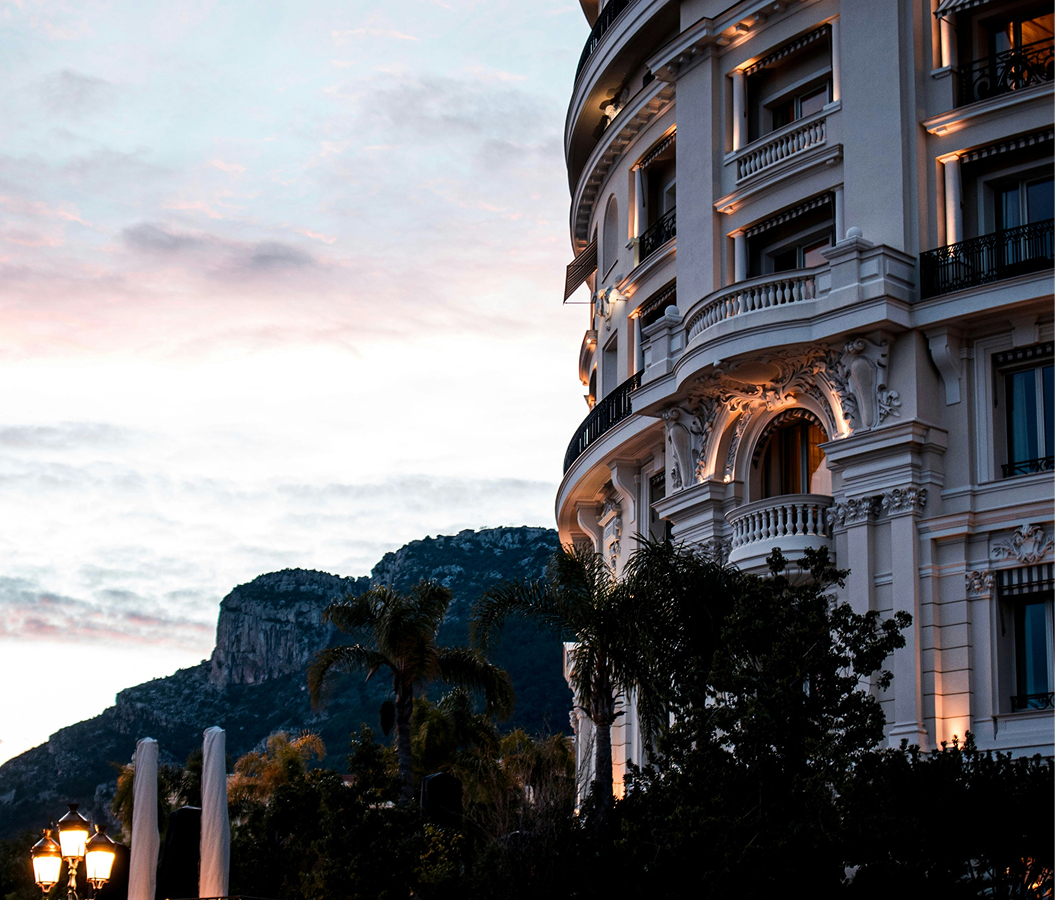
Why Università Bocconi matters.
Università Bocconi is a pioneering academic institution where Porta Ludovica's metropolitan character meets Italian Rationalism, international architecture and more than a century devoted to economics, management and social science.
Set along Via Roberto Sarfatti near Via Ferdinando Bocconi and just steps from Parco Alessandrina Ravizza, the university occupies an extensive urban campus whose successive buildings form an architectural sequence across the southern edge of Central Milan. Giuseppe Pagano's pale 1941 headquarters establishes the historic nucleus through long horizontal elevations and a cruciform plan, joined across surrounding streets by later buildings whose stone, glass and curved forms reveal successive generations of architectural thought. Crossing the campus establishes the primary encounter through these abrupt changes in scale and geometry, with courtyards, recessed entrances and pedestrian spaces binding buildings created decades apart. Grafton Architects' grand Via Röntgen facade and the sinuous volumes farther south deepen the atmosphere through contrasting interpretations of mass, light and public space. The result is a university where architecture turns more than eight decades of expansion into a physical chronicle of Milanese and international modernism.
What defines Università Bocconi.
Università Bocconi is best known for introducing university-level economic and commercial education to Italy through an institution founded by entrepreneur Ferdinando Bocconi in memory of his son Luigi. Ferdinando had risen from itinerant textile trading to establish the Alle Città d'Italia department stores with his brother, importing the ready-made clothing model of major French and British retailers into late nineteenth-century Milan. Luigi chose journalism over the family enterprise and traveled to Ethiopia in 1896 as a correspondent for La Riforma, disappearing during the Italian campaign associated with the Battle of Adwa. His father transformed that loss into an educational project bearing Luigi's name, supplying the financial foundation for the Università Commerciale Luigi Bocconi in 1902 and placing rigorous economic study at the center of its mission. The university opened on November 10 with an inaugural address by economist and future president Leopoldo Sabbatini, who became its first rector and helped define a curriculum combining economic theory with commercial practice. A library followed in 1903 with an initial group of 500 volumes donated by the Milan Chamber of Commerce, later enriched by collections associated with Angelo Sraffa, Eugenio Greco and Gino Zappa. Angelo Sraffa led the university as rector from 1918 to 1926, and Zappa taught there from 1921 to 1951 as his work helped establish business economics as an academic discipline in Italy. Expansion eventually required a purpose-built campus outside the historic center, where Giuseppe Pagano received the commission for a new headquarters on land formerly occupied by the San Celso gasworks. University president Javotte Manca di Villahermosa and vice president Giovanni Gentile supported Pagano through disputes surrounding his modernist design, allowing the architect to reject the conventional enclosed academic courtyard for a light cruciform structure influenced by Walter Gropius's Bauhaus building in Dessau. The Via Sarfatti headquarters opened on December 21, 1941, joining Bocconi's educational experiment to one of the strongest Rationalist university buildings in Milan.
A later architectural chapter began when Bocconi selected Shelley McNamara and Yvonne Farrell of Grafton Architects to create a major faculty building and Aula Magna on Via Röntgen. The architects developed a dense stone complex whose public spaces descend below street level, drawing daylight through courts and openings into an interior organized around offices, circulation routes and a 1,000-seat auditorium. Milanese precedents shaped the project, particularly the Broletto's combination of courtyards and suspended volumes, giving the Irish architects a historical reference for a building completed within a contemporary academic campus. Via Röntgen opened on October 30, 2008 and received World Building of the Year at the inaugural World Architecture Festival in Barcelona, where it prevailed in a field of 722 completed projects. Mauro Staccioli's Il Cerchio Imperfetto entered the complex during the same year, placing a grand sculptural work within the new architectural setting. McNamara and Farrell subsequently received the Pritzker Architecture Prize in 2020, bringing another distinction to designers whose Milan project had become an important early international commission. Via Röntgen gave Bocconi a second architectural reference point after Pagano, linking the university's Rationalist inheritance with an internationally recognized work developed through the physical character of Milan itself.
How Università Bocconi fits.
Università Bocconi works as the anchor for a daytime exploration of southern Central Milan through three sites that connect early public landscape design, twentieth-century performance culture and the conversion of industrial architecture into a major contemporary-art complex.
Begin at Parco Alessandrina Ravizza, planned within the 1889 Beruto city plan and constructed between 1903 and 1905 as agricultural land south of Central Milan gave way to new residential districts. Designer Tettamanzi conceived the grounds as a shaded gathering place and divided the original rectangular park with a tree-lined avenue separating a geometric Italian garden from a more scenic English section. Those formal distinctions softened as the vegetation matured, yet maples, pines, oaks and plane trees preserve the green mass created during the district's first major urban expansion. The park later took the name of Alessandrina Massini Ravizza, the Milanese philanthropist whose work for women, workers and disadvantaged communities gave the surrounding landscape a social connection extending beyond its original garden design. Continue to Teatro Franco Parenti and Bagni Misteriosi, where a 1930s recreational complex acquired a second cultural life through theater and later architectural recovery. Engineer Lorenzo Secchi designed the neighboring Centro Balneare Caimi pools in 1937 as part of a larger district facility encompassing fencing, boxing, medical and cultural spaces. Franco Parenti, Andrée Ruth Shammah, Giovanni Testori, Dante Isella and Gian Maurizio Fercioni founded the Salone Pier Lombardo nearby in 1972, and Shammah directed Testori's L'Ambleto for the new theater's first performance on January 16, 1973. The company developed a distinctive Milanese theatrical history through Testori, Molière, Shakespeare, Alfieri and other writers before taking Franco Parenti's name. Restoration later reunited the theater with the former swimming complex, bringing Secchi's pools back into use as Bagni Misteriosi and reconnecting two cultural and recreational institutions conceived in different periods on the same block. Conclude at Fondazione Prada, where OMA under Rem Koolhaas transformed an early twentieth-century distillery at Largo Isarco into a 19,000-square-meter arts complex opened in May 2015. Seven preexisting industrial buildings were retained alongside three new structures named Podium, Cinema and Torre, allowing the former production site to remain legible amid new exhibition architecture. Torre completed the ensemble in 2018 under Koolhaas, Chris van Duijn and Federico Pompignoli, rising sixty meters through nine floors whose rectangular and trapezoidal plans change dimensions, ceiling heights and orientations as the building ascends. Its exposed white concrete stands beside the gold-covered Haunted House and the older distillery structures, turning differences in age and construction into the organizing principle of the complex. The progression moves from Tettamanzi's response to Milan's early twentieth-century residential expansion through Secchi, Shammah and Testori's layered cultural precinct into OMA's reinvention of an industrial distillery, extending Bocconi's architectural surroundings through landscape, performance and contemporary art.
Where your story begins.
Foresyte Travel reveals places that feel extraordinary long before you arrive.
Enjoy editorial crafted for luxury travelers.
Foresyte may earn a commission when you book.