
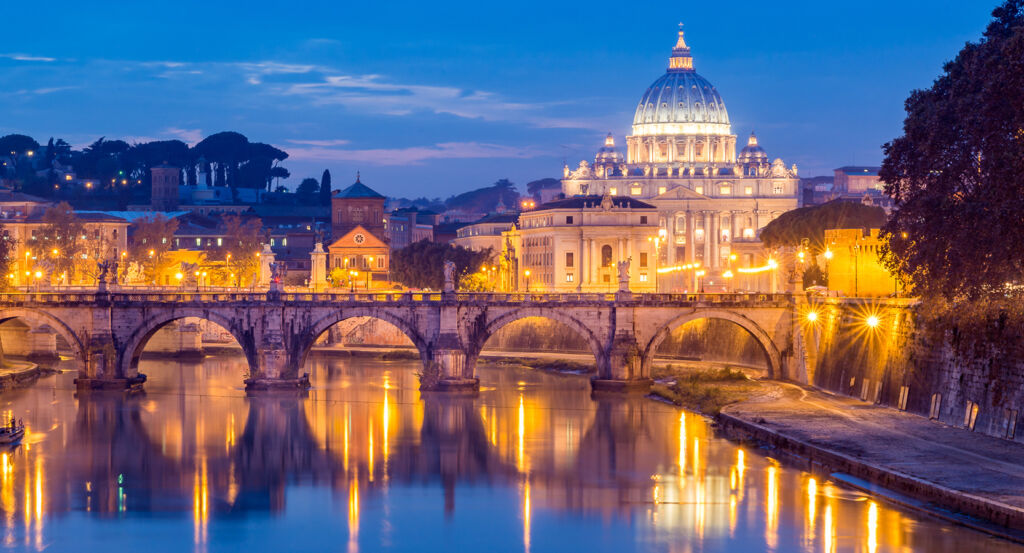
Why Via del Corso matters.
Via del Corso is a timeless artery of commerce and performance, where imperial history, civic life, and Roman energy converge along the city's most enduring thoroughfare.
Historic palaces, elegant churches, renowned shopping destinations, expansive piazzas, cultural landmarks, architectural treasures, and thriving streetscapes create a neighborhood that has connected the heart of Rome for centuries. Originally laid out along the route of the ancient Via Flaminia, the avenue served as one of the principal entrances into the city during the Roman Empire. Popes, nobles, merchants, pilgrims, artists, and citizens helped shape a district that evolved into Rome's premier corridor for public gatherings, celebrations, and commerce. Over generations, the street became synonymous with urban life in the Eternal City, linking many of its most important landmarks and neighborhoods. Today, visitors encounter a district where centuries of history unfold amid the rhythm of modern Rome. The result is a neighborhood that feels thriving, historic, and unmistakably Roman. To the north, Villa Borghese Parioli's celebrated parks and cultural landmarks extend naturally from Via del Corso through one of the city's most prestigious urban corridors, reinforcing the neighborhood's role at the center of Roman life. Every façade, piazza, and storefront reflects a district shaped by movement, commerce, and continuity.
What defines Via del Corso.
Via del Corso is best known for hosting the Roman Carnival horse races, where riderless horses thundered down the avenue for centuries during one of Europe's most famous public festivals.
Beginning in the Renaissance and continuing into the nineteenth century, the annual races became the signature event of Rome's Carnival celebrations. Crowds packed balconies, windows, and the street itself to witness the performance as horses sprinted from Piazza del Popolo toward Piazza Venezia. The event attracted locals, nobility, foreign visitors, and artists who helped cement Via del Corso's reputation as the stage for public life in Rome. Its popularity made the avenue one of the most famous festival routes in Europe. Today, the races survive as an important chapter in the cultural memory of the city. Few neighborhoods possess a tradition so closely associated with centuries of public celebration.
How Via del Corso fits.
Via del Corso works as an exploration of the historic landmarks, celebrated piazzas, and cultural destinations that define one of Rome's most important avenues.
Begin at Piazza del Popolo, where the neighborhood's defining connection to public life and historic processions immediately comes into focus. Continue along Via del Corso toward Palazzo Doria Pamphilj, whose remarkable collections reveal the aristocratic influence that shaped the district for generations. From there, make your way to Piazza Venezia, where expansive architecture and national symbolism provide a broader perspective on the civic importance that continues to define Via del Corso today. Along the route, you'll encounter historic churches, elegant palaces, architectural landmarks, celebrated storefronts, cultural institutions, public squares, and centuries-old streetscapes that reveal the neighborhood's extraordinary significance. The progression moves naturally from ceremonial gateway to noble residence to civic centerpiece, revealing the forces that shaped the neighborhood. The experience showcases a side of Rome defined by continuity, performance, and the enduring pulse of city life.
Where your story begins.
Foresyte Travel reveals places that feel extraordinary long before you arrive.
Enjoy editorial crafted for luxury travelers.
Foresyte may earn a commission when you book.




















































































































