Why Via Domenico Scarlatti matters.
Via Domenico Scarlatti is a literary corridor where Centrale's cosmopolitan character meets early twentieth-century residential Milan, postwar poetry and the human movement generated by one of Europe's great railway terminals.
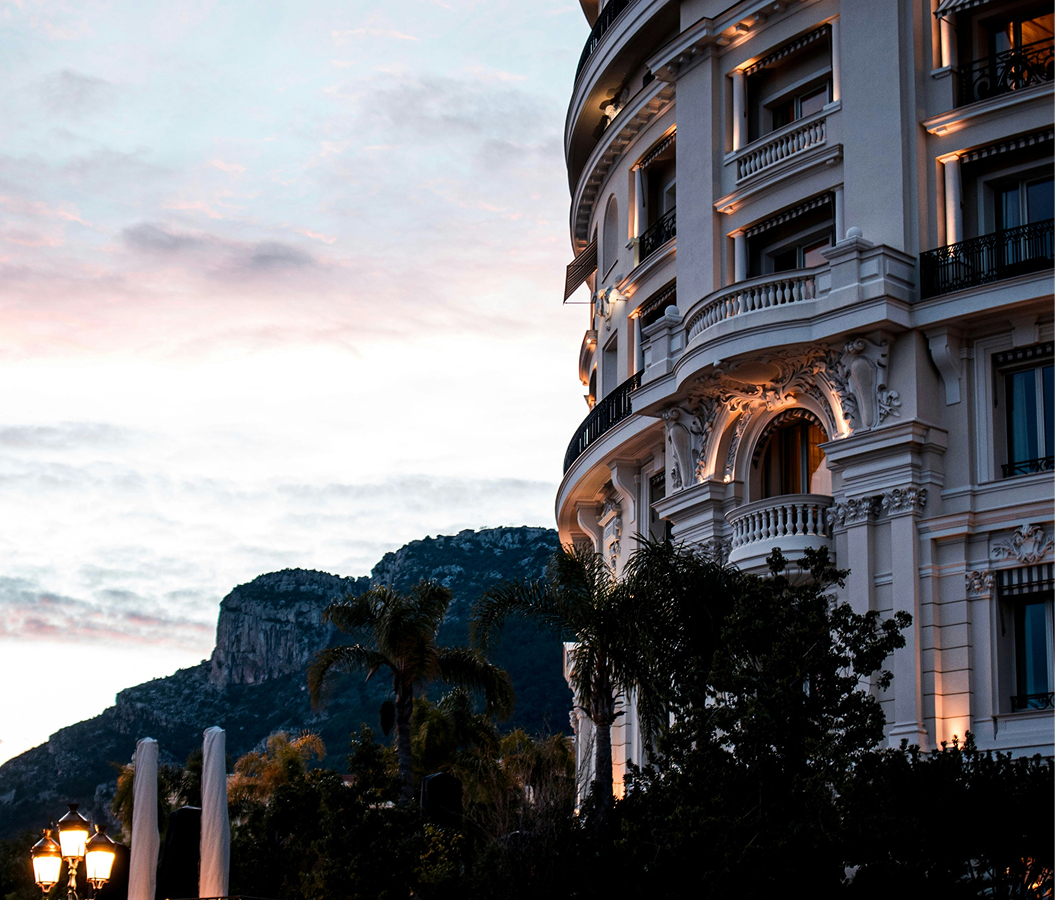
Running through Centrale between Corso Buenos Aires and Piazza Duca d'Aosta, the compact corridor links Milan's principal eastern commercial axis with the southern flank of Stazione Centrale. Continuous early twentieth-century apartment façades give most blocks a strongly enclosed profile, interrupted near Via Benedetto Marcello by a planted opening that breaks the otherwise dense sequence of buildings. Pedestrian movement establishes its primary rhythm through residents, neighborhood commerce and travelers moving between the station and Corso Buenos Aires, preserving the sharp contrast between domestic architecture and metropolitan circulation that has characterized the street for generations. Ringhiera courtyards, decorated residential façades and older hotel buildings introduce another register, carrying traces of the population that occupied this quarter as the railway district expanded around them. The result is a corridor whose short distance between two major centers of activity contains an unusually concentrated intersection of housing, migration, literature and railway-era Milan.
What defines Via Domenico Scarlatti.
Via Domenico Scarlatti is best known for entering Italian literary history through Vittorio Sereni, who moved to number 27 in August 1945 after returning from wartime captivity in Algeria. The street became the subject of Via Scarlatti, composed during the closing months of 1945 as Sereni confronted a Milan marked by workers returning home, postwar fatigue and the unsettled beginning of civilian life. He first placed the poem at the end of Diario d'Algeria in 1947, connecting the Milanese street directly to the conclusion of his wartime book. Sereni radically altered that position in 1965, removing Via Scarlatti from the revised Diario d'Algeria and making it the opening poem of Gli strumenti umani, his third and most consequential collection. The relocation converted a poem born from his return home into the threshold of a book increasingly concerned with postwar cities, industrial work and historical change. His connection with the corridor also reached Enzo Paci at number 26, the philosopher Sereni had met through Antonio Banfi's university lectures and with whom he walked the street during evening conversations. Sereni later entered Pirelli's publicity operation in 1952 and became Mondadori's literary director in 1958, carrying the encounter between poetry, industry and publishing that shaped Gli strumenti umani far beyond the years spent at number 27. The corridor became more than the title of a single poem: Sereni used its enclosed residential form and working population to establish the urban threshold through which one of the Central Italian poetry collections of the postwar period begins.
A separate cultural portrait survives at number 20, where Swiss filmmaker Markus Imhoof created the 26-minute film Via Scarlatti 20 in 1984. Imhoof turned his camera toward a traditional ringhiera building, concentrating on women at windows, children in the courtyard, condominium disputes, southern Italian dialects and food passed between apartments. The production captured a domestic world created by internal balconies and shared courts at a moment when the neighborhood surrounding Centrale had already undergone decades of population change. Imhoof arrived at the project after Das Boot ist voll had received an Academy Award nomination and won the Silver Bear at the Berlin International Film Festival, giving the modest Milanese courtyard a place within the work of an internationally established director. Another strand of twentieth-century history developed nearby at the Andreola, where Fausto Coppi spent the night of June 9, 1940 after winning his first Giro d'Italia and subsequently returned during stays in Milan. The cyclist's association with the street emerged at the beginning of a career that would make him one of the dominant figures of postwar Italian sport, placing an intensely public national figure inside the same residential corridor Imhoof later approached through private domestic life. Number 20 and the Andreola preserve two contrasting forms of twentieth-century memory along Via Scarlatti, one fixed through the intimate observation of a shared courtyard and the other through the Milanese routines of Italy's most celebrated racing cyclist.
How Via Domenico Scarlatti fits.
Via Domenico Scarlatti works as the anchor to an exploration of Porta Venezia through a Liberty residence created on the former grounds of Milan's horse-tram depot, an apartment building by Piero Portaluppi that became an exceptional repository of twentieth-century Italian art and an underground public facility carrying another side of Portaluppi's architectural experimentation.
Begin at Casa Guazzoni, commissioned by builder Giacomo Guazzoni from Giovanni Battista Bossi and constructed between 1904 and 1906 on ground formerly occupied by the Società Anonima degli Omnibus, operator of Milan's horse-drawn public transport. Bossi combined decorative cement sculpture with Paolo Sala's painting and elaborate ironwork by Alessandro Mazzucotelli, extending the floral treatment from the exterior balconies and carriage gate into an unusual hexagonal staircase whose ornament makes circulation itself part of the architectural composition. Continue to Casa Museo Boschi Di Stefano, occupying the second-floor apartment where Antonio Boschi and Marieda Di Stefano assembled a collection exceeding two thousand works inside a building designed by Piero Portaluppi between 1929 and 1931. Boschi donated the collection to Milan in 1974, and the house opened as a public museum in 2003 with some three hundred works distributed across eleven rooms, spanning Mario Sironi, Giorgio Morandi, Filippo De Pisis, Lucio Fontana, Spatialism and Informal art; the domestic setting also preserves a 1936 dining room conceived by Sironi. Conclude at Albergo Diurno Venezia, constructed beneath Piazzale Oberdan between 1923 and 1925 and opened on January 18, 1926 as the Albergo Diurno Metropolitano. Its underground complex extended for 88 meters across 1,200 square meters, with architecture, decoration and furnishings associated with Portaluppi turning a subterranean public-service facility into an elaborate statement of interwar design. The progression moves from Bossi and Mazzucotelli's Liberty treatment of former transport land through Portaluppi's residential setting for the Boschi Di Stefano collection and onward to his subterranean architecture beneath Piazzale Oberdan, connecting three successive reinventions of Milanese urban architecture around Via Domenico Scarlatti.
Where your story begins.
Foresyte Travel reveals places that feel extraordinary long before you arrive.
Enjoy editorial crafted for luxury travelers.
Foresyte may earn a commission when you book.