Why Via Galvano Fiamma matters.
Via Galvano Fiamma is an elegant corridor where Risorgimento's residential character meets early twentieth-century Liberty architecture, courtyard housing and the memory of a medieval chronicler whose writings preserve some of Milan's richest accounts of the Visconti city.
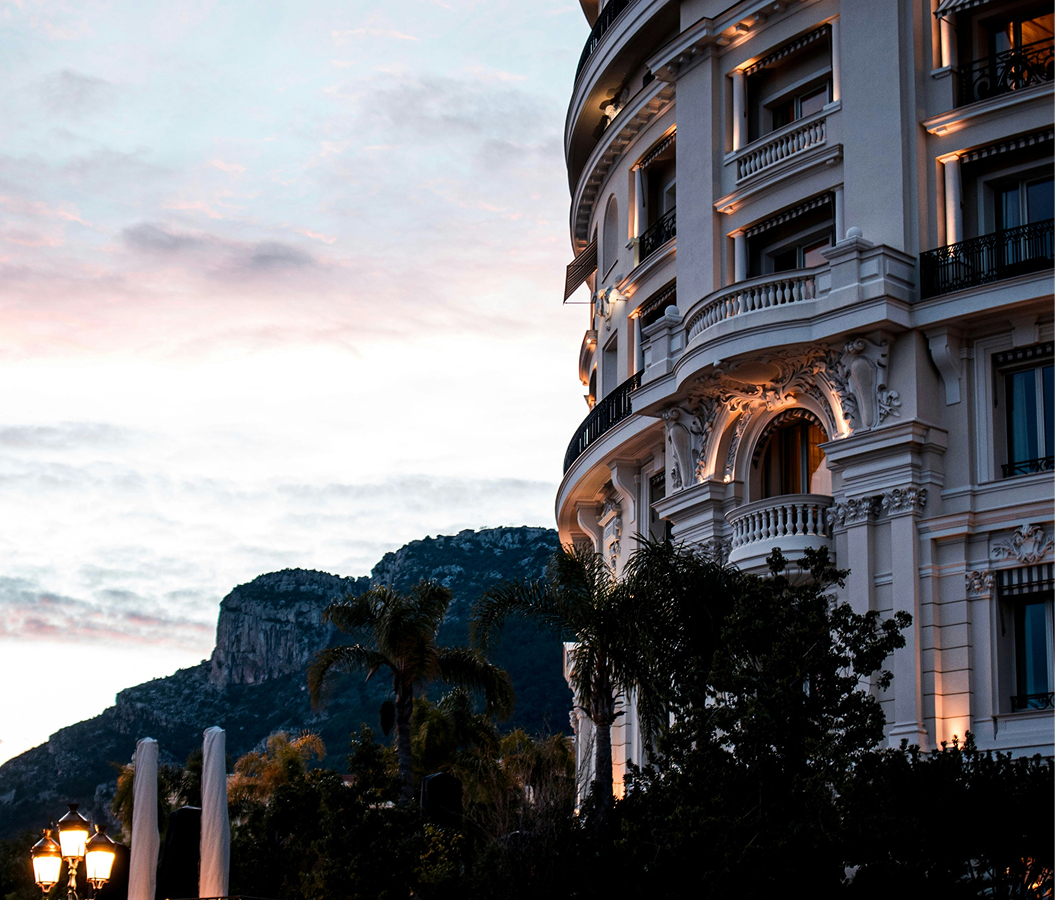
Running through Risorgimento between Corso XXII Marzo and Piazza Risorgimento, the residential corridor crosses Via Archimede and Via Macedonio Melloni within the dense eastern district developed beyond Milan's former walls. Continuous apartment façades create a strongly enclosed streetscape, yet projecting balconies, wrought iron, floral ornament and deep entrance courts repeatedly break that continuity across buildings erected during the district's rapid expansion. Walking establishes its primary rhythm through an architectural sequence whose ornament becomes especially concentrated toward the northern blocks, where several Liberty houses survive within a few hundred meters. Ground-floor shops and older internal courts introduce another register, preserving the small-scale commercial and residential organization that accompanied the neighborhood's transformation during the opening decades of the twentieth century. The result is a corridor where Milan's residential expansion produced an unusually concentrated architectural sequence around a street named for one of the writers who shaped the city's understanding of its medieval past.
What defines Via Galvano Fiamma.
Via Galvano Fiamma is best known for carrying the name of the Milanese Dominican chronicler born in 1283 whose extensive historical writing became a crucial conduit for knowledge of medieval Milan. Galvano entered the Order of Preachers and belonged to the Dominican community centered on Sant'Eustorgio, where the convent maintained studies in logic and moral philosophy and had served as the seat of the Lombard Inquisition since 1228. His intellectual career extended beyond Milan: he taught theology in Pavia between 1308 and 1313 before returning to his native city, and his later position close to the Visconti court placed him within the political world he chronicled. Works including the Chronicon maius, Manipulus florum, Chronicon extravagans and the account of Azzone, Luchino and Giovanni Visconti assembled traditions about the city that would otherwise have disappeared, making his corpus a major bridge between earlier Milanese writing and subsequent historiography. His interest in urban form extended to a fourteenth-century representation of Milan organized around its gates and civic center, an image subsequently studied for its symbolic conception of the medieval city. The unfinished Cronica universalis, composed 1340, pushed his geographical interests far outside Lombardy and included a reference to Marckalada, west of Greenland, corresponding to the Markland known from Norse tradition. Paolo Chiesa's 2021 study established the passage as the first known Mediterranean mention of the North American continent, 150 years before Columbus, with information circulating into Italy through contacts connected with northern seafaring. Publication of the Cronica universalis under Chiesa and Federica Favero in 2024 brought the surviving text into a complete modern edition, giving the medieval writer commemorated by Via Galvano Fiamma an unexpected place in the history of European geographical knowledge.
A separate architectural history developed along the corridor during the intense residential construction that reshaped eastern Milan 1900. The street contains a striking concentration of houses associated with the Liberty period, including buildings at numbers 11, 17, 19, 21, 30, 36 and 37. Casa Simoni at number 21 dates to 1911 and belongs to the group of Milanese Liberty residences singled out within surveys of the city's Art Nouveau architecture. Casa Ugo Frisia at number 37 was completed in 1904 by Giuseppe Pantaleone Boni, the Como-born architect whose contemporary Milanese work included Casa Isotta, Casa Brambati and Casa Radice before later commissions such as the Branca family funerary monument. Number 17 at the Via Archimede corner became Casa Meregalli Magnoni, followed along the same corridor by Casa Snider at number 19 and Casa Mariani at number 30, extending the architectural sequence across several blocks. The density of these residences places Via Galvano Fiamma inside the broader eastern belt where Liberty architecture flourished during Milan's prewar building expansion, yet the corridor distinguishes itself through the close succession of individual houses carrying their own patronal names. A photograph made by Studio Sommariva on March 14, 1957 at the Via Macedonio Melloni intersection preserves the later commercial life of this residential fabric, including the Posteria shop within the street frontage. The corridor joins two different forms of Milanese memory: the name of a fourteenth-century historian fixed onto the street and a substantial collection of residences created during the city's architectural expansion six centuries later.
How Via Galvano Fiamma fits.
Via Galvano Fiamma works as the anchor to an exploration of eastern Central Milan through an eighteenth-century cemetery built for the Ospedale Maggiore, an early twentieth-century pavilion created for metropolitan food commerce and a nineteenth-century music institution whose Milanese school became one of Italy's principal centers of professional musical education.
Begin at Rotonda della Besana, where construction of the Ospedale Maggiore's new burial ground began in 1695 after its existing cemetery became insufficient. The church of San Michele Arcangelo ai Nuovi Sepolcri followed from 1719, and Francesco Croce developed the surrounding portico with additional burial chambers, completed in 1731 with financial support from silk merchant Giambattista Annone; the complex later passed through proposals for a Napoleonic pantheon and uses as a barracks, hay store, chronic-care facility and hospital laundry before entering municipal ownership. Continue to Palazzina Liberty Dario Fo e Franca Rame, designed by Alberto Migliorini in 1908 within the new Verziere fruit and vegetable market as a center for merchant negotiations that subsequently operated as a café and restaurant. The surrounding market disappeared after its 1965 transfer, yet Migliorini's pavilion survived and acquired a second cultural history between 1974 and 1980 as the theatrical laboratory of Dario Fo, Franca Rame and their company, leading Milan to dedicate the building to the pair in 2017. Conclude at Conservatorio Giuseppe Verdi di Milano, founded through the Napoleonic reorganization of musical education in the early nineteenth century and established beside the former church of Santa Maria della Passione, where generations of composers, instrumentalists and conductors entered a school inseparable from Milan's operatic culture. Its history carries the route from institutional architecture serving death through a market pavilion converted into experimental theater and onward to the formal cultivation of music, completing an unusually concentrated account of the institutions that shaped this part of the city. The progression moves from the Ospedale Maggiore's burial architecture through Migliorini's commercial pavilion and its Fo-Rame theatrical chapter and onward to Milan's conservatory tradition, connecting public welfare, food commerce, experimental performance and musical education across the districts surrounding Via Galvano Fiamma.
Where your story begins.
Foresyte Travel reveals places that feel extraordinary long before you arrive.
Enjoy editorial crafted for luxury travelers.
Foresyte may earn a commission when you book.