Why Via Michelangelo Buonarroti matters.
Via Michelangelo Buonarroti is a cultivated residential corridor where Buonarroti's early twentieth-century character meets Milanese Liberty architecture, garden-fronted residences and the western expansion that carried the city beyond Porta Vercellina.
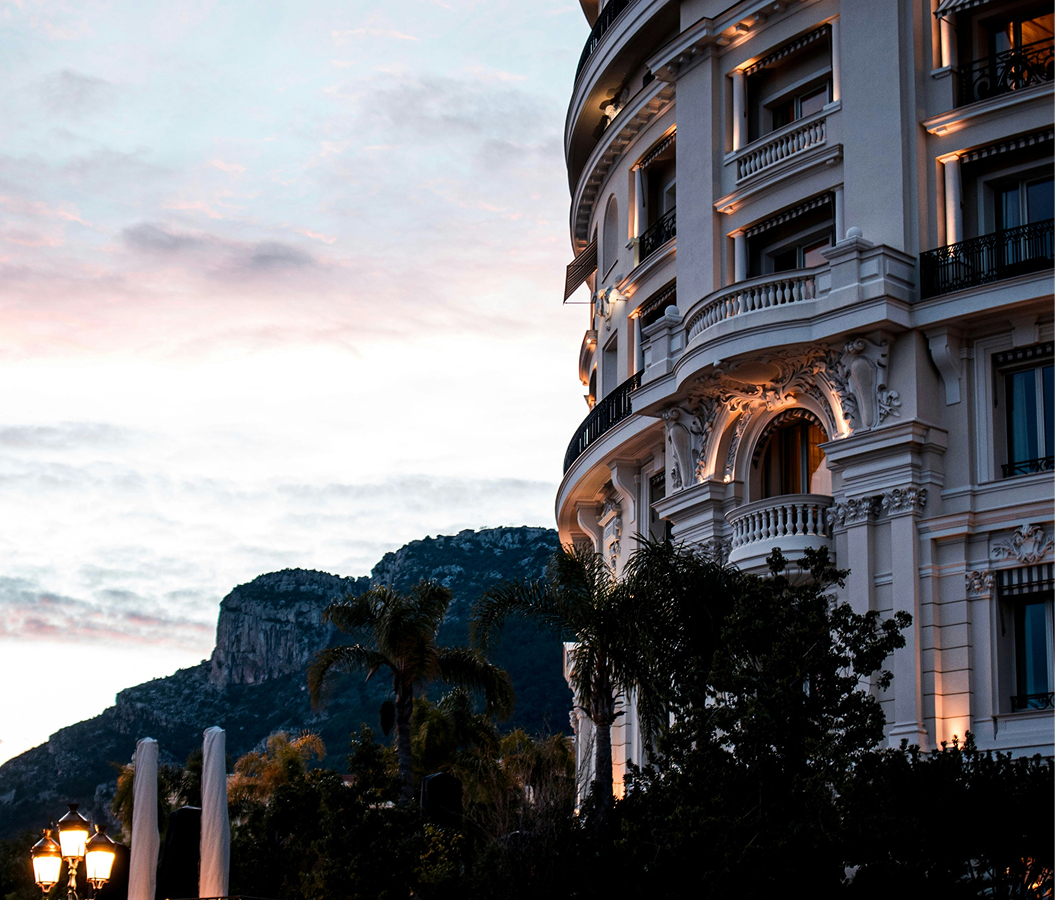
Running through Buonarroti between Piazza Piemonte and Piazza Giulio Cesare, the tree-lined corridor crosses Piazza Michelangelo Buonarroti midway through a sequence of residential blocks extending west from Corso Vercelli. Apartment houses stand beside surviving villas and private gardens, producing repeated shifts between continuous street walls and detached architecture whose setbacks expose trees, gates and ornamental façades. Residential movement establishes its primary rhythm through broad sidewalks and the succession of three squares, giving the route a measured sequence uncommon among the denser streets closer to the historic center. Early twentieth-century architecture introduces another register through carved stone, wrought iron, projecting balconies and asymmetrical residential compositions developed as this former outer territory became an affluent urban district. The result is a corridor whose domestic architecture and planted intervals preserve the scale of western Milan before later construction substantially increased the surrounding density.
What defines Via Michelangelo Buonarroti.
Via Michelangelo Buonarroti is best known for becoming the starting point of construction for Milan's first underground railway, placing the residential corridor directly inside one of the city's most consequential postwar infrastructure projects. Work on Linea 1 began here on June 12, 1957, initiating the route planned between Piazzale Lotto and Sesto San Giovanni. Excavation advanced through the district during 1958, with Giancolombo News Photos capturing the open construction site in Piazza Michelangelo Buonarroti that March and Publifoto photographing work at neighboring Amendola-Fiera and Via Giotto during the same campaign. The first M1 section opened on November 1, 1964 between Lotto and Sesto Marelli, bringing Buonarroti into the original generation of stations and placing it between Amendola and Pagano. Franco Albini and Franca Helg developed the architectural system for the stations, and Bob Noorda created the coordinated signage whose continuous red band, standardized typography and repeated station names established a unified visual system across the new railway. Their work received the Compasso d'Oro in 1964, connecting the engineering project begun beneath Via Buonarroti seven years earlier with a design program that became one of Milan's internationally influential postwar achievements.
A separate architectural history survives at Via Michelangelo Buonarroti 48, where Giuseppe Sommaruga constructed Villa Faccanoni between 1912 and 1914 for engineer Luigi Faccanoni. Sommaruga had already explored the palazzina type nearby through the Galimberti residence at number 41 in 1908, and the later commission brought his Liberty architecture into a more mature composition of columns, stairways, a tower and extensive decorative work. Eugenio Quarti developed the original interiors and Alessandro Mazzucotelli contributed decorative work, extending the project through two practitioners central to Milanese decorative arts during the period. Two female sculptures by Ernesto Bazzaro were installed on the garden elevation in 1914 after their removal from Sommaruga's Palazzo Castiglioni on Corso Venezia, where their nudity had provoked controversy after that building's completion. A second architectural phase arrived at the end of the 1930s when Giò Ponti transformed and enlarged the villa for clinical use with Antonio Fornaroli and Eugenio Soncini, organizing patient rooms toward the south, concentrating circulation and controls within the building and adding medical and surgical wings facing the garden. The commission joined Sommaruga's Liberty experimentation with Ponti's early work on healthcare architecture inside a single property, preserving Bazzaro, Quarti and Mazzucotelli within a building subsequently reshaped around a different architectural purpose.
How Via Michelangelo Buonarroti fits.
Via Michelangelo Buonarroti works as the anchor to an exploration of western Milan through a neighborhood church with medieval origins, a theater that brought large-scale performance to the city's expanding residential edge and a sports palace that became one of the principal survivors of the former exhibition district.
Begin at Chiesa di San Pietro in Sala, whose dedication and the ancient sala place-name point toward Longobard origins before Abbot Eriberto da Pasilvano of Sant'Ambrogio promoted construction of a church here in 1141. Cardinal Carlo Borromeo established the parish on April 1, 1581 from territory previously divided among neighboring parishes, giving an old religious nucleus beyond Porta Vercellina a formal role as the surrounding settlement expanded. Continue to Teatro Nazionale, commissioned by cinema entrepreneur Mauro Rota from architect Mario Borgato and inaugurated on December 20, 1924 with Sem Benelli's La cena delle beffe. Its reinforced-concrete construction supported a century of changing performance uses, and the stage later hosted figures including Walter Chiari, Giorgio Gaber and Rudolf Nureyev before a major 2009 reconstruction enlarged the stage tower and established a 1,500-seat theater equipped for long-running musical productions. Conclude at Palazzo delle Scintille, designed by specialist sports architect Paolo Vietti Violi and inaugurated in April 1923 as Milan's first indoor sports palace. Its vast elliptical iron-and-glass dome later covered boxing, exhibition and theatrical uses; the building became a Fiera Campionaria pavilion in 1935, hosted part of Teatro alla Scala's 1946 season during reconstruction of the bomb-damaged opera house and survived the disappearance of most surrounding exhibition architecture. The progression moves from a medieval religious nucleus formalized under Carlo Borromeo through Borgato's reinforced-concrete theater and onward to Vietti Violi's vast sports and exhibition hall, tracing the district's passage from an outer settlement into a major twentieth-century destination for performance and public performance.
Where your story begins.
Foresyte Travel reveals places that feel extraordinary long before you arrive.
Enjoy editorial crafted for luxury travelers.
Foresyte may earn a commission when you book.