
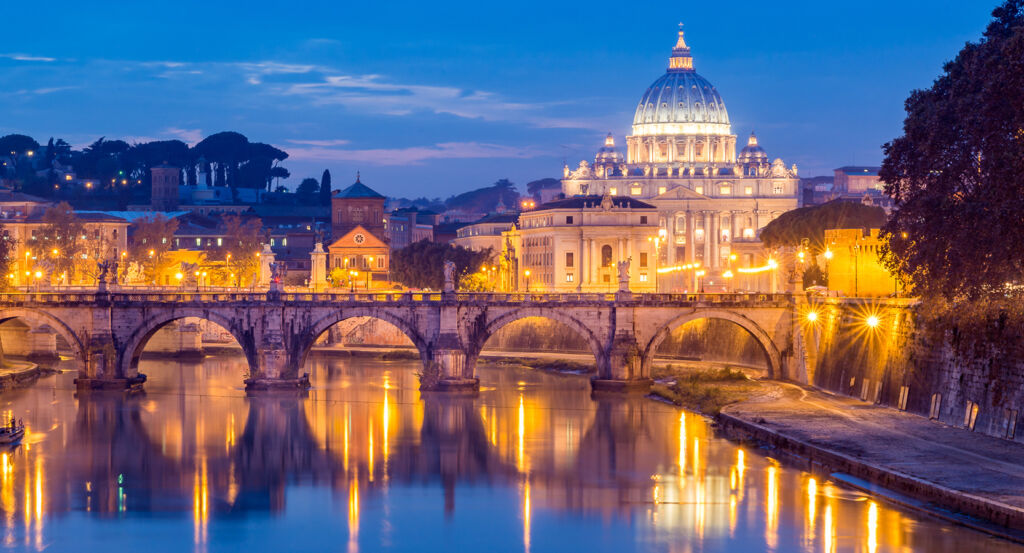
Why you should experience Via Nazionale in Rome, Italy.
Via Nazionale is a grand avenue of unification and ambition, where grand architecture, civic importance, and commercial energy converge along one of the city's most significant thoroughfares.
Historic palaces, government buildings, landmark churches, cultural institutions, elegant hotels, thriving storefronts, and impressive streetscapes create a neighborhood that reflects Rome's transformation into a modern European capital. Constructed in the decades following Italian unification, Via Nazionale became one of the city's first major modern boulevards, physically and symbolically connecting key parts of the newly established capital. Architects, politicians, entrepreneurs, and planners helped shape a district defined by national ambition and urban modernization. Over generations, the avenue evolved into an important center of commerce, government, and public life while retaining its architectural grandeur. Today, visitors encounter a neighborhood where historic significance and contemporary activity coexist in remarkable balance. The result is a neighborhood that feels influential, energetic, and unmistakably Roman. To the south, Rome City Centre's celebrated monuments and historic landmarks extend naturally from Via Nazionale along one of the city's most important civic corridors, reinforcing the neighborhood's role within the story of modern Rome. Every façade, public building, and boulevard reflects a district shaped by progress, statehood, and civic vision.
What you should know about Via Nazionale.
Via Nazionale is best known for being among the first major boulevards constructed after Italian unification, symbolizing Rome's transformation into the capital of a unified nation.
Completed during a period of rapid urban expansion in the late nineteenth century, the avenue represented a dramatic departure from the narrow streets and medieval patterns that characterized much of historic Rome. The project showcased the ambitions of the newly unified Kingdom of Italy as it sought to establish Rome as a modern capital worthy of its national status. Government institutions, grand hotels, commercial enterprises, and cultural venues quickly lined the boulevard, reinforcing its role as a symbol of progress and modernization. Over time, Via Nazionale became one of the city's most important civic and commercial corridors. Today, it remains a lasting reminder of one of the most transformative periods in Italian history. Few neighborhoods possess a street so closely associated with the creation of modern Italy.
How to fold Via Nazionale into your trip.
Via Nazionale works as an exploration of the civic landmarks, architectural achievements, and historic institutions that define one of Rome's great modern boulevards.
Begin along Via Nazionale itself, where the neighborhood's defining connection to Italian unification and urban development immediately comes into focus. Continue toward Palazzo delle Esposizioni, whose grand architecture and cultural programming reveal the artistic ambitions that have shaped the district for generations. From there, make your way to the Basilica of Santa Maria degli Angeli e dei Martiri, where Michelangelo's remarkable adaptation of ancient Roman baths provides a broader perspective on the layers of history that continue to define Via Nazionale today. Along the route, you'll encounter government buildings, historic hotels, cultural institutions, architectural landmarks, elegant storefronts, public spaces, and celebrated streetscapes that reveal the neighborhood's extraordinary significance. The progression moves naturally from iconic boulevard to cultural landmark to historic basilica, revealing the forces that shaped the neighborhood. The experience showcases a side of Rome defined by national ambition, architectural grandeur, and the emergence of a modern capital.
Where your story begins.
Foresyte Travel reveals places that feel extraordinary long before you arrive.
Experience premium editorial crafted for luxury travelers.




















































































































