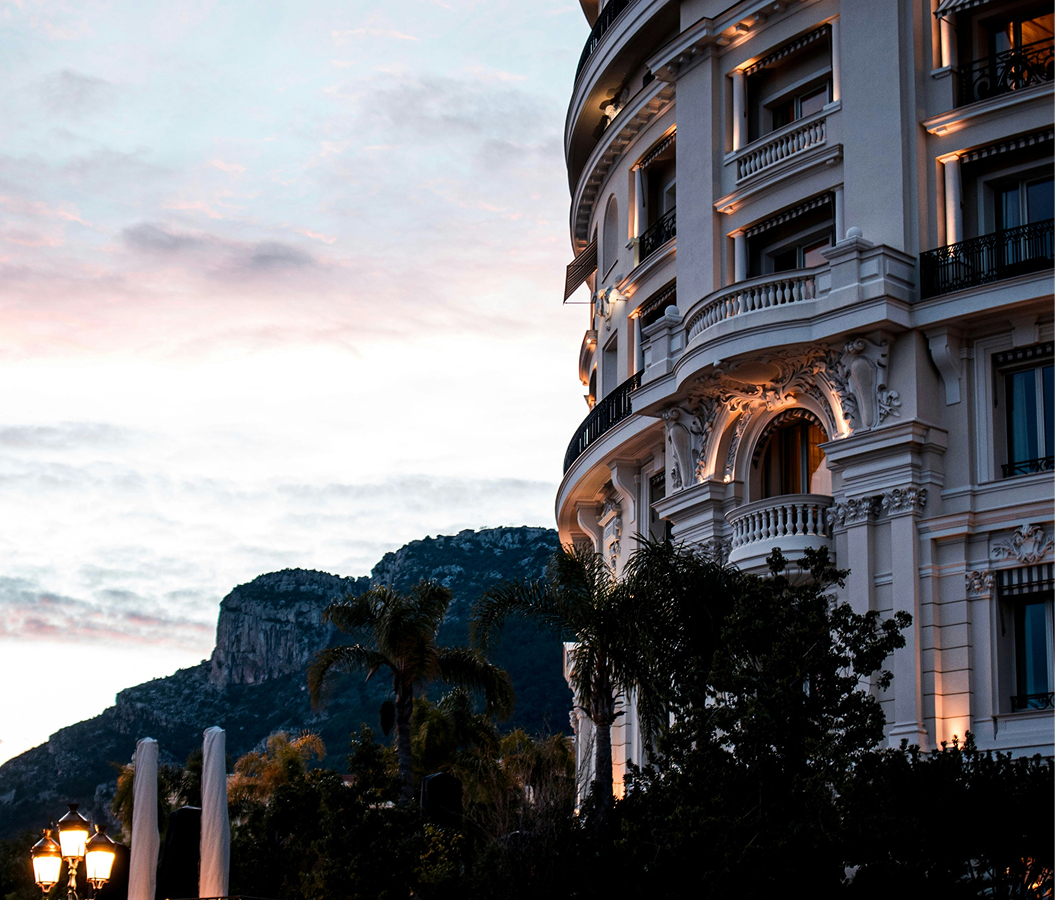
Why Viale Andrea Doria matters.
Viale Andrea Doria is a stately corridor where Centrale's metropolitan character meets Milan's early twentieth-century expansion, interurban tram history and the ambitious avenue created to connect Loreto with a new railway gateway.
Running through Centrale between Piazzale Loreto, and Piazza Caiazzo, the long avenue forms a direct approach toward Milano Centrale through dense residential territory between Corso Buenos Aires and the railway district. Continuous twentieth-century façades frame a wide roadway whose central strip preserves the dimensions of an earlier tree-planted and rail-served boulevard. Trolleybuses and surface traffic establish its metropolitan rhythm as the perspective extends westward toward the station district. Curved corners, projecting balconies and large postwar blocks introduce another register, turning successive intersections into a compact survey of Milanese residential architecture. The result is a corridor where railway expansion, metropolitan transportation and a century of architectural construction remain unusually concentrated along a single east-west axis.
What defines Viale Andrea Doria.
Viale Andrea Doria is best known for originating as Via Caiazzo, an avenue opened at the turn of the twentieth century to connect Loreto with the new Central Station planned north of the existing city. Milan acquired part of southern Greco in 1904 to create the large circumferential avenues extending through the surrounding territory, placing the new route within a wider reorganization of the northeastern edge. The street initially carried the name of Caiazzo, the Campanian town associated with condottiero Gianfrancesco Sanseverino d'Aragona, Count of Caiazzo, before receiving Andrea Doria's name during the 1930s. Its original configuration included double rows of trees and central tracks used by interurban trams. Services toward the Adda valley, including routes for Cassano, Vaprio and Vimercate, traveled through the eastern section between 1931 and 1957 before reaching their terminus around Via Benedetto Marcello. Removal of those interurban services left the central strip without its former rail function, and later construction of M2 during the 1960s eliminated much of the avenue's earlier planting. Trolleybus infrastructure subsequently occupied part of the route, with the reserved corridor for lines 90 and 91 extending between Piazza Caiazzo and Via Giovanni Pierluigi da Palestrina. These successive systems turned a purpose-built connection toward the railway district into an avenue shaped by changing generations of metropolitan transport.
Postwar architecture transformed the avenue into a concentrated display of Milanese residential and office design. Giovanni and Lorenzo Muzio designed the INA block at number 17 between 1963 and 1964, and construction continued through 1967 across an entire triangular parcel bounded by Via Palestrina and Via Venini. Nine storeys rise above a reinforced-concrete structure, with red clinker, hammered terrazzo and white aluminum screens distinguishing different portions of the façades. Projecting blocks set at forty-five degrees articulate the adjoining elevations, and long attic terraces separate the upper apartments from traffic below. Gio Ponti pursued a radically different solution nearby with Edificio Montedoria, constructed between 1968 and 1971 on another triangular parcel between Via Macchi, Via Pergolesi and the avenue. An initial 1963 to 1964 scheme proposed a tower near Piazza Caiazzo, yet development constraints led Ponti to redistribute the volume across a lower composition capped at 30 meters. Completed in 1971, Montedoria became Ponti's final building in Milan, placing the closing chapter of his architectural work beside the Muzios' large residential commission within the same short corridor.
How Viale Andrea Doria fits.
Viale Andrea Doria works as the anchor to an exploration of eastern Central Milan through wartime memory, subterranean public architecture and one of the city's great private collections of twentieth-century Italian art.
Begin at Memoriale della Shoah di Milano beneath Milano Centrale, where the subterranean railway infrastructure known as Binario 21 became the departure point for deportation transports during the German occupation. Prisoners were brought from San Vittore to the station, loaded into freight cars below street level and raised by an elevator onto the main railway system, turning an operational part of the station into a mechanism of deportation toward concentration and extermination camps. Continue to Albergo Diurno Venezia beneath Piazza Oberdan, constructed between 1923 and 1926 as a sophisticated public-services complex for travelers and Milanese residents. Piero Portaluppi shaped much of its architecture and decoration across a 1,200-square-meter underground facility combining baths with barbers, beauty services and other personal-care spaces; it opened on January 18, 1926 and remained in service through decades of changing urban habits before closing in 2006. Conclude at Casa Museo Boschi Di Stefano, where Antonio Boschi and Marieda Di Stefano assembled more than 2,000 works spanning Italian art from the early twentieth century through the 1960s. Their collection entered Milan's civic holdings in 1974, and 300 works now occupy the couple's former apartment in the Via Jan building designed by Piero Portaluppi between 1929 and 1931, including works by Boccioni, Carrà, Sironi, Morandi, De Pisis, Fontana and Manzoni. The progression moves from railway infrastructure bound to wartime deportation through Portaluppi's subterranean architecture for interwar metropolitan services and onward to Boschi and Di Stefano's private collecting, connecting memory, urban culture and twentieth-century art across the territory surrounding Viale Andrea Doria.
Where your story begins.
Foresyte Travel reveals places that feel extraordinary long before you arrive.
Enjoy editorial crafted for luxury travelers.
Foresyte may earn a commission when you book.